
THE ART OF
FAST SKIS
Words by Henrik Rostrup
Photos by Patrick Dougherty
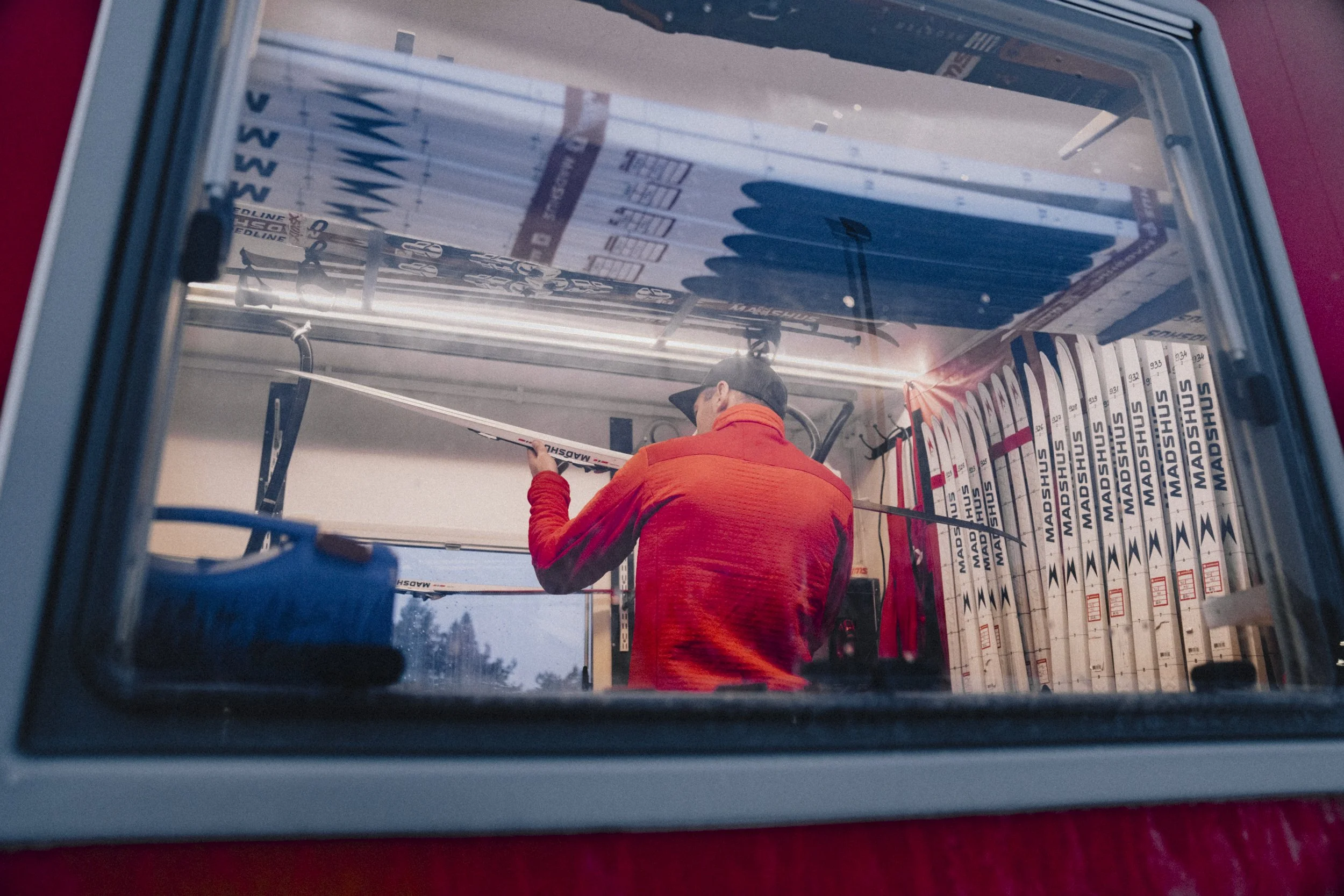
Morten Sætha is the silent force behind the scenes, the road warrior of Nordic skiing. While athletes chase glory, he moves from race to race, long before dawn, making sure their skis are ready for battle. Testing, tweaking, perfecting—his work is never in the spotlight, but every podium finish has his fingerprints on it.
I
I work in the Racing Service for Nordic skiing, which means I’m responsible for cross-country and Nordic combined. Basically, I travel around following the World Cup circuit, working with athletes, waxing teams, and product testing. We’re in the same places as the skiers week in and week out, so you really get to know the people in the sport.
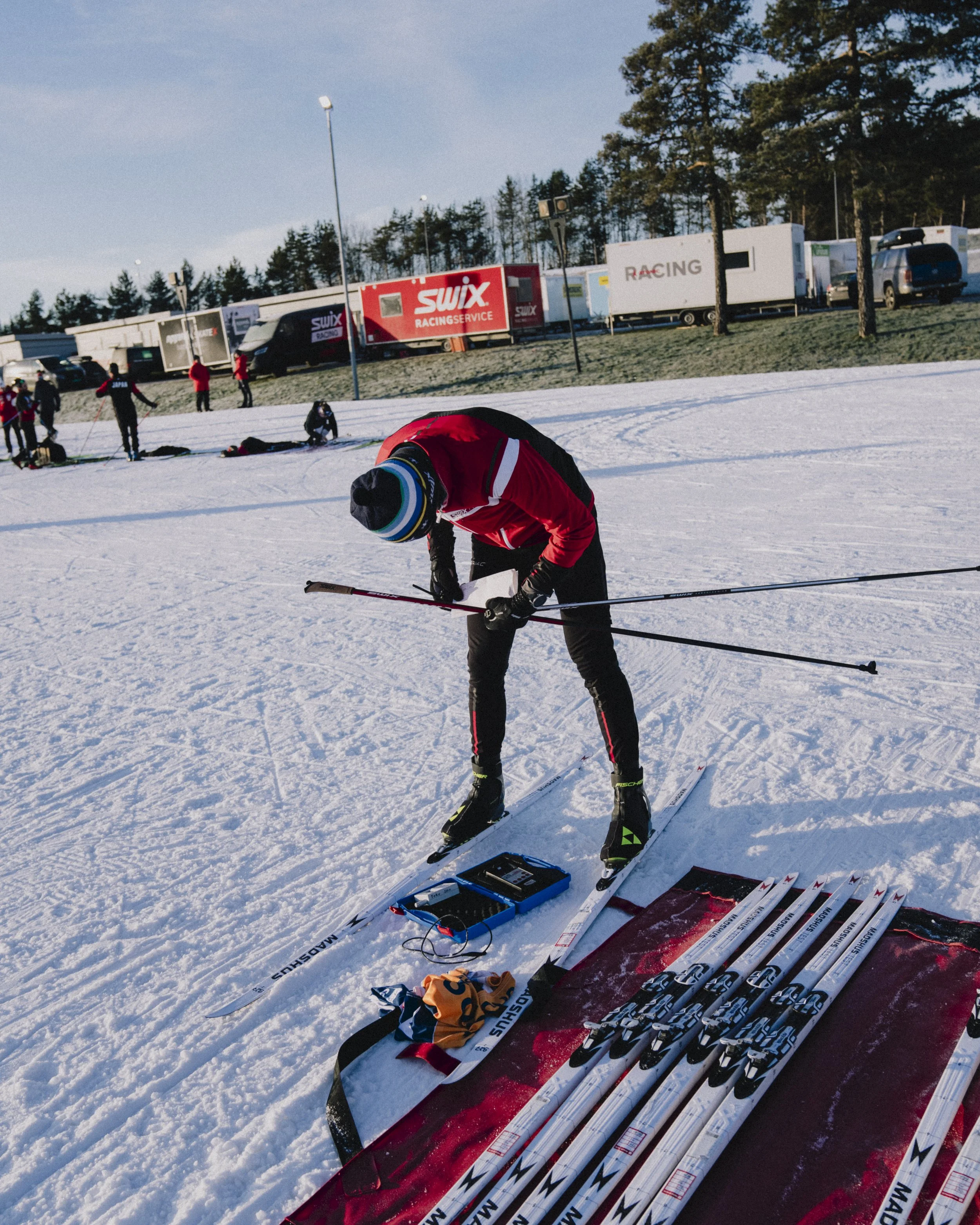
I also work closely with Nordic combined, meeting up with those teams during key competitions. But the core of what I do is making sure athletes have the best possible skis on race day while also testing and refining new Swix products. We’re constantly working on development—bringing prototypes to the races, comparing them with our best existing waxes and equipment, and figuring out what can be improved. It’s this ongoing process where every small gain counts.
You’ve been doing this for a long time. What’s changed the most since you started? Do you feel like you’re always learning, or are there certain things that never change?
It’s a mix of both. With kick wax, the fundamentals have stayed pretty consistent. It’s still about experience, knowing conditions, and applying that knowledge the right way.
But glide waxing? That’s been completely flipped on its head—especially when fluor was banned.
Swix was actually ahead of the curve on that. While other brands were still focused on fluor-based products, we had already started working on alternatives. That gave us a real advantage when FIS introduced the ban. The last two years have been really strong for us because of that head start.
That said, fluor-free waxing is still in its early days. Fluor had over 30 years of refinement; we’ve only been working with non-fluor products for about five. There’s still so much development happening, not just with the wax itself but also in how we apply it, how we layer different products, and even the tools we use. It’s a whole new world, and we’re learning every day.
II
That’s got to be a big adjustment, especially since the sport itself is evolving too. Are the athletes or the gear leading the way?
They kind of push each other forward. I started full-time at Swix in 2010, but I was already working with them before that, so I’ve seen a lot of changes over the years.
One of the biggest shifts on the athlete side is how much double-poling has taken over.
Back in the day, diagonal striding with some double-pole push was the norm. Now? Skiers are double-poling up hills that would’ve been unthinkable before. The power they generate with their upper bodies is insane.
That’s completely changed how we design ski poles. They have to handle way more force than before, so we’ve had to rethink materials, construction, and even grip design.
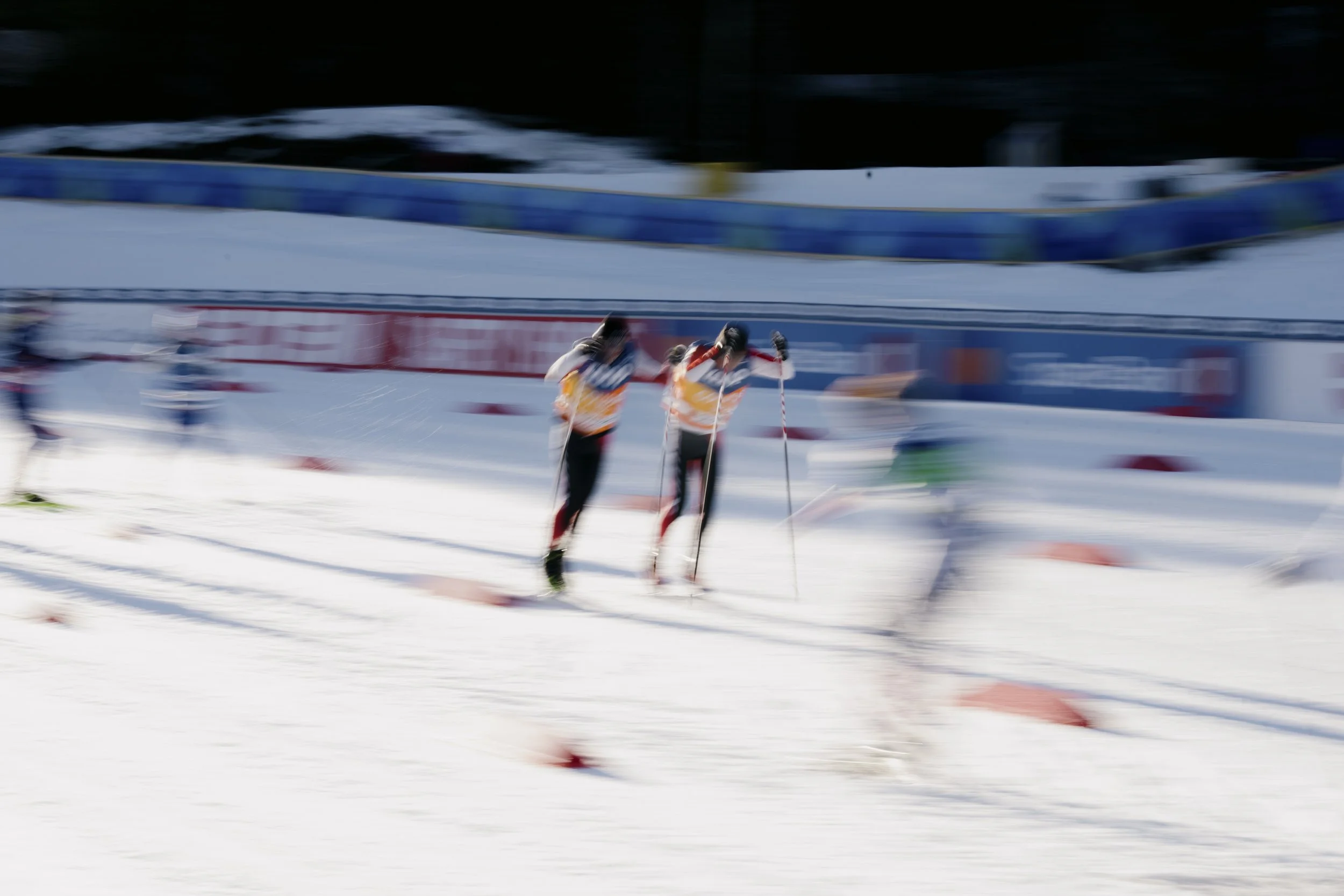
Then there’s the race format itself. More mass starts, fewer individual time trials. Races now come down to the final few kilometers, and that’s changed how we think about ski preparation. Before, a skier needed skis that were solid across the whole race. Now? You need skis that are at their absolute best in the last 3–4 km, because that’s where everything is decided.
You’re on the road constantly, surrounded by the same people. Does it start to feel like a second family?
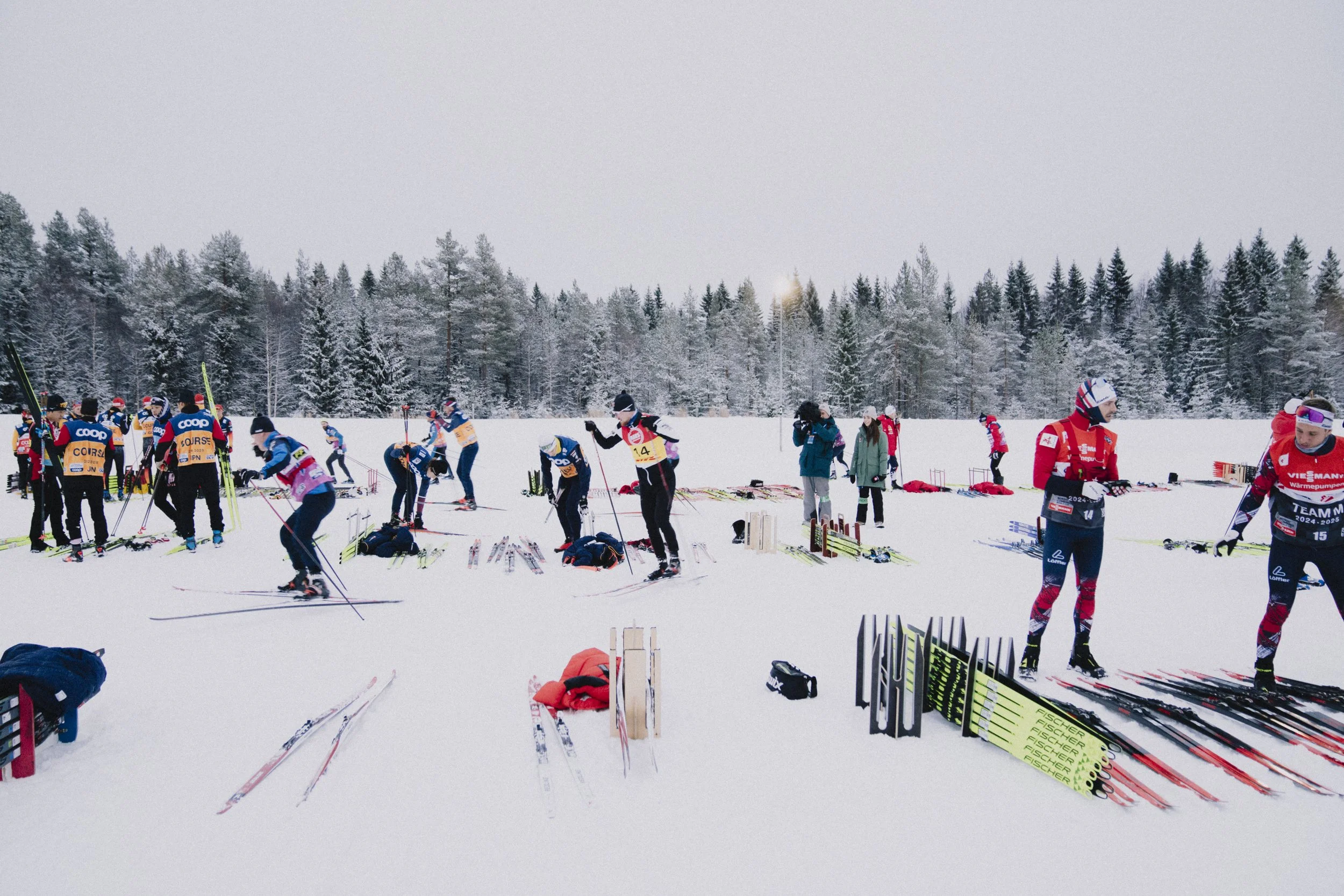
For sure. We’re basically traveling together for half the year, seeing each other every week. Athletes, wax techs, service teams—we’re all in the same places, doing the same thing, eating in the same hotel dining rooms. You can’t help but form close bonds. It really is like a traveling circus.
III
Do certain moments feel more emotional than others? Like, is it more about seeing an athlete succeed, or is it about those days where you just nail everything and know the setup was perfect?
Both.
When a skier you’ve worked closely with finally has a breakthrough, it’s huge. Especially if they’ve been struggling—maybe they’ve had bad skis a few races in a row, or the conditions just haven’t suited them. And then suddenly, everything clicks. You know how much it means to them, and it means just as much to us too.
And yeah, there are definitely days where we just get it right—where the wax, the skis, the conditions all line up, and we know we’ve given the athlete everything they need to win. That’s an amazing feeling.
There’s so much behind the scenes that people don’t see. What’s your favorite part of the year?
I love the start of the season, when we first get on snow.
In the summer, we do a lot of testing in the mountains, trying out new ideas, refining products, and seeing what works. It’s a bit more relaxed—no races, no stress. We can really take our time testing and fine-tuning things.
Then in October, we start getting real-world conditions. We go to places like Northern Finland and Central Europe, testing how products work in different types of snow. That’s where things get exciting, because we’re getting closer to the real thing.
Once the season starts, though, it’s full throttle. Everything has to be tested, prepped, and ready before 8 AM on race days. That’s when we send out reports to the teams, so they can make final decisions on ski and wax selection.
IV
How important is it to start strong?
Super important. If Swix products are performing well in the first few races, word spreads fast. People trust what works, and if we can get strong results early, that confidence carries through the season.
And what about championships? That’s got to be a whole different kind of pressure.
Oh yeah, totally different.
The biggest pain? Packing up and moving constantly. Tour de Ski, for example, is brutal—you’re only in one place for two or three days before packing everything up and moving to the next venue. You’re constantly setting up, tearing down, and repeating the process. It’s exhausting.
Championships are different. Since they last over two weeks in one place, we actually have time to set up properly, test thoroughly, and fine-tune everything. Instead of just me and one other person traveling, we’ll have a bigger crew, which makes everything run more smoothly.
V
What’s a typical race day like for you?
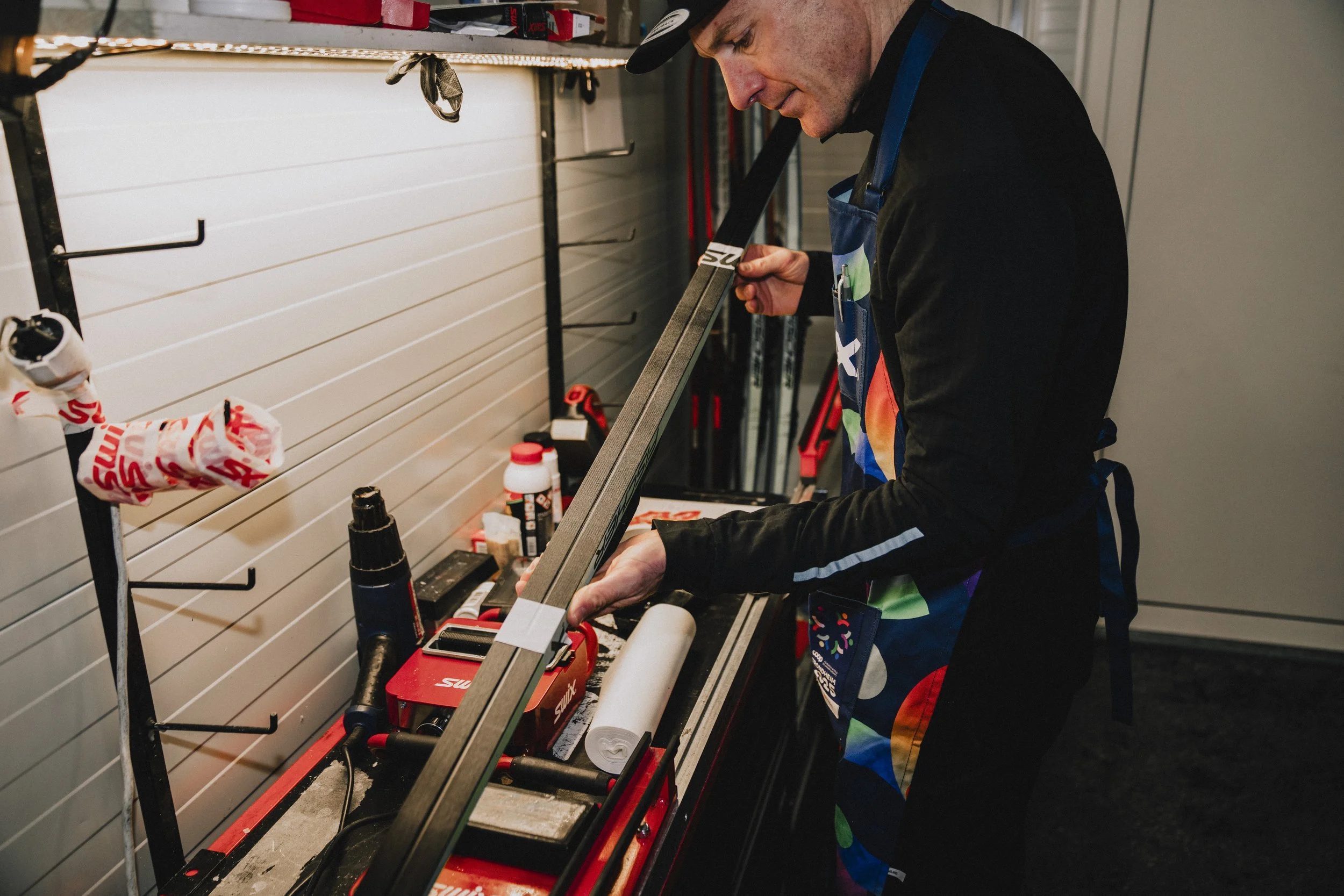
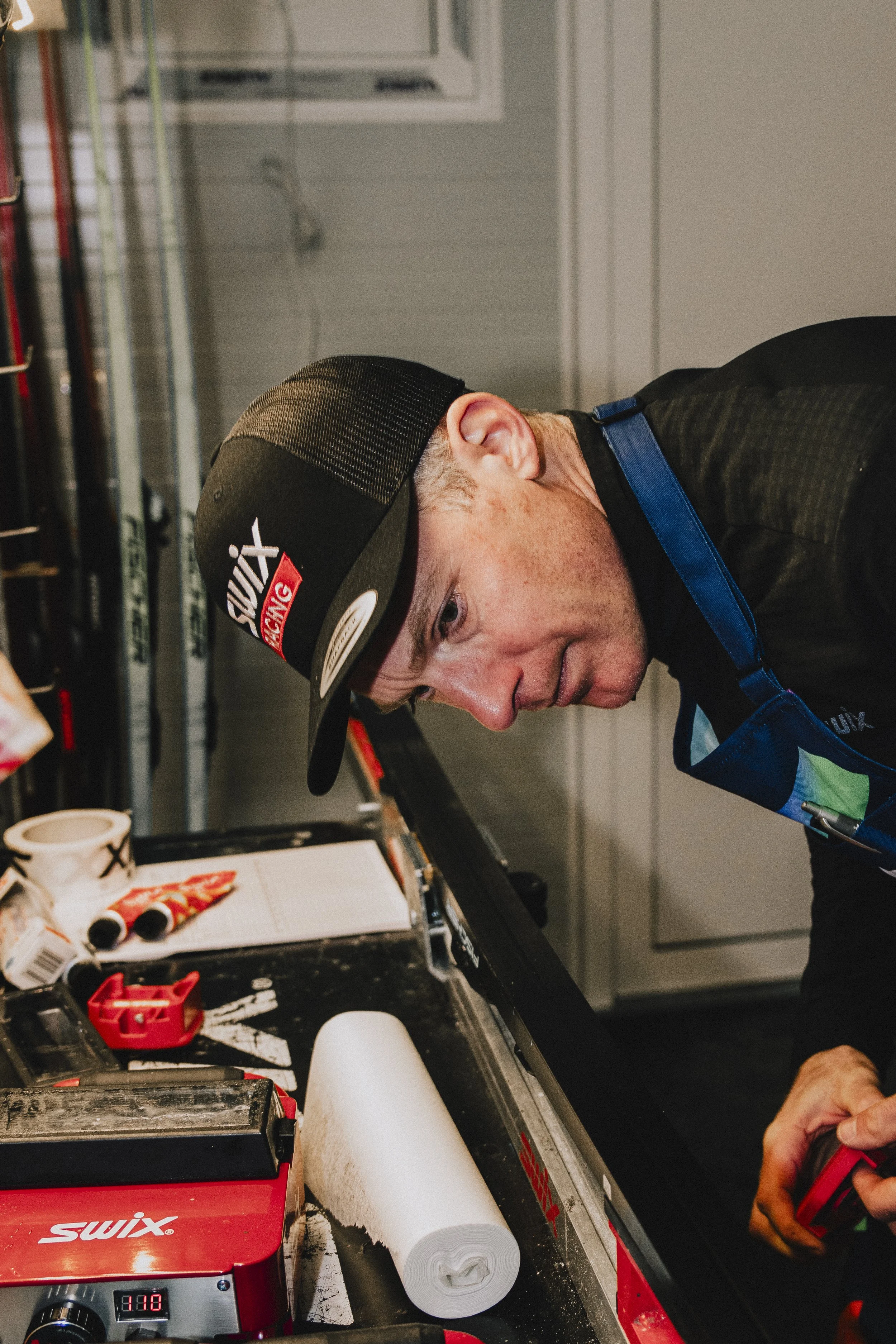
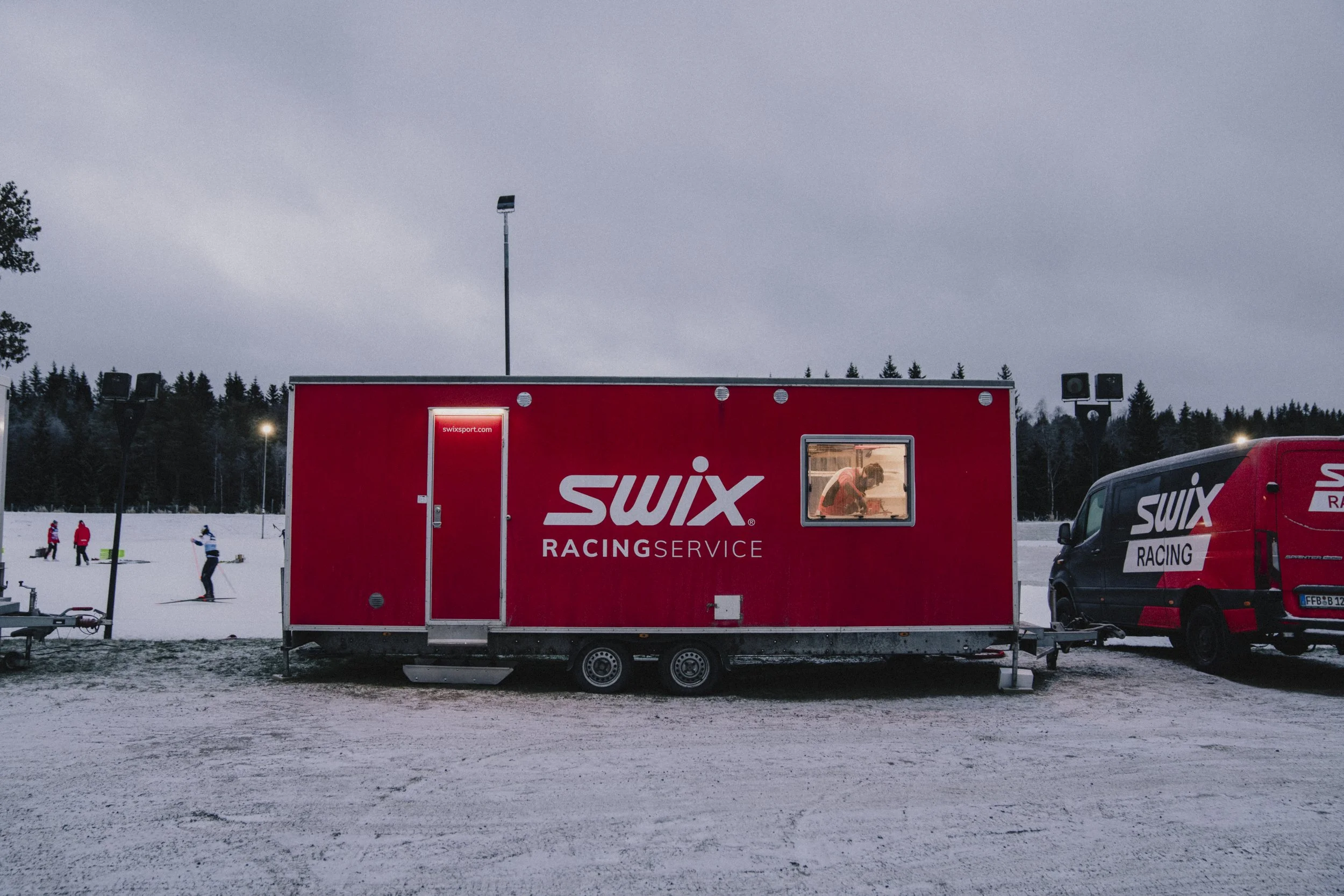
It depends on when the race starts, but if it’s an early one—like at 9 AM in Falun—we have to be at the wax cabin by 5 AM.
First, we check the track—temperature, humidity, snow texture. Then we prep skis. My colleague focuses on glide wax, testing eight pairs of skis, while I work on kick wax, testing four different setups.
We have to be done two hours before the race so teams can finalize their selections.
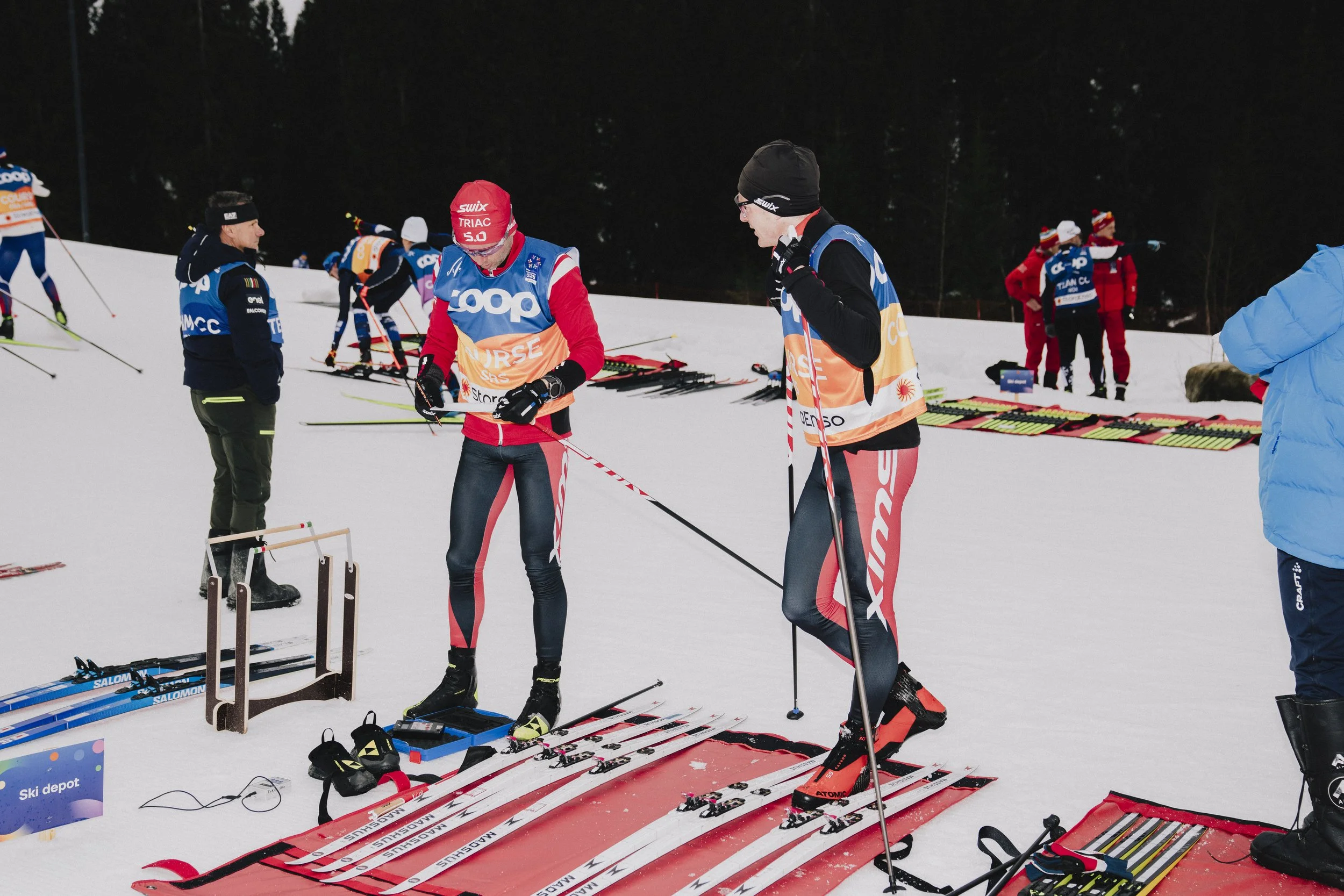
Once the race starts, our job is more about monitoring conditions and being available for last-minute needs—spare poles, quick adjustments, that kind of thing. Afterward, it’s straight back to the wax cabin to clean and reset everything for the next day.
That sounds intense.
It is. People don’t always realize how tight the timing is. Waxing eight pairs of skis, running tests, analyzing conditions, and finalizing everything before 7 AM—there’s no room for mistakes.
What’s been one of your best moments at Swix?
The Oslo 2011 World Championships were unforgettable. Seeing Marit Bjørgen win gold for Norway—that was special.
And then there’s Petter Northug.
At Falun 2015, he called me just hours before his race and said: “The conditions are soft—I need poles that are 1 cm longer.”
We made the adjustment.
He won.
Those are the moments you never forget.
SHARE
OTHER STORIES
-

Romsdalen in Focus
PHOTOGRAPHY
-
The Crack
DISPATCH
-
Whispers of Lapland
DISPATCH