
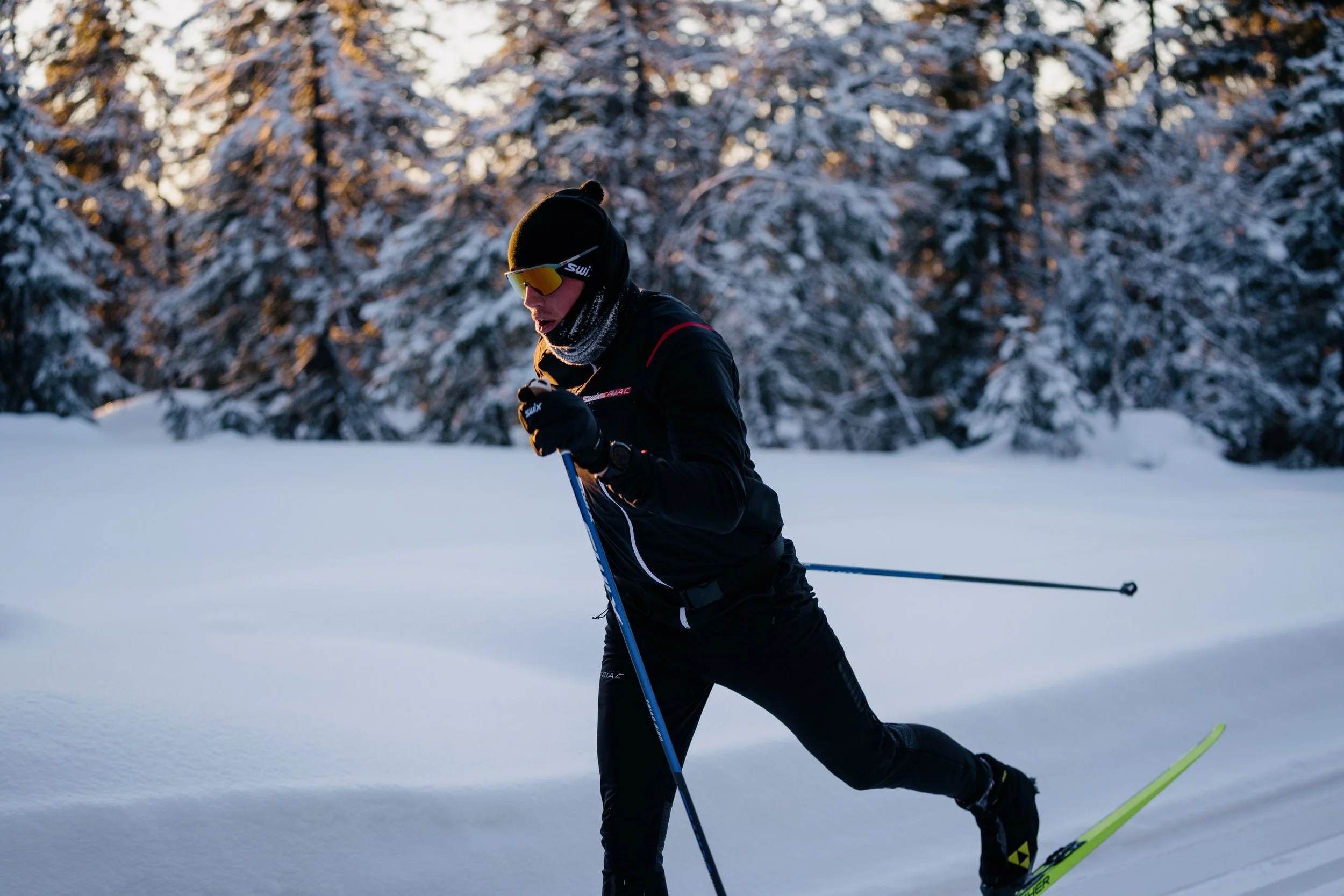
through the nordic lens
Words by Henrik Rostrup
Photos by Patrick Dougherty
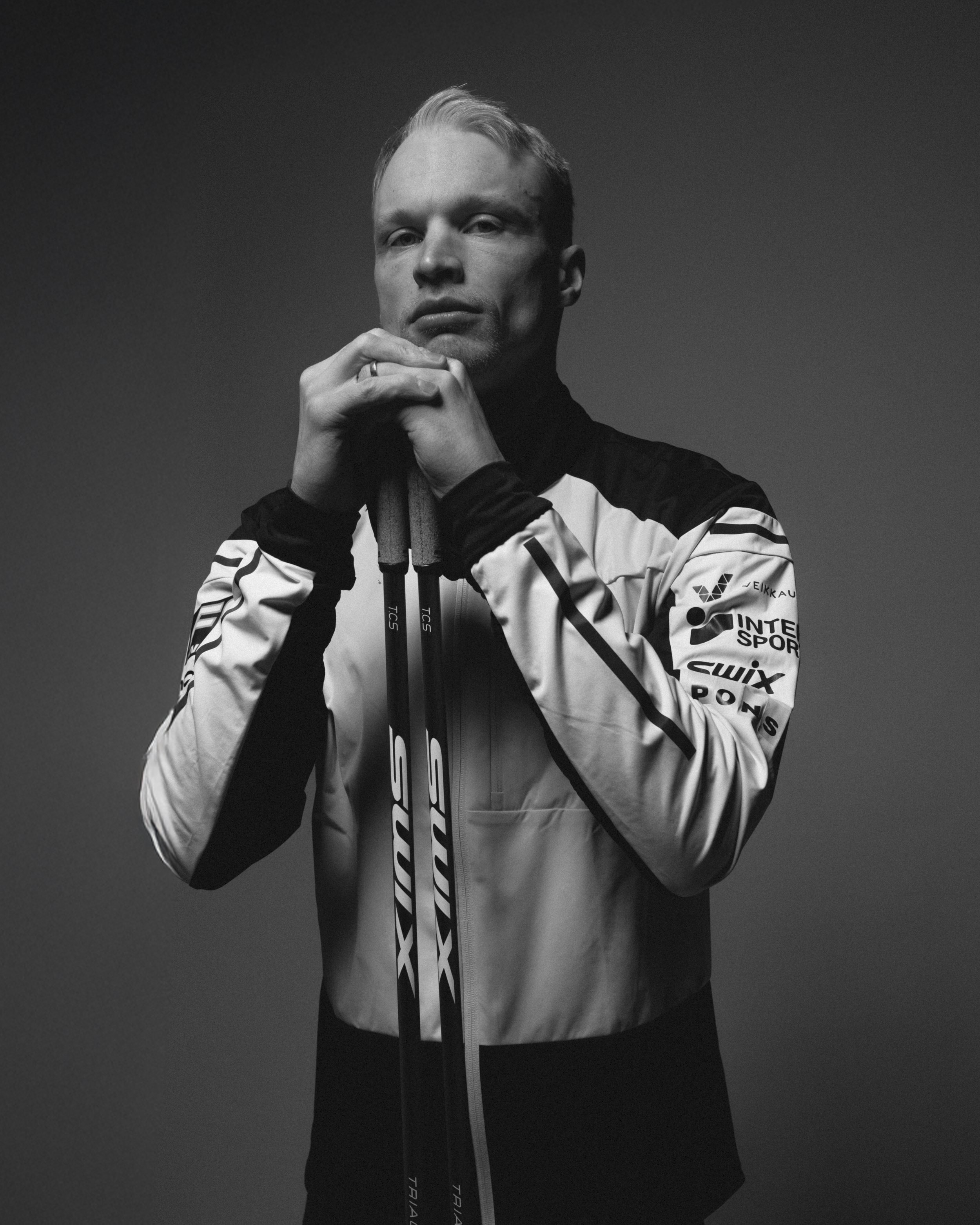
American photographer Patrick Dougherty didn’t grow up dreaming of waxing cabins in Lillehammer or World Cup sprints in the dim Norwegian forests. He came from the U.S., stood on cross-country skis once in Colorado, and somehow found himself inside the Nordic ski circus—a small, intensely dedicated world with surprisingly little visual culture of its own.
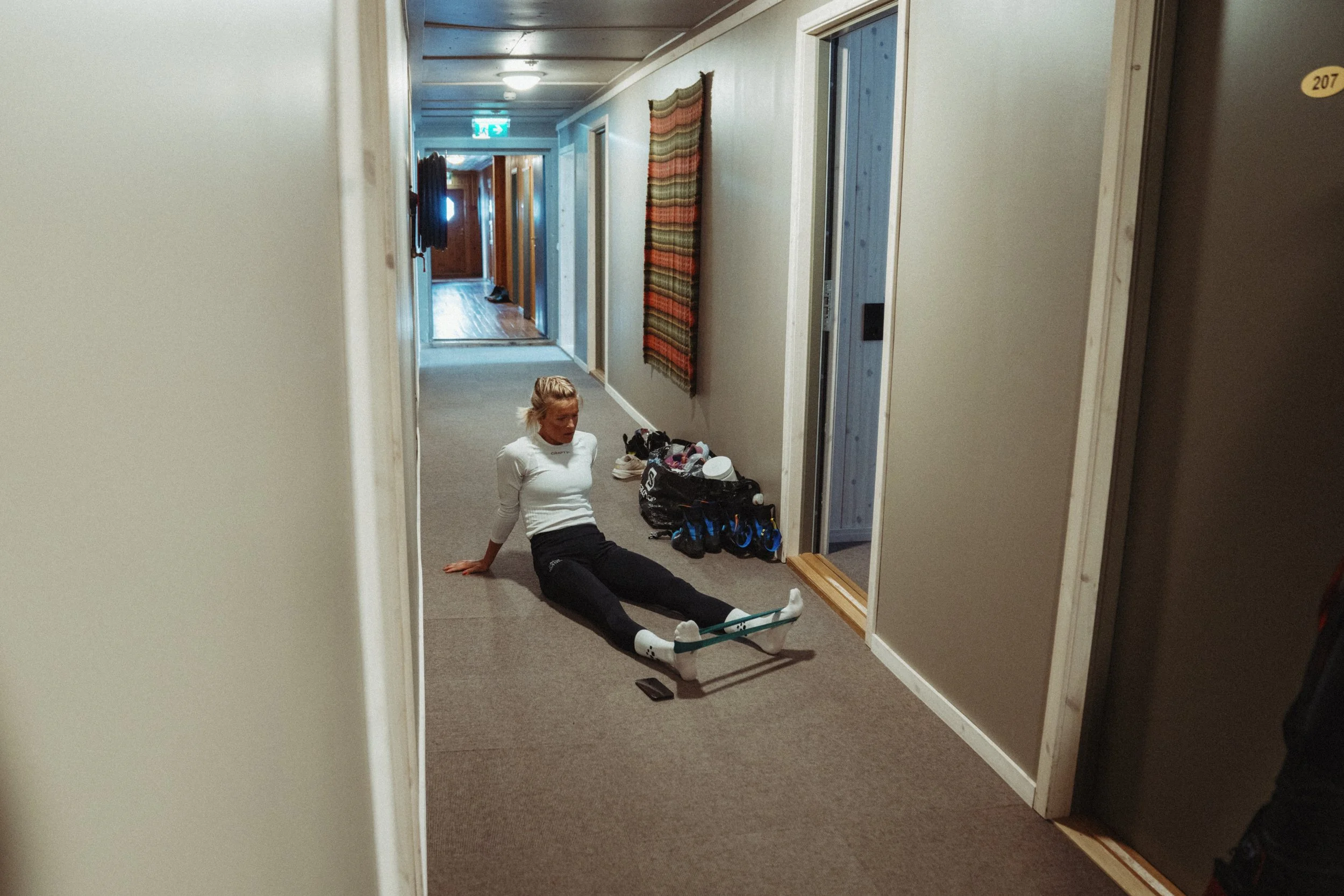
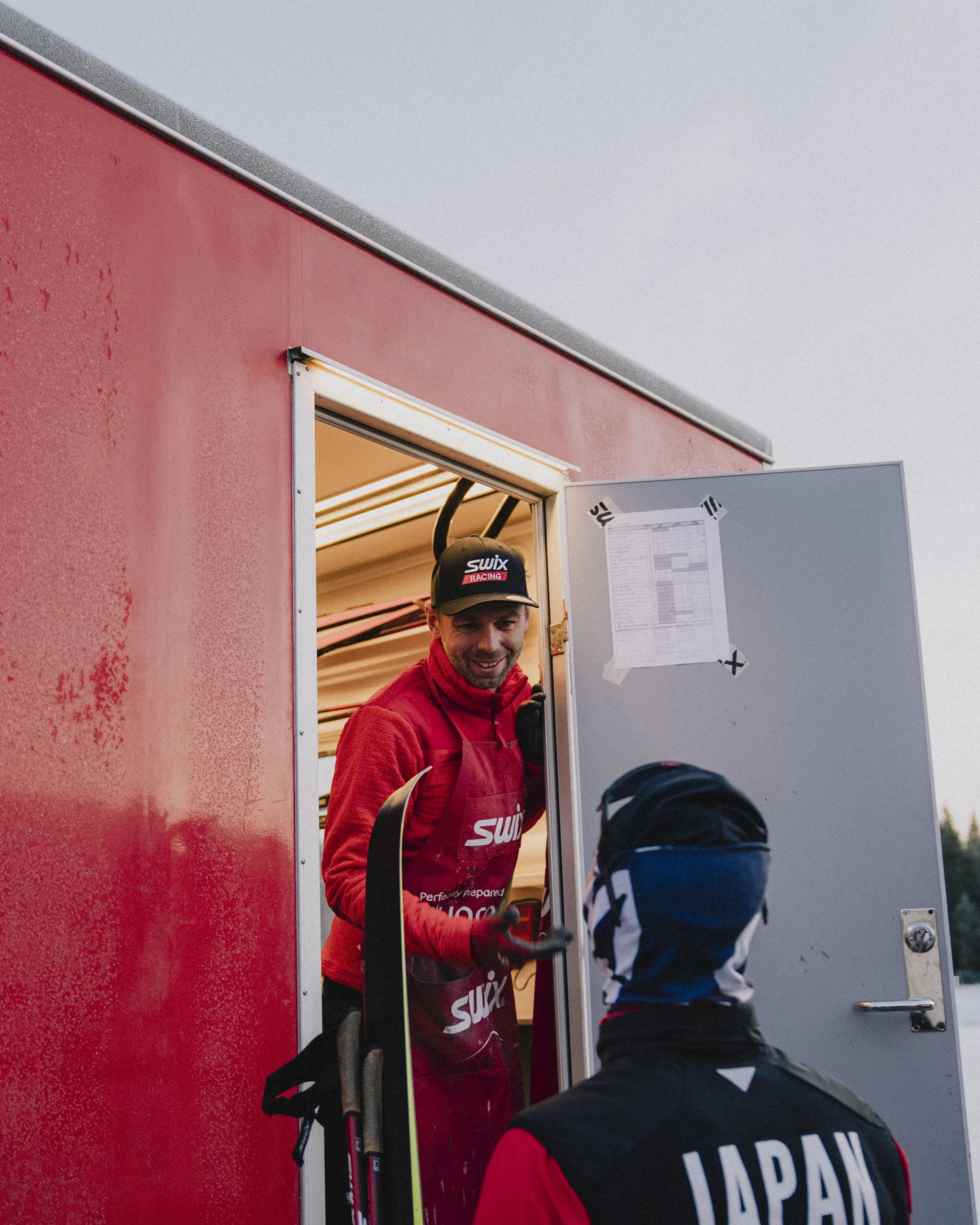
“I sort of stumbled into a niche that not a lot of people are shooting,” he says. “There are the sports journalism guys, of course, but even the brands don’t really send much of a team out there. I noticed right away that there was almost no real behind-the-scenes work, so approaching it from a documentary perspective felt really natural. And the people around it—the racing service crews—always fascinated me. They’re like the roadies of the sport. This tight-knit band of support staff that just loves what they do and goes completely deep into it.”
I
Coming from the States to Norway, the whole thing felt strangely exotic.
“People are super into it. There’s this small corner of the world that lives for this sport, and it’s cool to watch.”
Most people’s relationship to Nordic skiing has been shaped through newspapers, brief TV segments and now social media. There are no real Nordic ski magazines. There’s no big, public-facing visual culture.
“There’s not much to the culture outside of what you see in the newspapers,” Dougherty says. “Nowadays there’s social media, but there’s no public, popular culture for it.
Dougherty’s way into the sport wasn’t through racing or childhood fandom. It was through curiosity—and being very much on the outside.
“I had stood on cross-country skis one time,” he says. “Never did I imagine that there were people out here custom mixing wax. I had never seen skate skiing until I walked out there and saw this dude majestically gliding by, and I was like: oh shit, this is something I’ve never seen before. I felt like a fly on the wall,” he says. “It was fun to be an outsider because we’d meet all these ski athletes and my colleague would say, ‘This guy has no idea who you are. He doesn’t really care. Let him take your picture.’ There’d be this dynamic of this random outsider coming in. I think people appreciate that sometimes—someone coming in and being fascinated with what they do.”
Dougherty never really identified as a sports photographer first. His roots are in documentary work.
“I was always inspired by the documentary photographers from back in the day,” he says. “Mainly not the sports people—Robert Frank, Bruce Davidson, Diane Arbus. There’s a genre of photography that blends art and documentary, like Christopher Anderson’s for example. Those are the kinds of images I have always studied.”
That sensibility is what he’s tried to bring into Nordic skiing: not just action, but context and history.
“I think what I’m bringing to it is a documentary and historical sensibility that maybe someone who’s focused on the pure action doesn’t bring,” he says. “There’s a realization of a sense of history to the sport that I’m always thinking about. I’d hope that if I said that to someone—‘I try to tell the story from a perspective that this is meaningful and historical’—they’d be like, yeah, he does do that.”
II
Over time, his approach has shifted from pure documentary to something more hybrid.
“When I started, I was all about shooting documentary images,” he says. “Then you get around sports and see the potential in working in sports photography, and my sensibility shifted to: okay, what is a really good documentary slash commercial image? I don’t feel ashamed saying that. I want to have a documentary approach, but I also want the athlete in the picture, or the culture around the sport, the brands, to see potential in those images too. How do you make an image more popular, get a broader audience, by giving it a little more of a useful commercial edge—without losing the soul of it?”
Commercial photography, he notes, has changed around him.
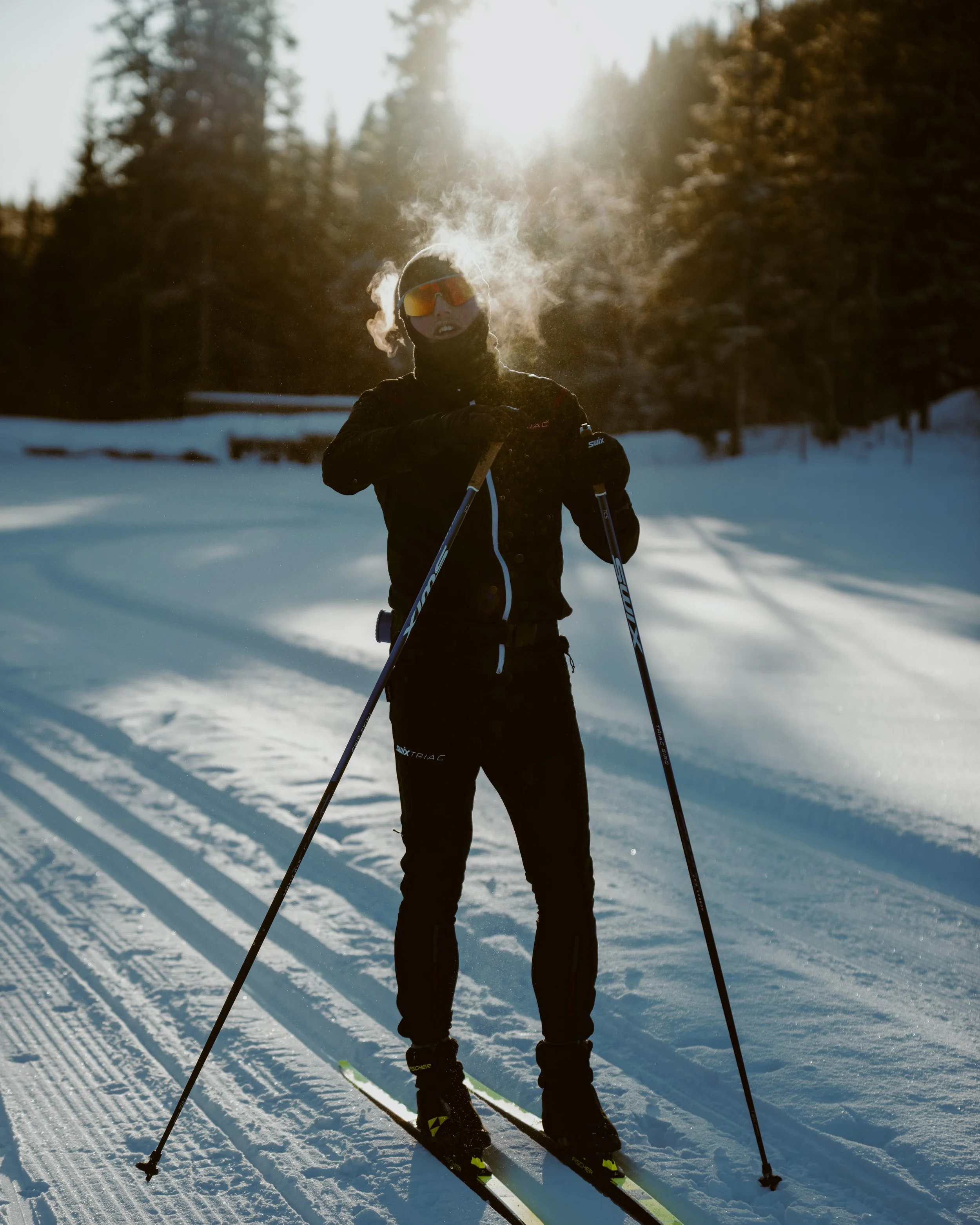
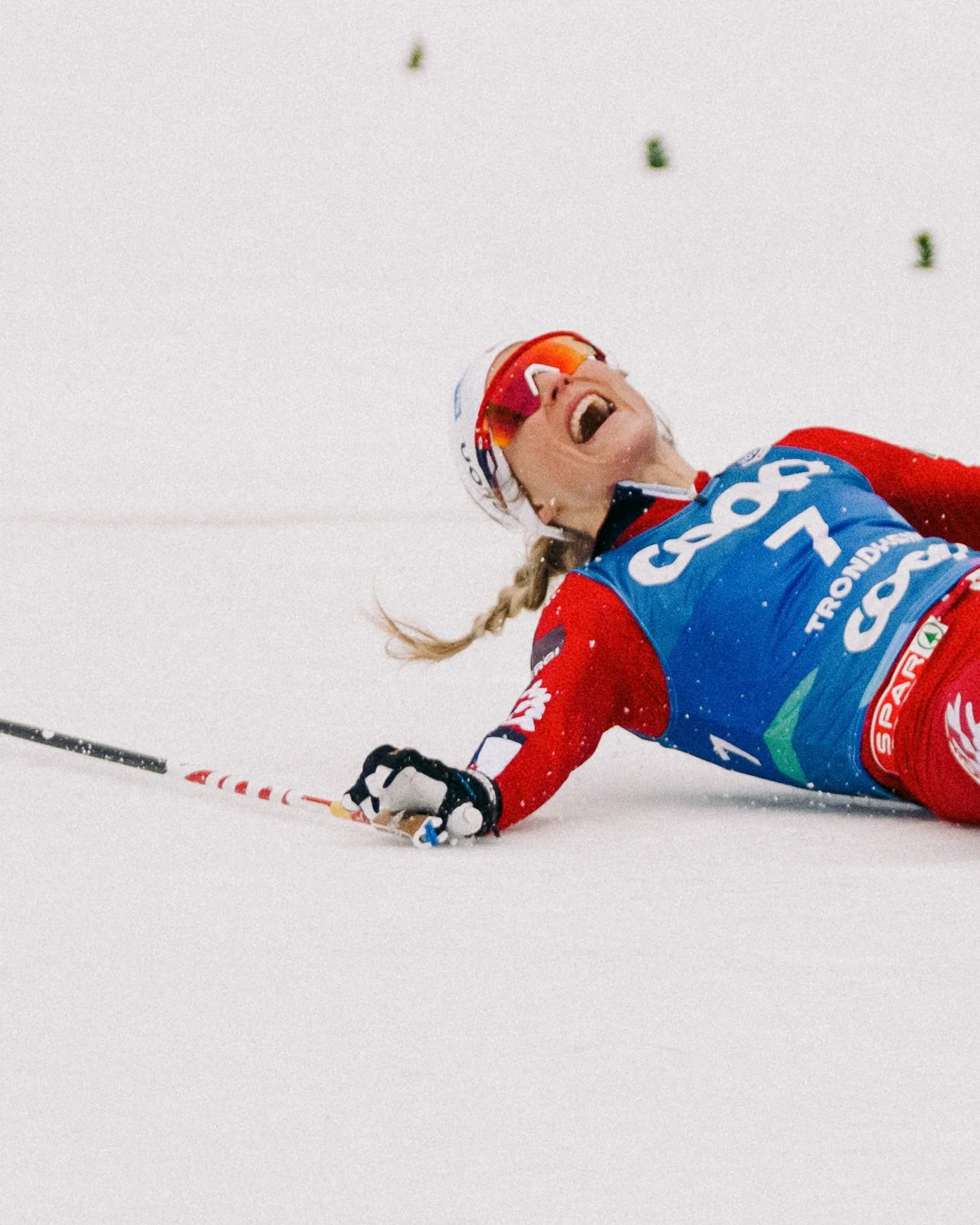
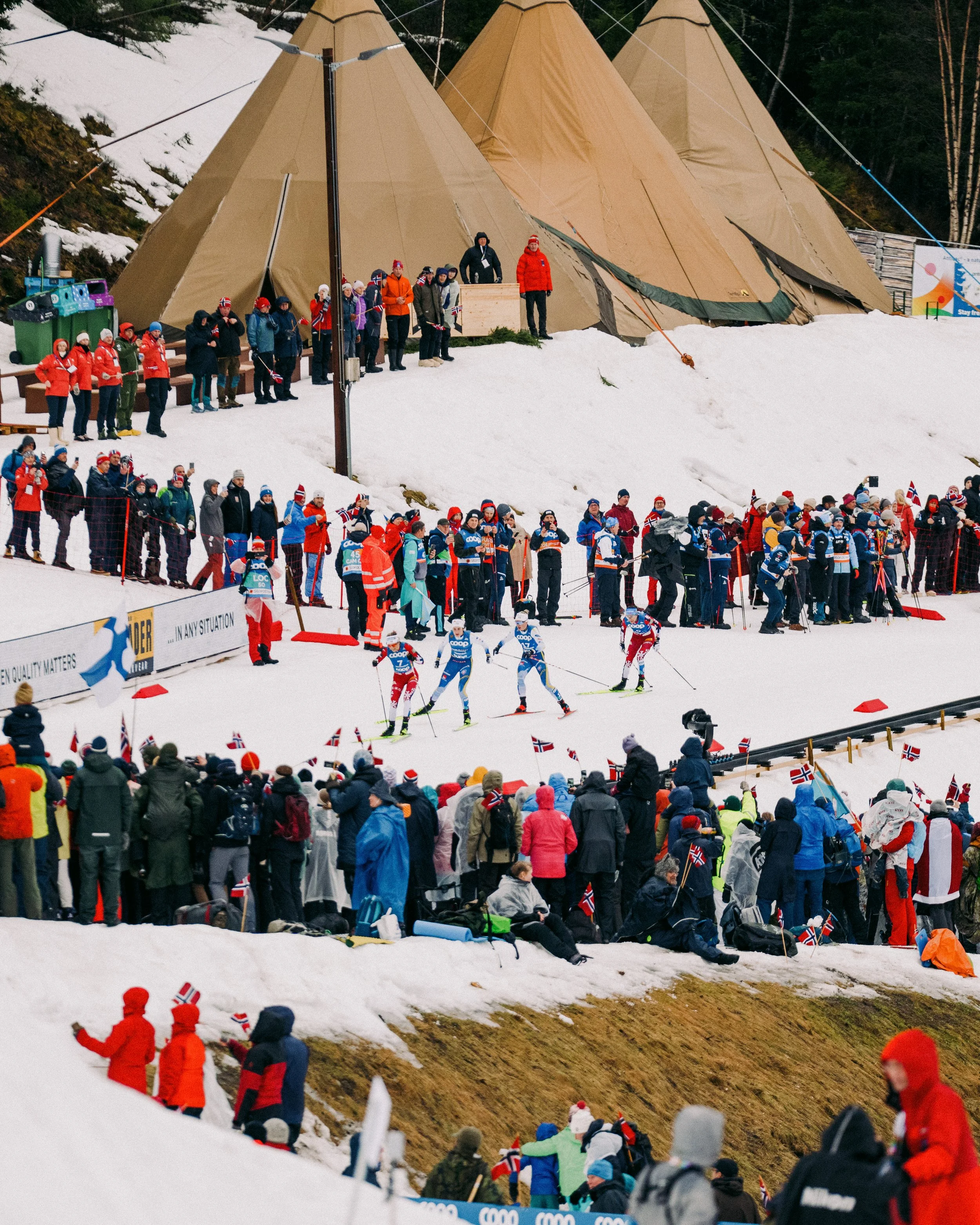
“Brands are not only looking for high-end photography like they used to,” he says. “It is much more accepted and often preferred to have something that feels quickly shot, without too much polish. Social media has pushed photography from something more structured to a blurrier, off the hip look. And I actually like that. You can add it to your toolkit, bring your own sensibilities from how photography used to be, and mix it with where you see it going. That is why my favorite thing is being at an event like Trondheim. It is a big event with lots of energy, all the top names are there. You are constantly trying to be in the right place at the right time, knowing where the athletes are, having some access where the main photographers work, while also slipping behind the scenes to catch athletes leaving the wax cabins and doing the more documentary work. You are building the story in real time as you move through the event and shoot.”
Part of that is working with limitations: one lens, one position, one moment.
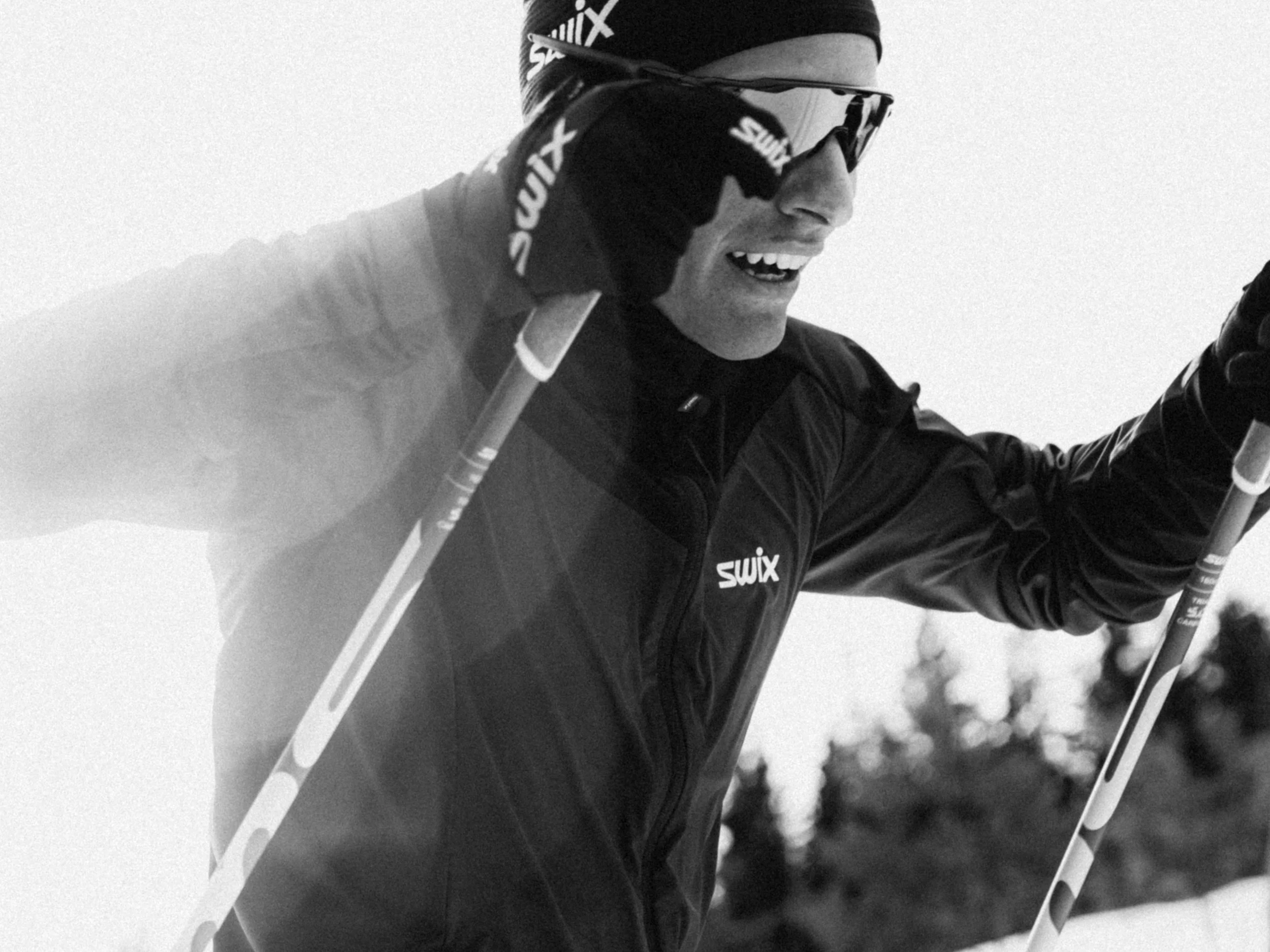
“One of my favorite things we ever did was a result of not having a long enough zoom lens, and I cropped in really tight on a bunch of different athletes and they were grainy and personal in a way where there was a red thread through them,” he says. “These really cool action portraits. It’s all about working within your limitations. You don’t want to be fiddling with your gear while the race is happening, so you’re like: all right, here we are. What are we going to make from this?”
Still, it’s often the smaller events that stick with him.
“It’s also fun to be at these smaller events in Lillehammer, these dark winter mornings,” he says. “To think about your sense of place. Isn’t it strange that we’re all here in the dark getting ready to have a ski competition? You shoot the surrounding area and the setting. If I had to pick a favorite, I think it would be those smaller insider moments—local World Cup events that are still important for the athletes’ season, there’s this really unique sense of place.”
III
The intimacy doesn’t just extend to locations; it shows up in how close you can actually get to people.
“At Trondheim, it was kind of high stakes,” he says. “Everybody was on their best behavior and there was a lot of security. But at these smaller World Cup events in Lillehammer, you can walk up to anybody and chat with them, take their picture. You can go up to all the Americans, tell them you’re also American and be like, ‘Can I stand with you guys for a little while?’”
He laughs.
“I always wanted to be like a golden retriever,” he says. “The dude who was always around. Get some beef jerky and just hang around the waxing bus.”
From the outside, Nordic skiing can look incredibly controlled. Athletes move along fixed tracks, in stadiums lined with scaffolding, bibs and sponsor logos lined up for maximum visibility. Some photographers find that restrictive.
“I’ve heard that,” Dougherty says. “People say, ‘They’re always on the same track; it’s boring.’ I get it. When we shot those action portraits at Trondheim, I was flipping through the pictures and realized all of them were moving left to right in the same pose. I was lucky enough to see it quickly and rethink it and find a spot where they’re going the other way. Then rush to a spot where they’re coming directly into frame. It just poses a new challenge.”
Classic technique is tougher.
“To shoot classic nordic skiing, I agree it’s boring to watch everybody swish their way through,” he says. “Once you start shooting skate skiing, it feels more fluid and dynamic, and it’s much more fun to shoot.”
What’s maybe more interesting to him, though, is everything that happens off the track: training, travel, the lonely in-between.
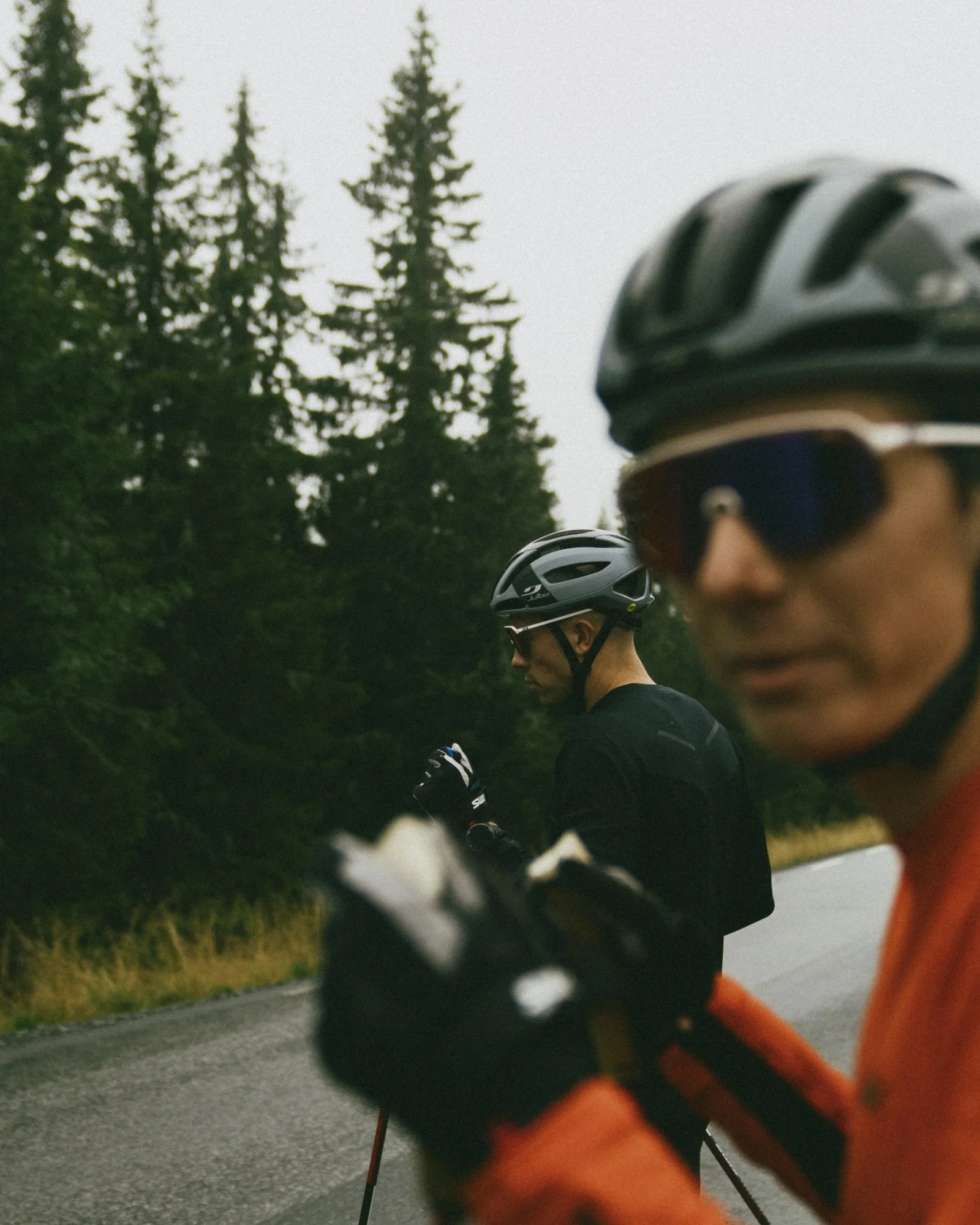
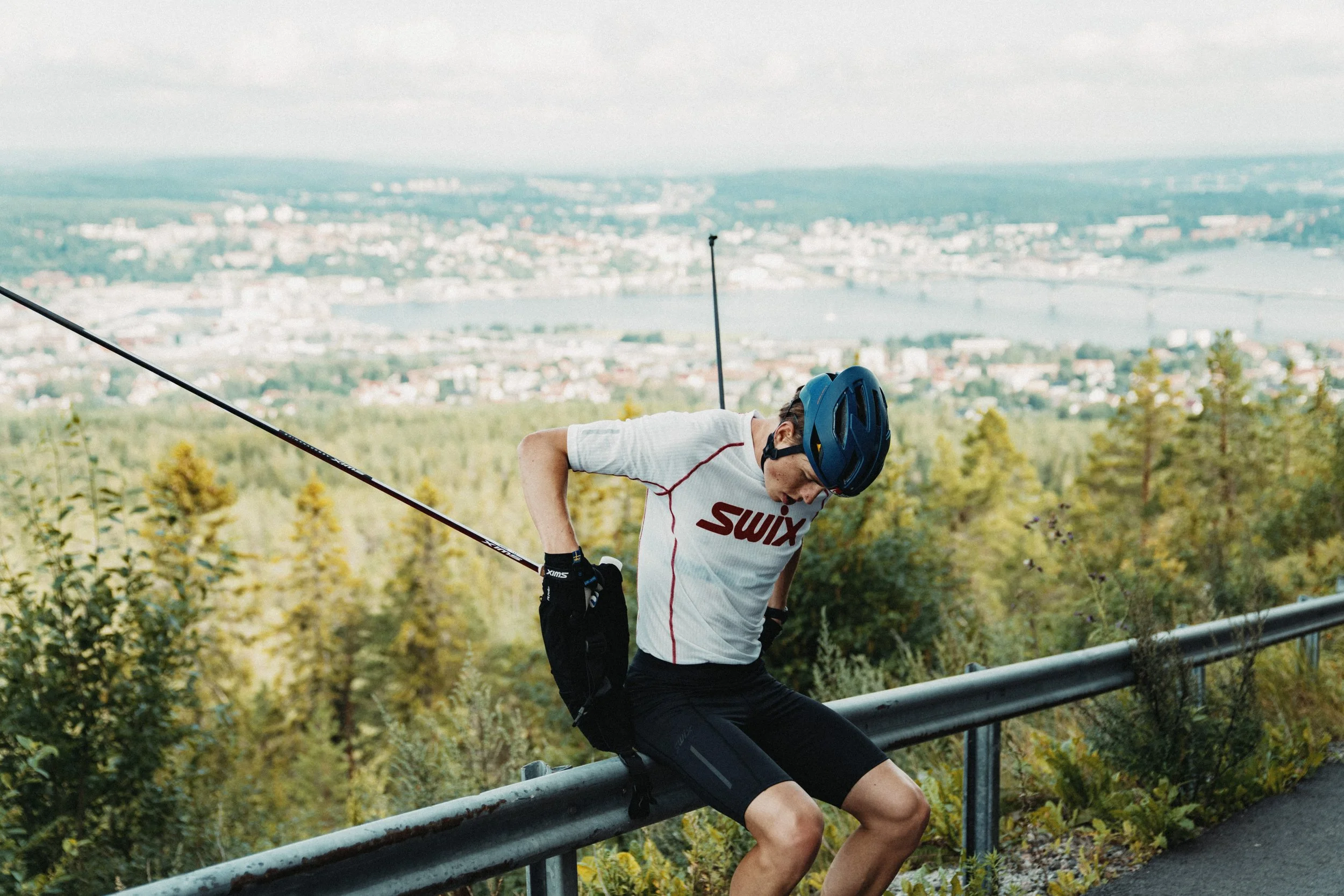
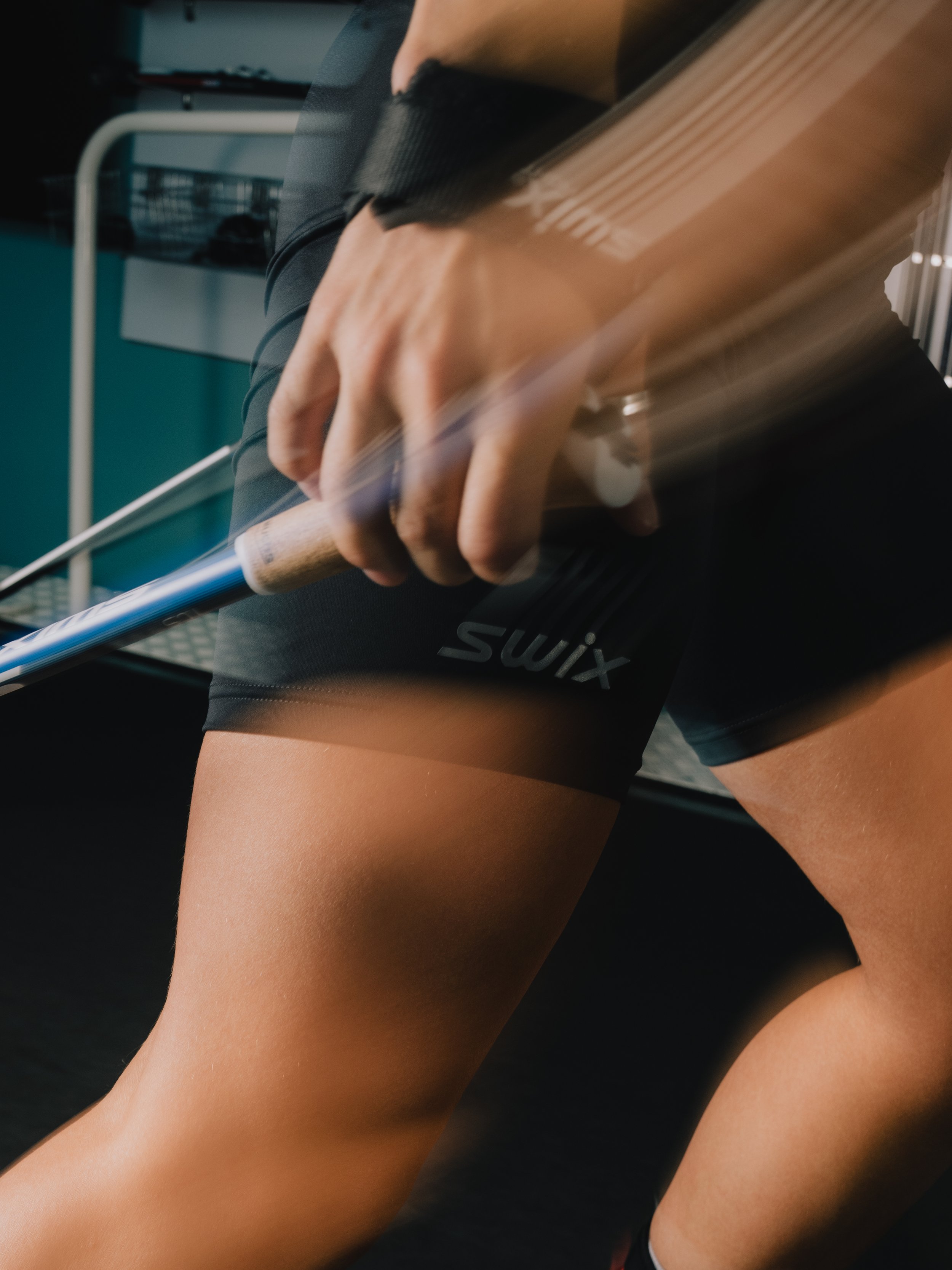
“A lot of the roller ski stuff we have shot, like with William Poromaa, that’s actually the most fun thing to shoot—a real training session,” he says. “To go out and see these people where they’re at in their training, just follow them. You get such a personal insight into the sport.”
He imagines what it would mean if someone had really committed to that earlier.
“I would love to see a well edited 35mm archive, or a book, of a Nordic hero in their prime just training over the course of their career,” he says. “That’d be it. That’s the stuff that makes legends—for the sport itself.”
Dougherty still thinks back to a New York Times piece he read calling cross-country skiing “a brutally sustained non-thrill”—a line that lodged in his head when he first moved to Norway.
“It gave me a new perspective,” he says. “And gave me a new respect for a sport that I had never given much thought. Even at the Lillehammer Olympics back in the day, I wasn’t watching cross-country. We were watching giant slalom and ski jumping and figure skating. Even in Norwegian skiing’s golden age, it was still very insular.”
That insularity, he thinks, shapes how the sport is perceived. The training is solitary, the lifestyle monk-like, the margins fine.
“With endurance athletes, you have to be low key,” he says. “You have to eat breakfast, train for four hours, eat lunch, take a nap. Your body is a temple. It’s very insular. Maybe that’s why there’s not a huge culture around it. Compare it with snowboarding—more social, more kids hanging around with cameras.”
At the same time, the media coverage can be oddly tabloid.
“There’s a very ‘tabloidistic’ vibe sometimes,” he says, enjoying the made-up word. “Big caps, sensational headlines. And yet the actual environment is small, quiet, and understated. They train their ass off. The rivalry between Norway and Sweden is very real, but most of these athletes are soft-spoken, serious people.”
IV
What’s often missing, he feels, is playfulness.
“There are people doing that playful side of things. Sometimes you see them. If they’re just shooting it in the right way, it can look playful. But on a popular scale, your average person is not seeing playful images of cross-country skiing. It’s mostly world’s loneliest sport kinda stuff.”
For Dougherty, this isn’t just inside talk. He really believes that imagery shapes what a sport can be.
“Photography has a huge role to play in expanding the audience and appeal of Nordic skiing,” he says. “You can get pictures of the act and the results, sure. But you can also show what it means to do that sport—what it looks like when you train for it, what your surroundings look like, the whole picture of it.”
“With so many high-profile things happening in the world, you need to show people a lot of pictures of something before they sit up and take notice. The more you can show it, and the more non-traditional outlets you can use to get it out there, the better. Focus on big stories. Focus on the personal side. Publish pictures in places where the cross-country audience isn’t the only one consuming them.”
Underneath all of this is a long-term idea: Nordic skiing as a deep documentary project whose value may only really be seen decades from now.
“I had a photography professor who used to say: eventually any of your documentary projects will become interesting to look at, but you might have to wait 50 years,” Dougherty says. “There’s just something that happens as these pictures age that works.”
That’s part of why he still thinks about continuing to go to races even without a brand assignment.
“On my more ambitious days I think, I’m gonna continue to go to these races, figure out when these guys are local, go shoot,” he says. “There’s too much potential here to only do it for a brand that’s paying you. The ski world is actually quite a good documentary project.”
And like any good documentary, it comes back to people—their aura, their humor, their way of moving through the world.
“It’s definitely an aura,” he says. “I connect with people who have some humor around the whole circus. Some athletes have an introverted vibe; they’re not giving a lot of themselves. Others you meet for the first time and they’re tall, confident, looking right at you, ready to chat about the sport. People who are taking the opportunity when they see that I’m interested in them, who can understand that they have a story to tell—those are the people I’m really drawn to. And sometimes it’s just pure talent. You watch them glide on these skis and you’re like: oh my God, that’s amazing. You start to notice little differences. Then you’re just drawn to this person because the way they ski is incredible.”
Maybe that’s where the next era of Nordic imagery begins—not with a grand strategy, but with someone who’s willing to stand in the cold, genuinely paying attention.
SHARE
OTHER STORIES
-
born to endure
CULTURE
-
from the track to freedom
INTERVIEW
-
The first step
CULTURE
-
A Nordmarka Classic
CULTURE
-
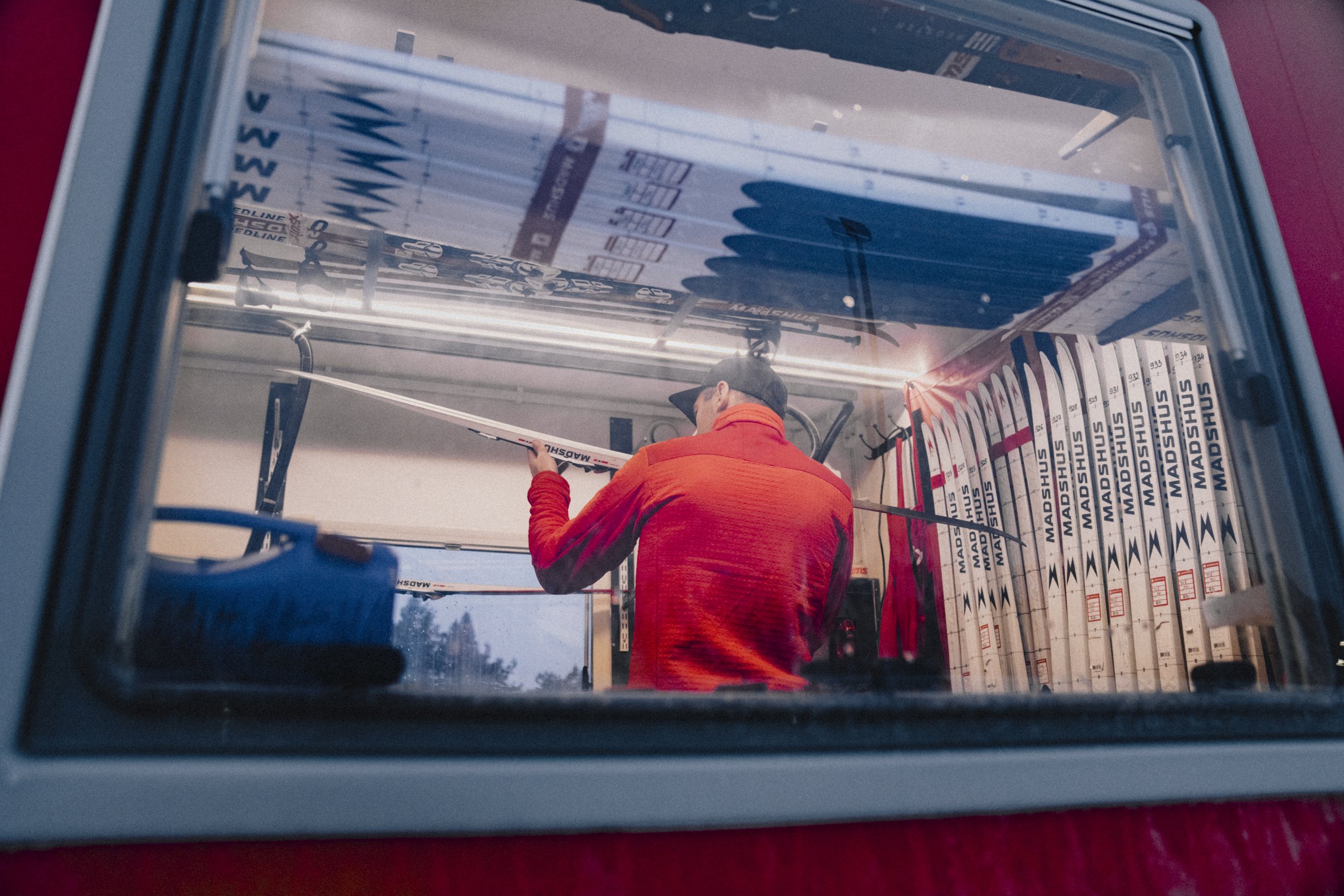
The Art of Fast Skis
INTERVIEW
-

Nattvasan
CULTURE