
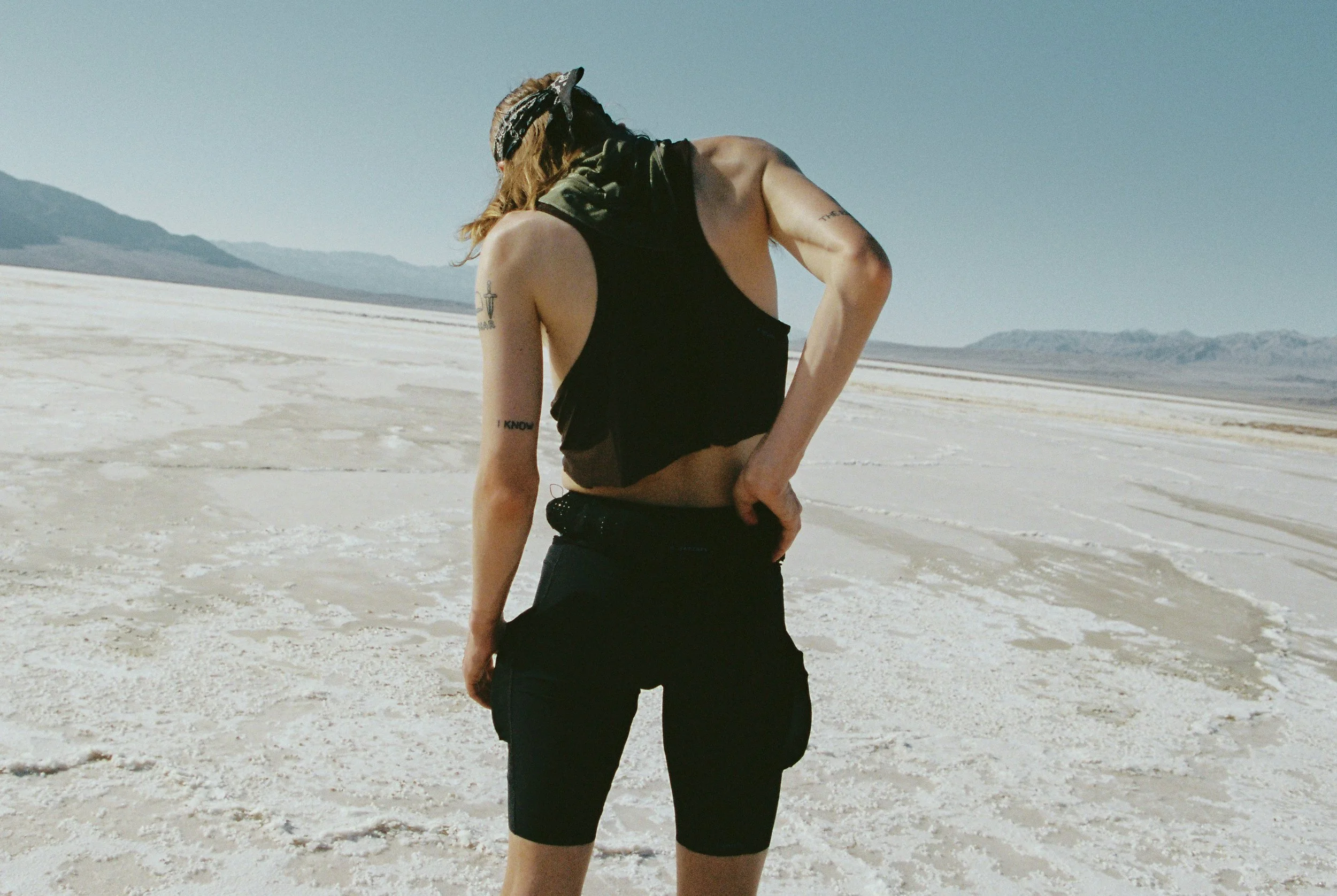
THE SAME INSTINCT
Interview by Henrik Rostrup
Photos by Pierre David
Some bands don’t just soundtrack a period. They quietly shape how you learn to look.
You hear them young, through a side door, before you have language for taste or identity. They don’t feel like something you like. They feel like something you’ve found. And because the discovery feels private, you carry it quietly for years, assuming no one else ever stood in the same room.
That’s what happened with The Thermals.
When Stian Dahl posted a Thermals track recently, it landed like a flare. Not because it was nostalgic, but because it revealed a shared reference point that had lived, unspoken, for decades. Two only children. Two Norwegians. Years apart. The same internal map.
Stian is an ultra-runner and a Satisfy athlete, but running isn’t where this conversation begins. It begins with music. With digging. With the quiet ways culture shapes you before you ever choose a direction.
This is a conversation about that. Running comes later.
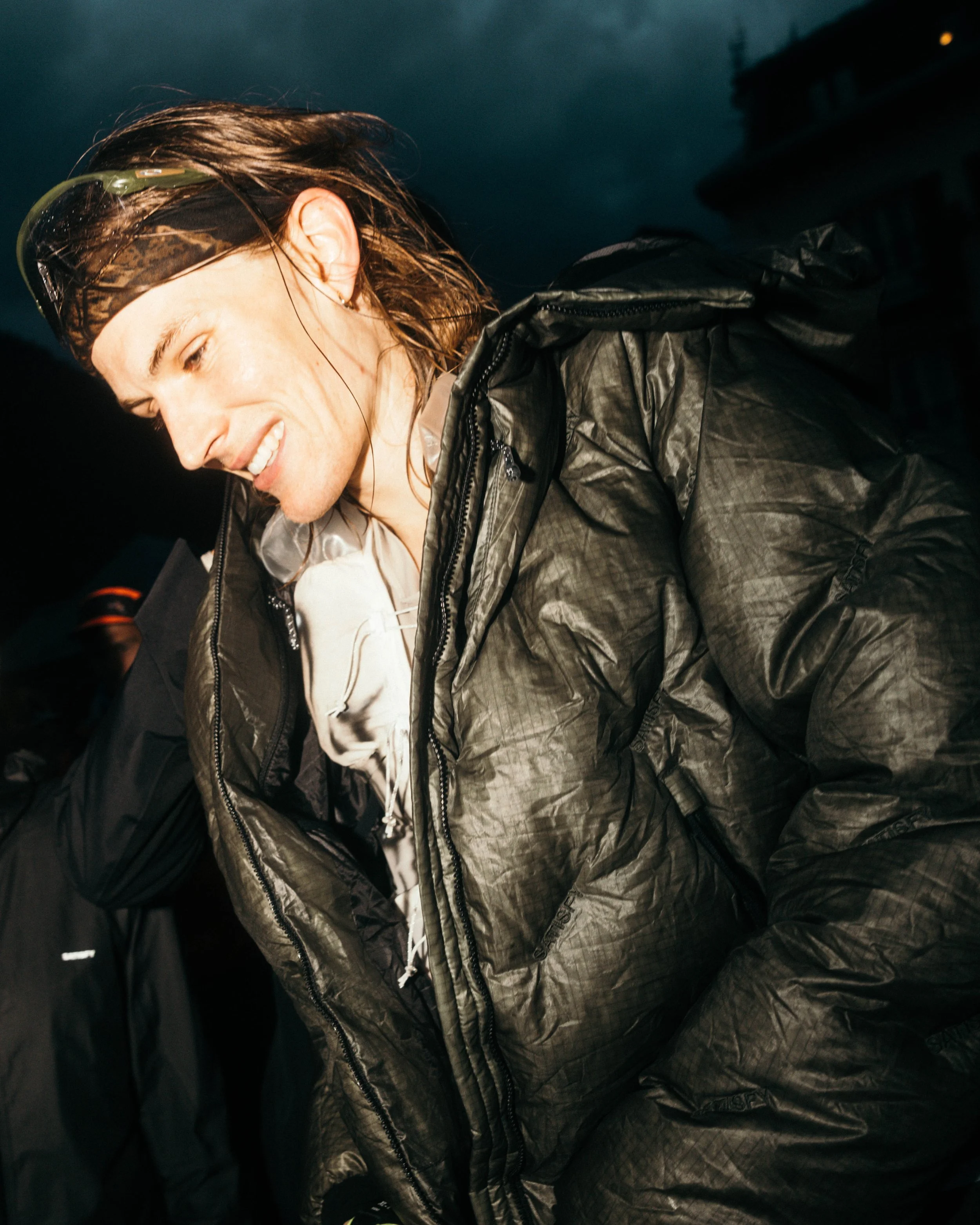
Let’s start where this actually started. Not with running. With the track you posted. Because I had this very specific feeling when I saw it. Like, wait. I’ve never met anyone who listens to that band in a real way. And then you just drop it.
Yeah. The Thermals. I had the exact same feeling. Like it’s impossible that someone else has that reference point in the same way.
And I hadn’t listened to them in a long time either, which is maybe why it hit harder. Because some music sits in you, even when you’re not actively playing it. It’s not about the band being part of your daily rotation. It’s more that it formed something.
I
It’s a timestamp.
Exactly. I don’t remember the first time I heard the big, obvious bands, the ones everyone listens to. I grew up with a lot of music at home. I loved almost everything my parents played. Bruce Springsteen. Madonna. Michael Jackson. Eagles. REM. The Beatles. Nothing snobbish, just a lot of great music. But at one point, I think for most of us, something shifts. You start developing your own taste. You start collecting things that feel like yours.
I didn’t have any siblings, so most of my role models were outside my family. A neighbor kid. Slightly older people. Boys and girls who became these metaphorical siblings. And that’s often how you get introduced to cooler music, something a bit edgier, even if it’s still pop. I remember who it was that introduced me to My Chemical Romance for example, but they were still massive. Still part of the main road.
With The Thermals it was different. It felt like a side door.
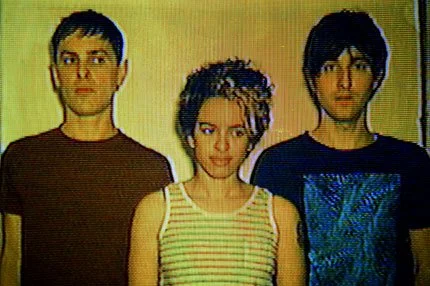
I was ten, around 2007. I wasn’t old enough to go to Bukta Festival in Tromsø, but I saw their name on the lineup. And I think I just had that feeling. The cool people are going to this thing. I can’t go, but I want to hear what they’re hearing. So I went looking, and I clearly remember the first time I heard their song “A Pillar of Salt.”
There’s that intro. You know it. The guitar chords coming in, the way it builds, the drums arriving, and then that new riff that opens everything up. I remember thinking it was the coolest thing I’d ever heard. I’d never heard anything like it.
That band also felt like something nobody else in the world knew about. I haven’t listened to them much in recent years, but the memory is still incredibly clear. It’s strange.
That first few seconds is the whole thing. The feeling of something starting.
Yeah. And then there’s the psychological part. When you’re young and you think no one else knows about this. It strengthens the bond. Because now it’s not just music, it’s identity. It’s like you’ve found a hidden room and you get to keep it.
Even though they were obviously big enough to tour from the US to Norway. When you’re ten, that doesn’t matter. It still feels like it’s only yours.
And there’s also the content of that record. Even when you’re ten, you feel the energy. The concept. The friction. A concept album about Christian conservative America, the symbolism. Even a kid can feel how charged it is. It opens a door.
I didn’t grow up in a religious home, but I didn’t grow up anti-religious either. Still, it hits like this. There are established truths, and there’s also dissent. There’s the idea that you can push against what’s given. It reshapes your brain a little.
I’m pretty sure I can claim it was my first favourite band.
You went to see them too. And you got a tattoo.
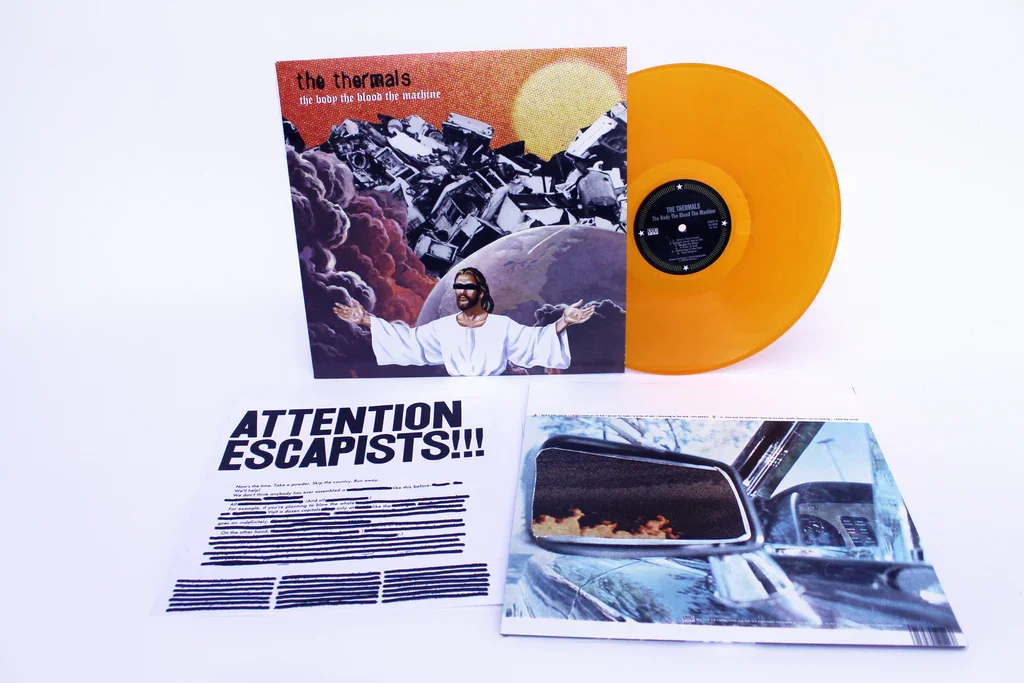
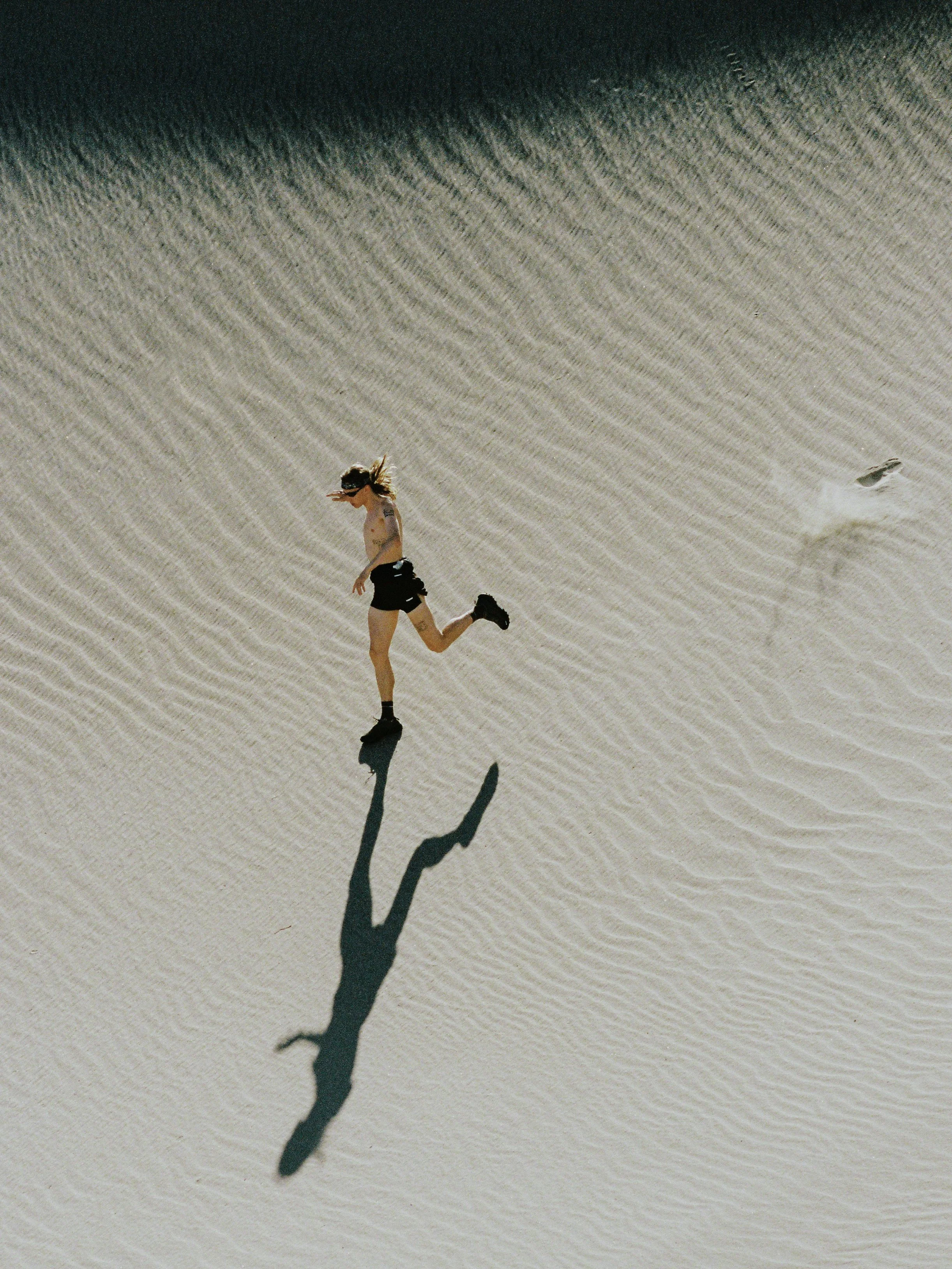
Yeah. When I was old enough, I went to London and saw them before they broke up. One of my first tattoos is The Thermals. It says The Body, The Blood, The Machine down my ribs.
It’s not really about being a superfan. It’s more like a marker for that part of me. The kid who digs. Who’s curious. Who forms intense bonds with cultural things that feel like they speak directly to me.
And then the power is when you realise someone else feels it the same way. That’s when it turns into a triangle. My relationship to the music becomes stronger, and my relationship to the other person becomes stronger, because I understand what they felt. Almost exactly.
It’s also weird that The Thermals never became bigger than they did.
Yeah. They toured, they came to Tromsø, they received great reviews. And then the moment passed. That’s also part of an artist’s life.
You can make something objectively great and still never become a huge phenomenon. What I take from that is simple: you keep making what you think is cool. If you stay true to what you want to create, there will always be people who connect with it. People can tell what’s authentic.
And you don’t end up on a label like Sub Pop without something real behind it. That kind of realness matters.
Which, honestly, makes me think I really want to start a label. There’s something incredibly cool about that idea.
II
You mentioned something I really agree with — that the internet has created endless niches. Do you think that’s changed how people relate to culture?
A lot. It’s so individualized now. Everyone has their own feed. Their own algorithm. Their own culture pipeline.
The very top surface of pop culture still hits broadly, but as soon as you go slightly under that, everything fractures into sections. That can be cool. There’s so much variety. But it can also make people feel alone, because you can live inside your niche without ever colliding with anyone else’s.
And there’s nostalgia in that. People miss being part of a movement. Being part of a shared universe.
Even the idea of a band is disappearing. Everyone can be a solo artist now. Everyone can make music on a laptop. Which is amazing. But I still feel hungry for the feeling of being part of something bigger. A crew. A band. A universe.
That’s where I find running culture interesting, because it often feels like the opposite — very measured, technical, sometimes a bit soulless.
Yeah. Running isn’t very rock’n’roll as an act. There’s not much risk. If you kickflip down stairs you might break your ankle. If you run 20 kilometres in the forest, chances are nothing dramatic happens. So it makes sense that the culture becomes performance driven, technical, optimized.
And it’s not a negative thing. It’s just how it naturally becomes.
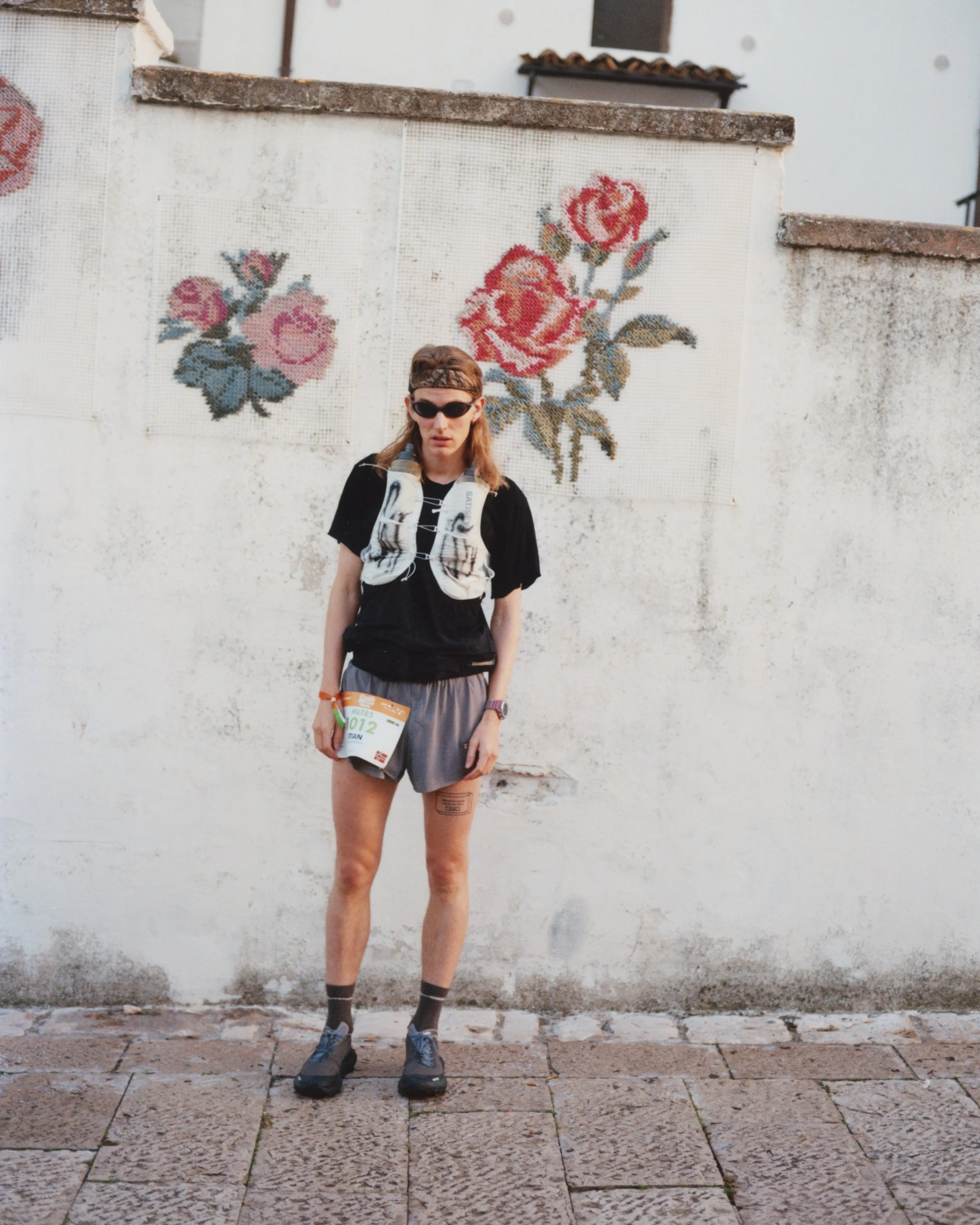
But for me, I’ve always been more inspired by what’s outside running. Music, art, how things work. And my instinct has been to weave more of myself into running over time, rather than letting running become all that I am.
That’s why Satisfy caught my eye early. Even before I became part of it. There were references. Culture. Taste.
Like the Sonic Youth merch. The Joe Strummer imagery. Brice’s taste. His old jeans brand had music in it too. That mattered to me. It felt like a path.
III
But you also said you didn’t want to make running “punk” in a forced way.“
Yeah. When I first got involved with running, I had these thoughts like: how do we make running more punk, more emo, more skate, make it look like something else. But I never found a natural way to do that, and I’m glad I didn’t force it.
Because if you genuinely have a deep interest in music, but you’re forced to run around in a blue singlet and neon yellow shorts, it can be hard to find an expression that actually makes sense. Not because there’s anything wrong with that, but because you start wondering what you’re really trying to say. No one is actually out there running in a blue singlet and neon yellow shorts listening to punk and thinking too hard about it. Or maybe they are, but then what is the expression you’re building on?
Now I see a lot of people doing cool things while running. And I think the truth is, it’s not about trying to stand out. It’s about doing what you genuinely like, and letting the culture grow from that.
I loved the line about yellow shorts, carbon shoes, and punk in your ears. That duality is kind of perfect.
Totally. Like neon shorts and super shoes, and listening to Ramones. It’s a cool duality.
But personally, I’m also interested in making everything feel like one thing. I already have enough duality in my life, work, responsibilities, roles. I don’t need my identity to be split into costumes too.
How do you balance performance with that? Because the endurance world can become very “look at my suffering.”
I’m consciously steering away from a lot of that. Not because I judge it, but because it doesn’t inspire me.
Seeing blood on fingers from lactate testing or treadmill screenshots doesn’t move me. It doesn’t make me feel anything. So I don’t want to present myself that way. It wouldn’t feel authentic.
At the same time, I love the feeling of improvement. I’ve always competed. I like progress. Running is concrete. You can see it, feel it. That’s a big reason people fall in love with it.
But what inspires me more now is the unknown. Things I don’t think I can do at all. Really long efforts. Extreme conditions. Multi day things without sleep. That draws me more right now than how fast I can go.
I’m still competitive, but I’m less results driven than I was when I was younger. I think everyone has to go through that process of understanding that your best will never be objectively the best in the world. Even if you win something huge, it’s still just a list on a day.
What I care more about now is doing things as well as possible, and doing things that scare me a bit.
IV
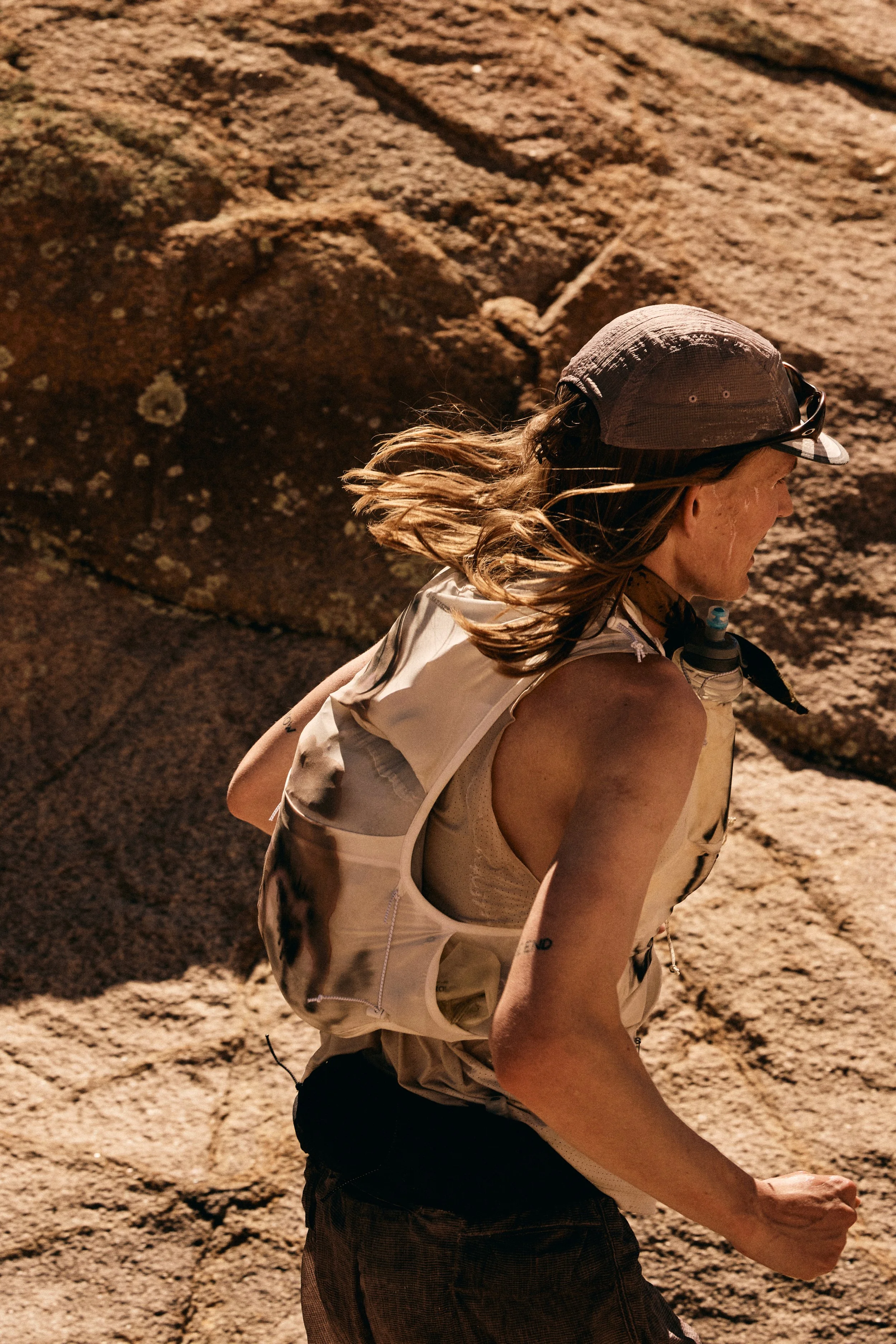
Let’s set the scene again. You’re sitting in an office in the government quarter in Oslo. Behind you, a shelf with empty cans of Red Bull, Starbucks cups, sports drinks, half eaten energy bars. You’re wearing a shirt to work. Last week you were in Chile on a photoshoot with SATISFY. Now you’re here, planning a move to Annecy to work more closely with Satisfy and train. It’s a layered life.
Yeah. But that’s exactly what I think is cool. I love it.
The job I have now, and I’ve had it for almost five years, is genuinely interesting. On Monday, my first day back after Chile, I was in a meeting at the Prime Minister’s office. That’s something I never imagined I’d do.
And I learn a lot here. Not just professionally. Being around people who are incredibly skilled, who know more than me, changes you. They’re not afraid to be wrong. Not afraid to fail. Not afraid to criticise. Knowing that gives me the motivation to go to Chile for three extremely intense days, three 18 hour days in a row, and then travel 35 hours, twice, within five days.
I think if I’d been sitting by myself in a cabin in the woods, training every single day, I would’ve gotten back into shape, sure. But I would’ve missed personal development. I would’ve missed certain landscapes. I don’t feel like I’m sacrificing anything by not having done that before.
I’ve never connected to the fact that “I sacrificed so much narrative”. I’ve always just done what felt right to do. If you wanted to be at the party, you’d be at the party. If you want to train, you train. That’s not a sacrifice. It's a choice, a preference, a priority.
I’ve never really understood that narrative you hear from athletes in interviews — “I’m 19, world champion, but I’ve sacrificed so much, I’ve never been to a party”. I honestly don’t know what that means.
In high school, I was probably a russ* — the Norwegian graduation tradition where students spend weeks partying at the end of their final year…Like, I joined in on the celebrations on the first day and that was it. The rest of the time I studied and played football full-time.
I trained, went to school, got up early, and it was what I wanted to do. It still feels the same way for me.
I have liked that I can do both. I can go away for four or five days, come back, do work, then do running. A bit of everything. But being able to prioritize running and product development for SATISFY more for a period now, that still feels like the right decision and an amazing opportunity.
When you return to the government office, after running around the deserts in Chile, do you feel a need to tell people outside the bubble what you’ve done, or is it more like a quiet double life?
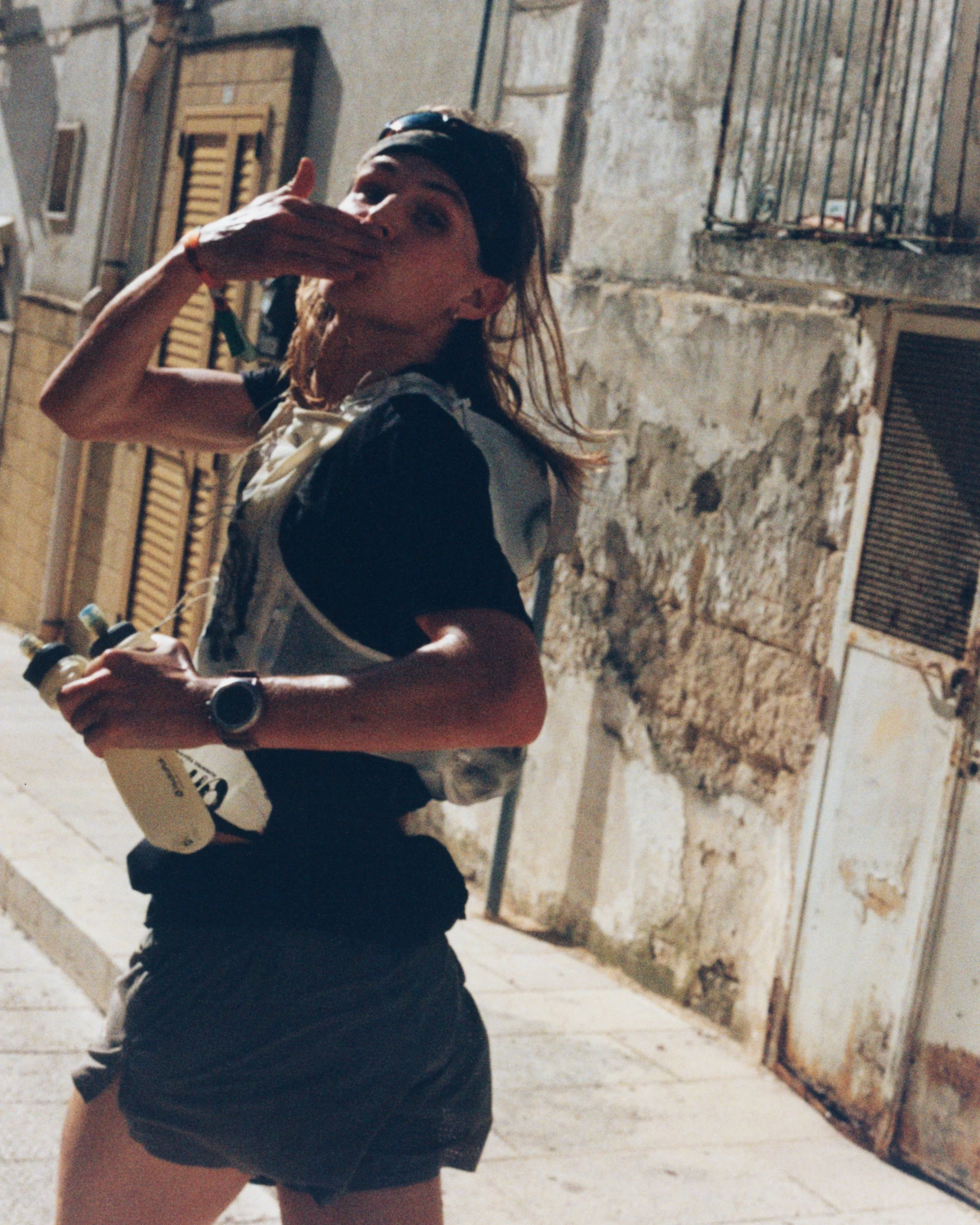
It’s hard to explain, honestly. Those experiences are so intense and specific. Sleep deprivation, logistics, early mornings, heat, weird meals on roadsides. It’s hard to convey the whole thing in a way that makes sense to someone who wasn’t there.
And it takes days to process even for me.
But I’m lucky. Some colleagues know what I do. Others don’t. But they make space for it. They accommodate it. And that’s what I need. I don’t need to talk about how cool the photos were or how beautiful it was. I need understanding and time off from work. Those two things.
I love the idea that a lot of people have hidden lives like that — someone’s mom used to play bass in a punk band, but you’d never guess.
Exactly. Those are the best stories. And it’s healthier that not everything becomes a projection all the time. It would be exhausting if everyone had to constantly perform their hobby or their passion.
V
Okay — races. What are you aiming at? And are you moving away from racing, or just expanding the definition of it?
I still love racing. I think it’s important for structure. It gives training a spine. And it’s fun.
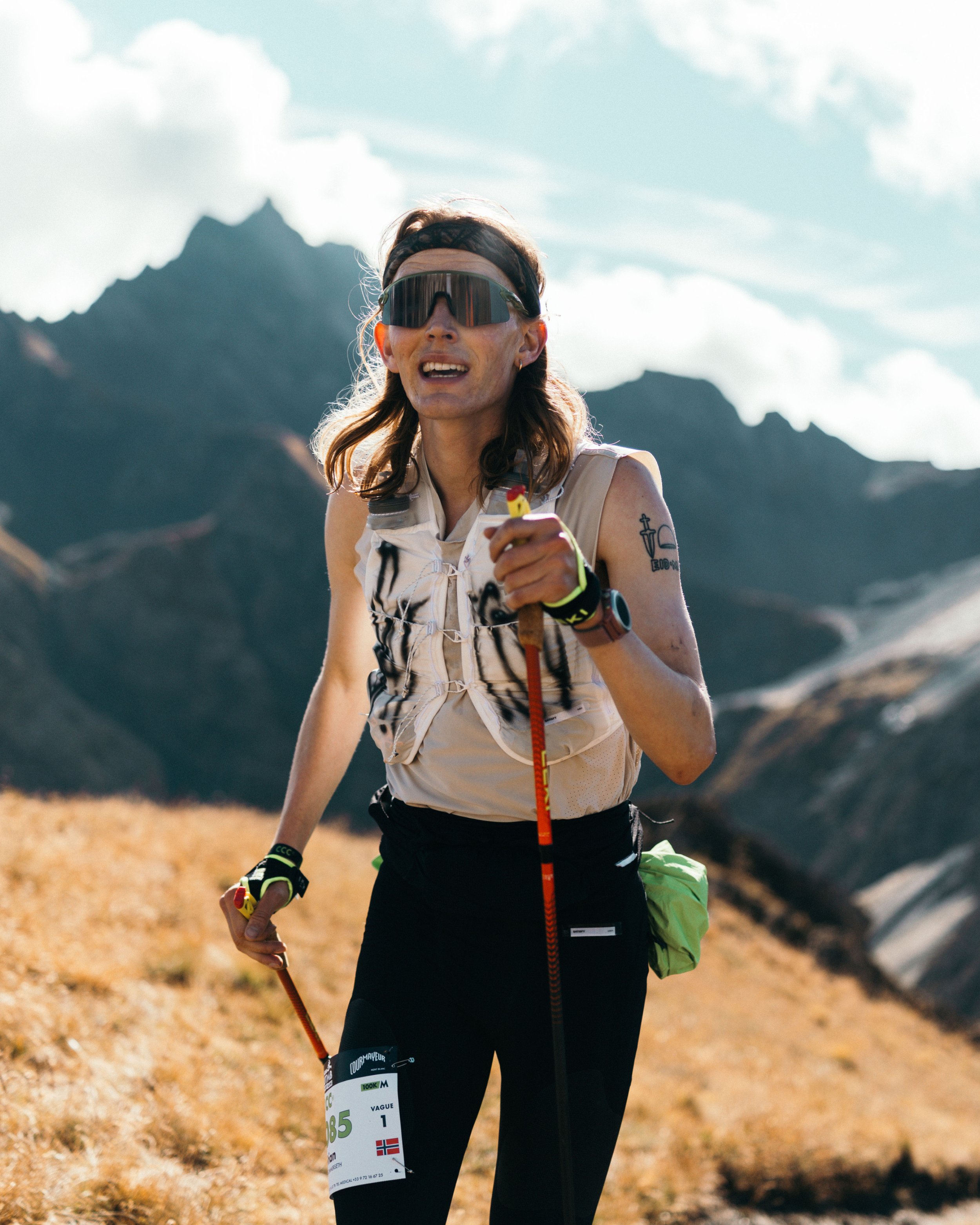
This year I have a very concrete plan toward TDS in late August. It’s the longest race I’ve done, over 150 kilometres, and more technical than many of the other UTMB week races.
Earlier in the season I’ll run the Eiger Ultra Trail, 100 kilometres. I’ve done the 35k there several times, and it’s one of the most beautiful places on earth. Running the full loop around the Eiger massif feels like the right progression.
I also signed up again for the Mont Blanc Marathon. Last year I ran really badly. Objectively I wasn’t in good shape when the gun went off. I’d been injured, trained differently, and I still started. At the moment it wasn’t fun. But I’m glad I did it. It gave me something in hindsight.
And I’ll do a skyrace in France in May. Snow, high mountains, a bit of mess. It’s a nice mix. The first race is 25k and the last is 150k. It steps up through the season.
After TDS I’ll move back to Norway and take a breath. Put a foot down. Recalibrate.
And then you mentioned the bigger “story” races — the stuff that feels more like a journey than a competition.
Yeah. There are two big projects I want in early 2027.
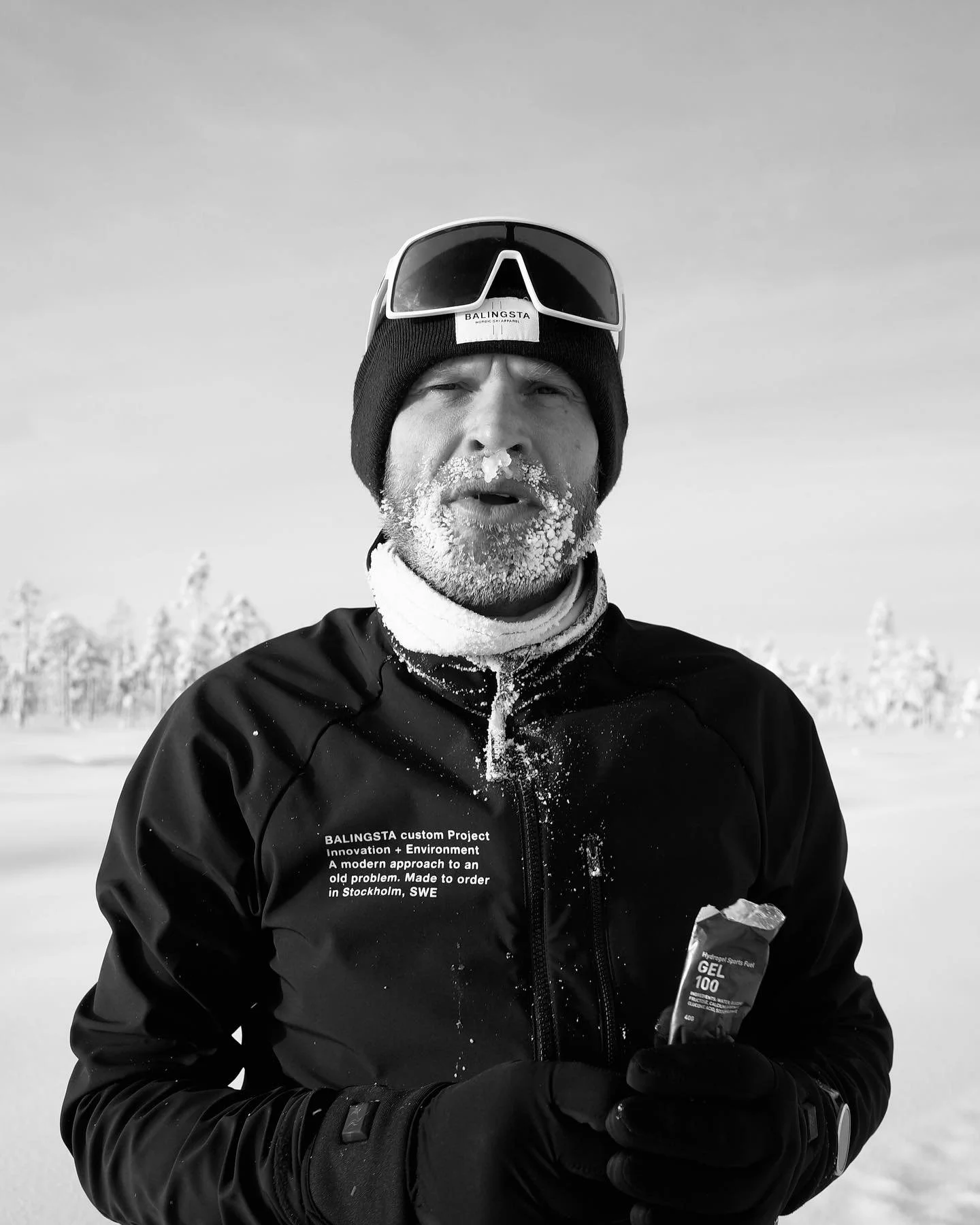
I’d love to get into the Winter Spine Race in England. Four hundred and something kilometres. Snow, wind, and cold. That’s one of the only four hundred plus kilometre events I genuinely want to do as a race.
Partly because the conditions are extreme. Partly because the field is always strong. And partly because it speaks to me like a story. I always say it’s like watching The Lord of the Rings and seeing the Fellowship move across landscapes, up and down and through weather, and thinking: I want to have been part of that journey. That’s how it hits me.
And if I don’t get in, which is likely because it’s hard, I still want another four hundred kilometre winter adventure, even if it’s not a race.
And the classic dream list — Western States, UTMB. How do you hold those without getting stuck waiting?
That’s been a big realization for me.
I still want to do Western States Endurance Run and UTMB and be competitive. I still have that part of me that wants to perform, to do it well, to win, all of it.
But I can’t put my whole career on pause waiting for a lottery, or the best day of my career at a Golden Ticket race. I’ve been on the Western States waitlist for four to five years. Western States was the thing that made me start ultrarunning. I heard about it and thought, I want to do that. That was almost ten years ago.
And I realized I can’t sit here and say that everything I want to do will happen after Western States. It might take ten years. It will exist in ten years too. But I want to do things now, while I can.
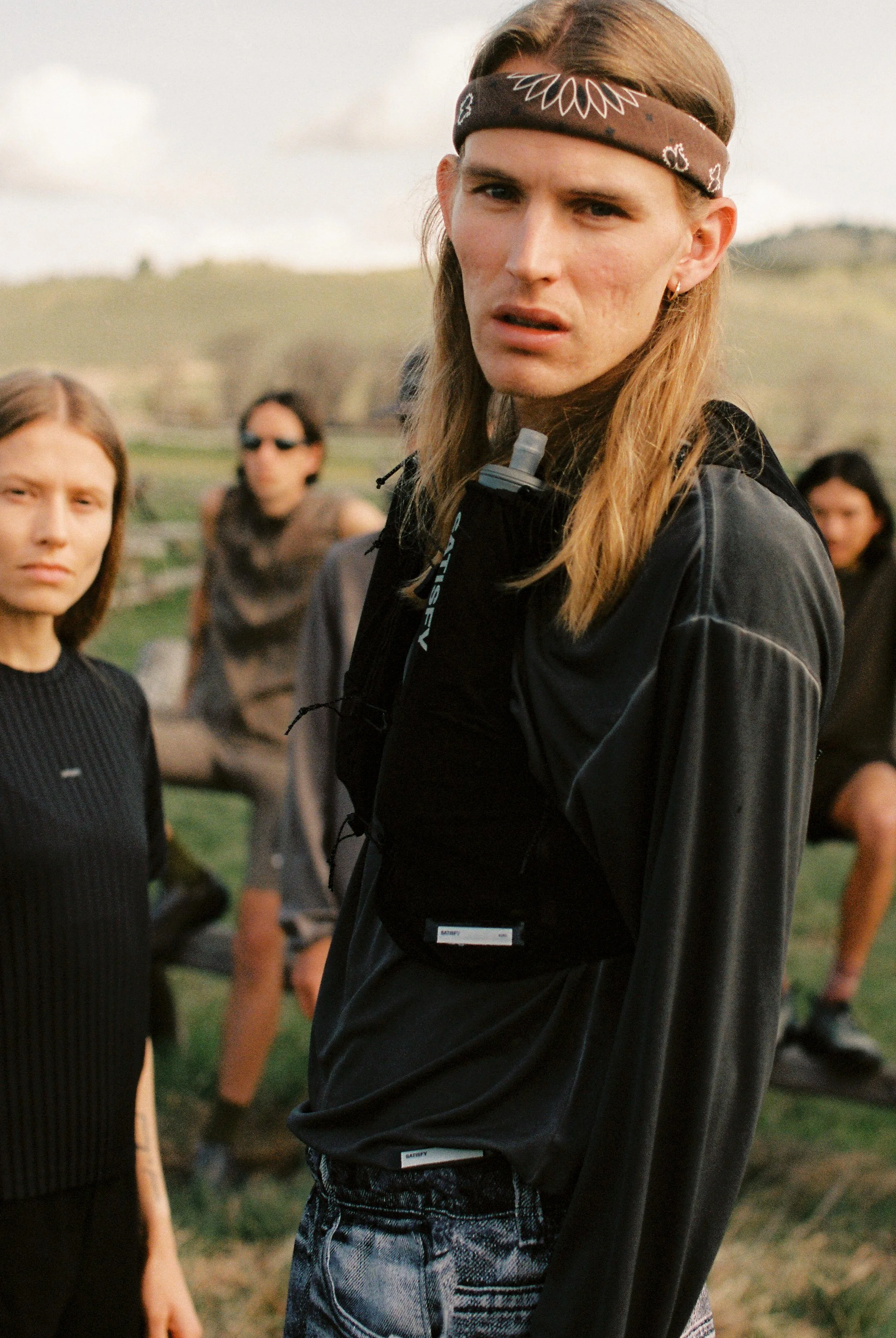
So that’s where the unknown comes back. Doing completely new things. Things I don’t think I can do. Not to impress anyone, just because I can. I’m turning 30 next year. I just want to do things while I can.
VI
Now we can go back to Annecy. Because it actually makes sense in this context. You’re going there for half a year and it’s not just “living somewhere cool,” it’s product work too.
Yeah. Exactly.
I’m going to Annecy for half a year to work closer with product development at Satisfy. And a big part of it is learning language, technical language, product lingo. Meeting product people. Visiting shops. Visiting suppliers. Understanding how decisions are made.
It’s also a good place for it because everything is so close. Mountains, materials, brands, athletes, stores. You can do the work and still live in the terrain.
And it’s also, honestly, a better balance than Chamonix for daily life. Chamonix is legendary, but Annecy feels like a mix of work and mountains in a way that’s sustainable.
And the thing with Satisfy, it’s growing so quickly, but for me, it still feels the same as when I was first brought in. Lines of communication are pretty much exactly the same. Manageable, operative. We’re light on our feet, adaptable but growing in strength and experience. The last few years I’ve been able to test products, give feedback, learn a lot, and I feel like it’s heard. That’s rare. I know that’s rare.
So when I’m in that position, I feel like I owe it to myself to maximize it. And it’s also easy to do because I genuinely understand their aesthetic vision. I’m a fan. It makes sense to me culturally, not just technically.
You said something earlier that stuck with me — that you “know nothing,” but you want to learn. That’s a rare way to approach a sponsorship relationship.
I think that’s the only way that feels honest. I’m not a footwear designer or engineer. I'm not creative by trade. I’m not pretending to be. But I want to learn all of that and more. As much as possible. I’ve spent a lot of time trying to understand, and now the timing is right.
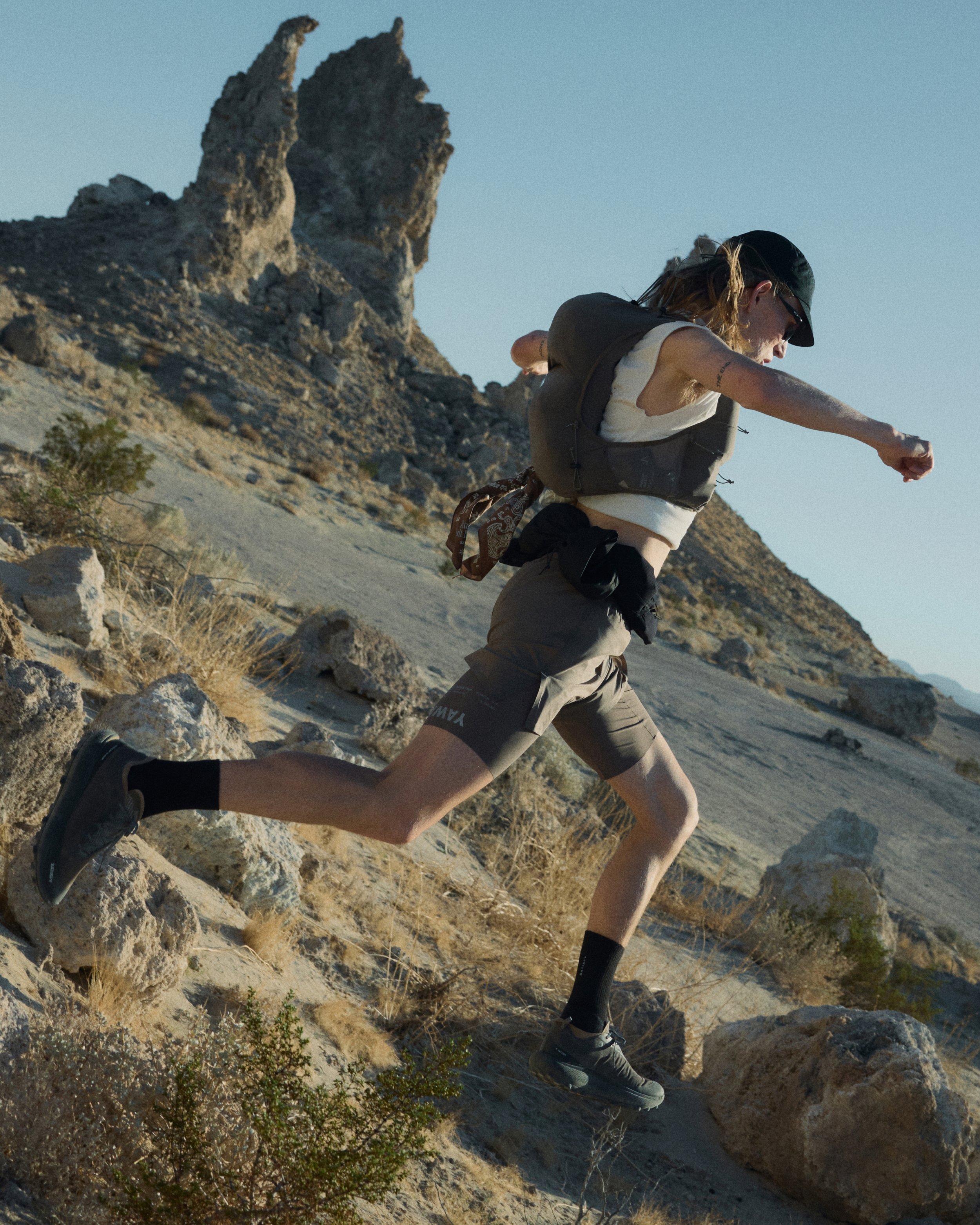
They’re also doing more footwear development now, testing, iterations, and that’s a whole world. So for me it’s like, okay, here’s a perfect opportunity to merge interests. Running, design, materials, function, culture. All of it.
And it ties to the kind of running you’re drawn to — the extreme stuff where gear stops being aesthetic and becomes survival.
Exactly.
If you do something like a four hundred something kilometre winter event, with a few checkpoints, carrying everything yourself, what you pack becomes life and death. That’s not branding. That’s reality. And thinking about how to build the best kit for something like that, that’s the kind of problem solving I’m drawn to.
That’s also what’s interesting about running right now. So much of it is still developing. There’s been such a technology jump in the last decade that people don’t have to think as much anymore. Shoes for everything. Gels for everything. Solutions for everything.
And that’s great. I get why people love it.
But for me, the thinking and process is part of it. The curiosity. The craft. “What happens if we go here, what do we actually need, what is missing?”
VII
It also feels like everything you’re doing is long-cycle now. Long races, long projects, product development. It’s a different tempo.
Yes. I guess I’ve learned patience, finally.
Training can be instant. You get gratification quickly. But the bigger things become more like life projects.
When I started running at 20, I couldn’t believe people ran 100 miles. It broke my brain. Now it’s not fantasy. It’s real. And I feel like I’m in a phase where slowing down actually makes things make more sense.
I think I need that slower tempo now. In all parts of life. Things that take time. Things that give meaning when you zoom out.
Last one. When you look back at that ten-year-old discovering The Thermals, does it feel connected to who you are now?
Completely. It’s the same instinct.
Seeing a name on a poster and wanting to understand it. Wanting to go deeper. Whether I’m ten or thirty, I want to learn the language. I want to build a world around something that feels true.
Some things don’t disappear. They just change form.
SHARE
OTHER STORIES
-
born to endure
CULTURE
-
from the track to freedom
INTERVIEW
-
The first step
CULTURE
-
A Nordmarka Classic
CULTURE
-
The Art of Fast Skis
INTERVIEW
-
Nattvasan
CULTURE