
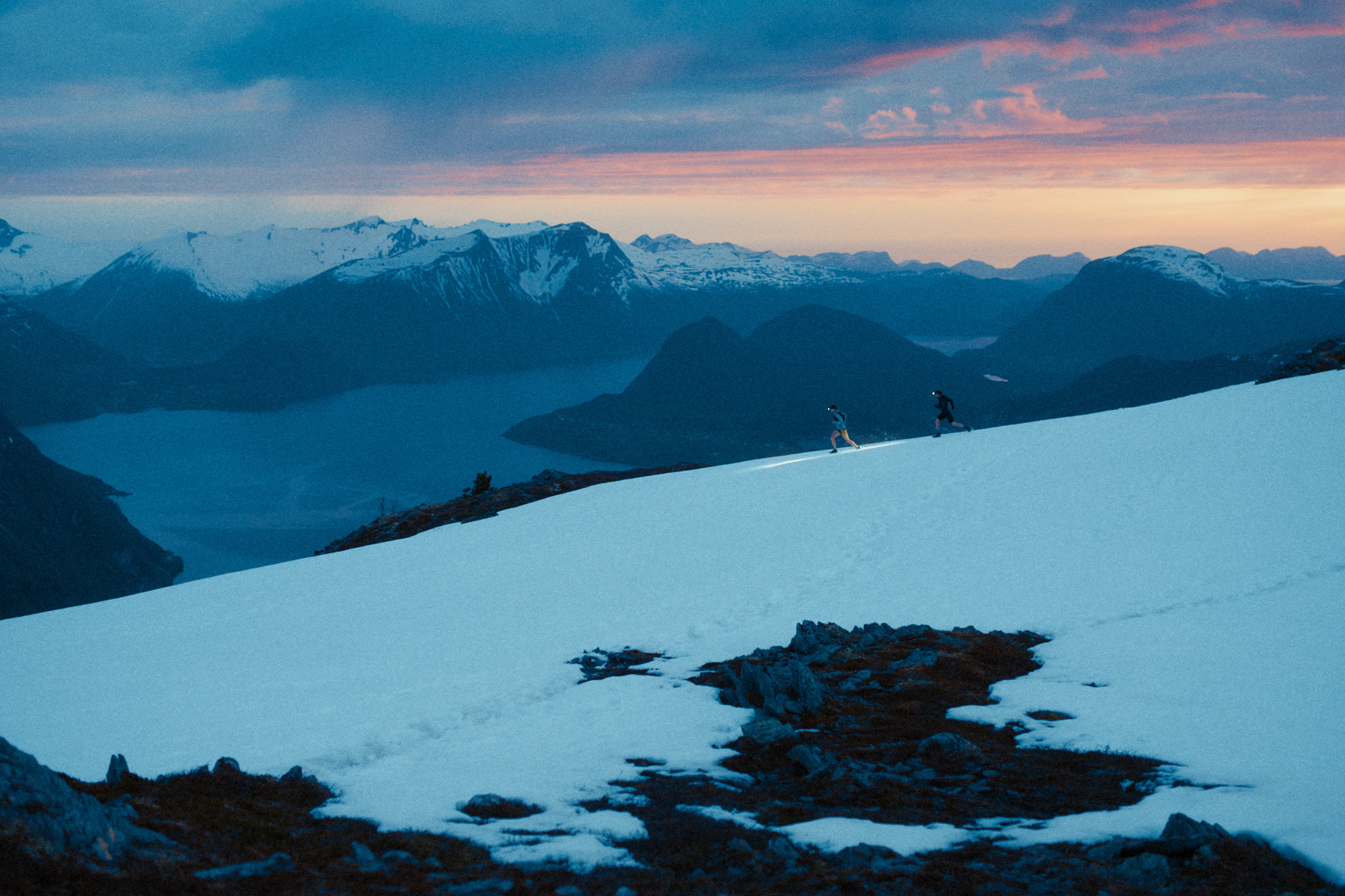
THE GLOW OF THE GRIT
“Norway has its challenges—darkness for half the year, cold, isolation—but I’ve grown to appreciate it.”
Words by Henrik Rostrup
Photos by Lars Schneider
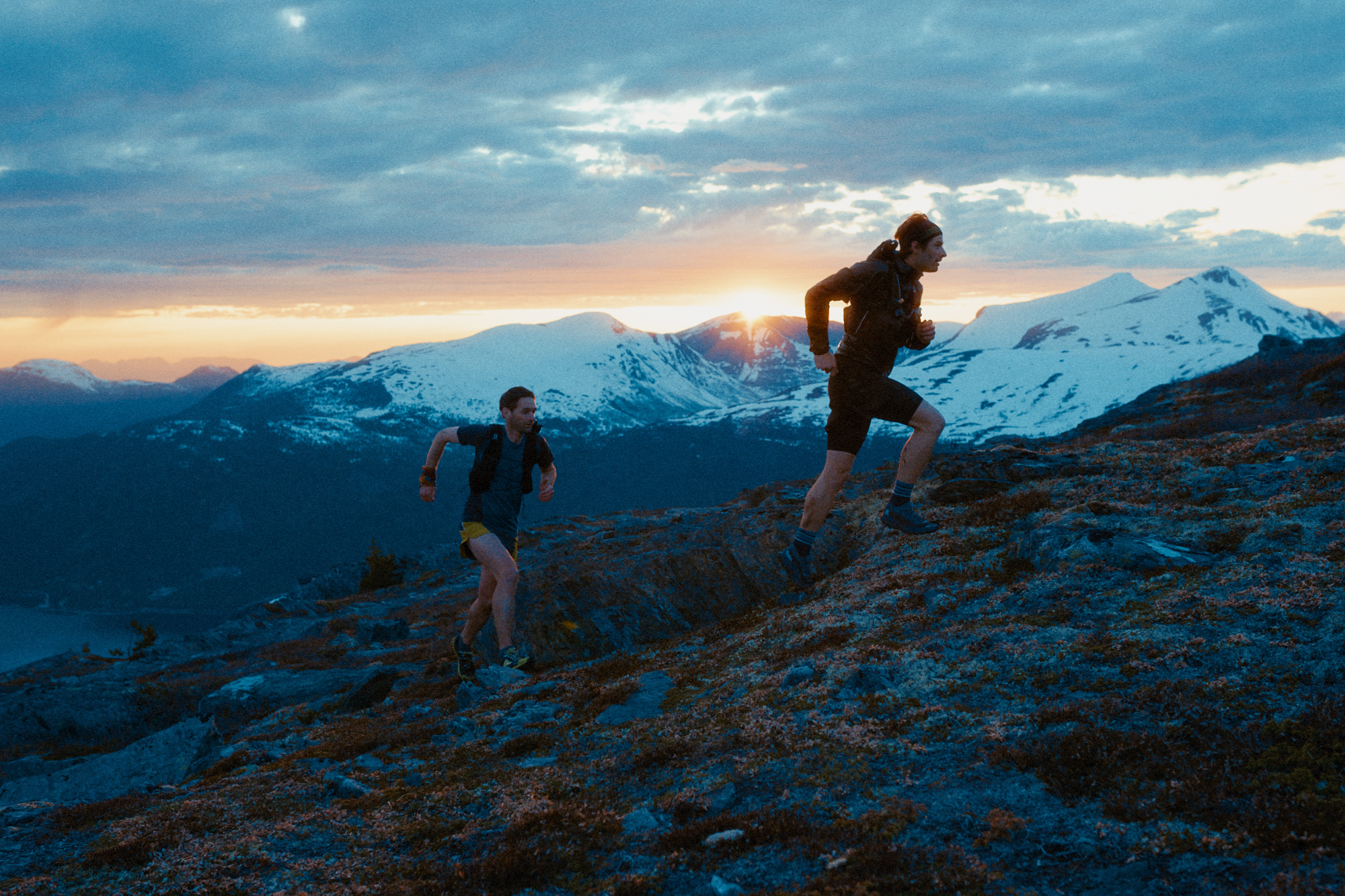
Paul Ogier’s life is one of movement. Whether he’s pedaling through the Norwegian landscape on a bike or lacing up his running shoes to tackle a trail, he thrives on pushing himself through challenging conditions.
Originally from France, Paul has called Romsdalen, Norway, home for the past three years, where he manages marketing for Moonlight, a company at the forefront of night-running innovation. Despite the area’s notorious darkness and unpredictable weather, Paul embraces the tough environment—finding peace in the grit and using it to fuel his endurance journey.
As an ultrarunner with a history of professional racing, Paul has experienced the evolution of endurance sports firsthand. After a two-year break due to ACL surgery, he’s back to racing and exploring personal projects, all while reflecting on how the sport—and life—has changed. In this conversation, we dive into Paul’s insights on night running, the growing popularity of ultra sports, and what it really means to challenge yourself, both physically and mentally.
I
Hey Paul, what have you been up to lately? How’s life in Norway with that wild weather and endless darkness? I hear your form is really coming back—impressive stuff! Would love to catch up.
(laughs)
I try to keep it low-key, but thanks! I did have a two-year break due to ACL surgery, so it's nice to hear some compliments again after all that.
Yeah, for sure. I think it's so interesting how the sport has grown. It feels like there’s this huge boom in endurance sports and people just love being outside now. It’s becoming a bigger thing all around, right? And I think your move to Norway plays a big part in that. You could be anywhere, but you're here, dealing with the darkness and the grit. In my opinion, it's way tougher here than in mainland Europe. Has living here shaped your view on being an endurance athlete, like how you deal with the weather and the tough conditions?
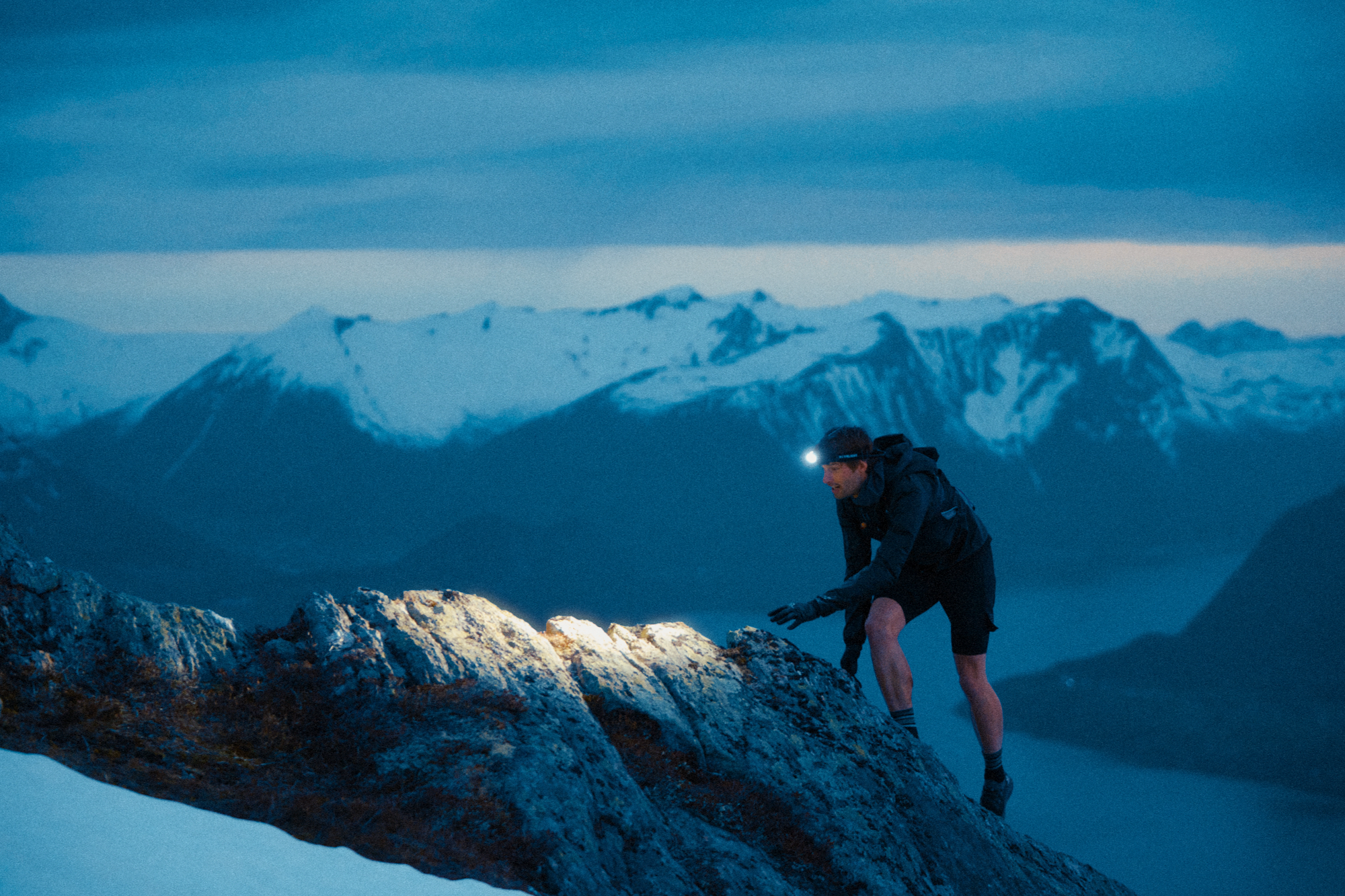
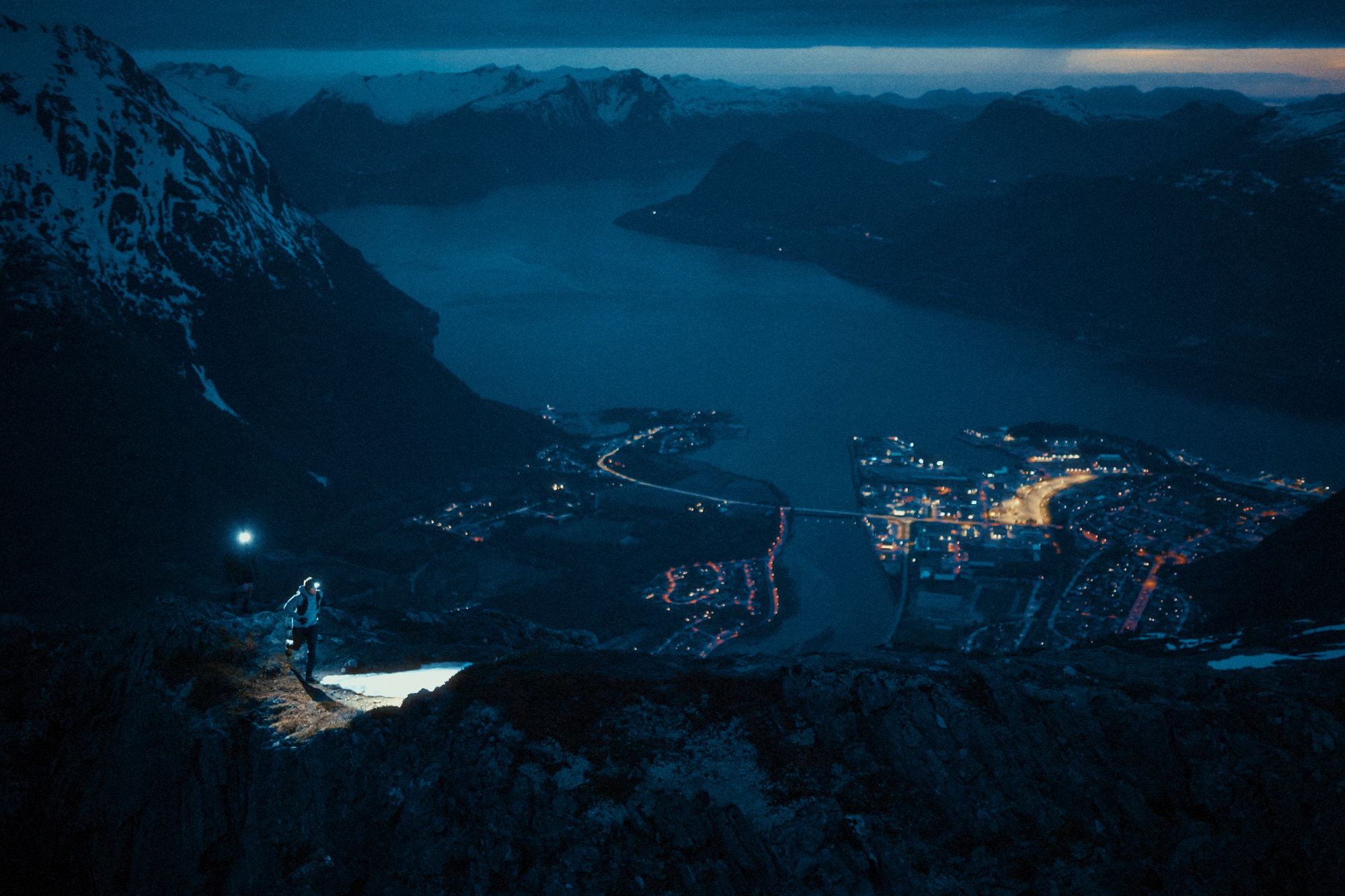
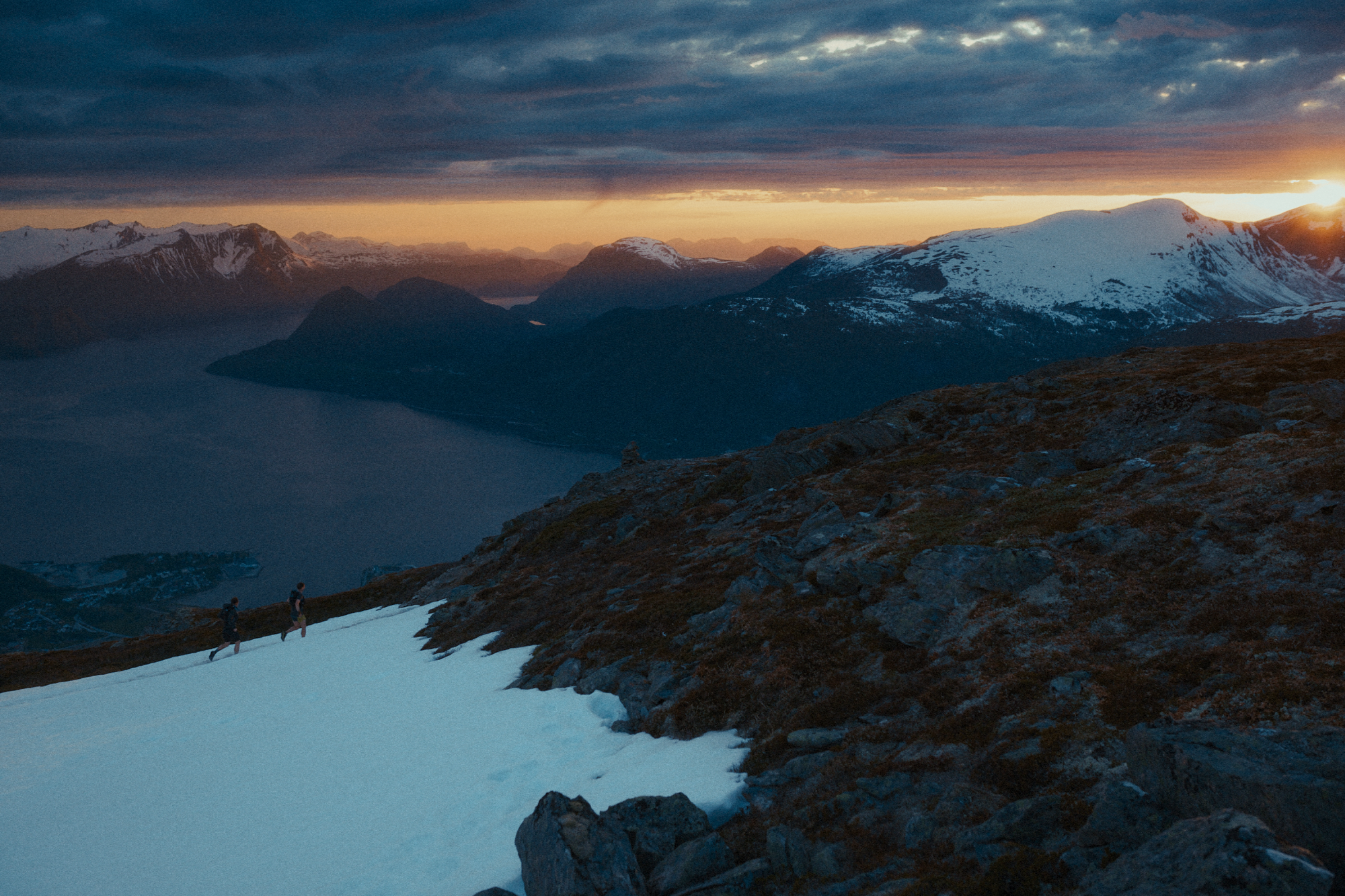
Yeah, completely. Living here has definitely changed my perspective. Norway has its challenges—darkness for half the year, cold, isolation—but I’ve grown to appreciate it. There’s a peace here that you don’t get in big cities, and when you're out there in the wild, you feel a unique connection to nature. That’s what’s really rewarding about living in a place like this, even though it means you’re running in the dark a lot of the time.
II
That’s interesting. I feel like a lot of people are adapting to the night running more now. Do you think people are more comfortable being out in the night compared to before?
Yeah, for sure. I think it's not just the gear, but the whole mentality. Life is busier for everyone—work, family—and people have less time to train. So, running at night becomes a solution.
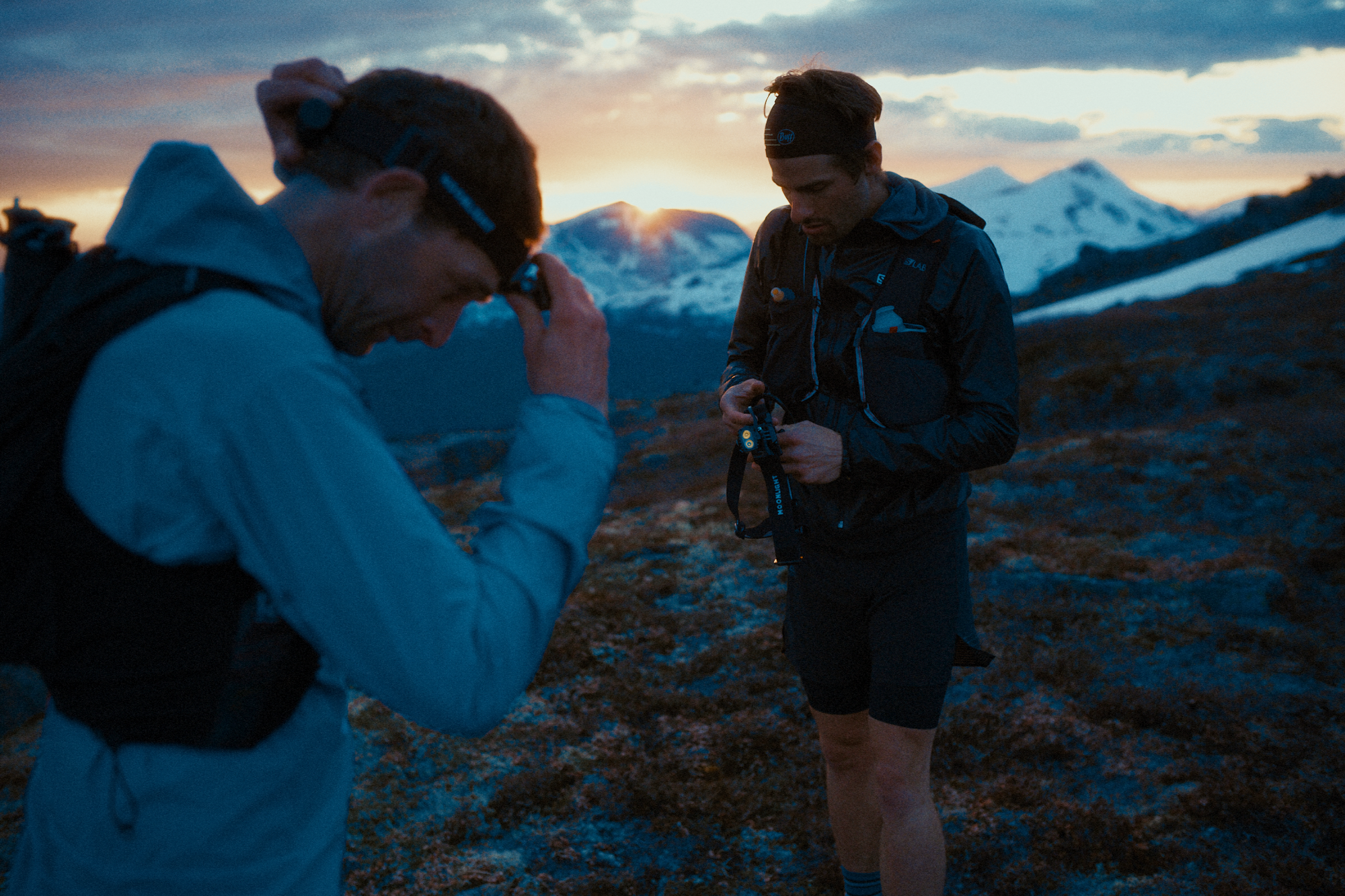
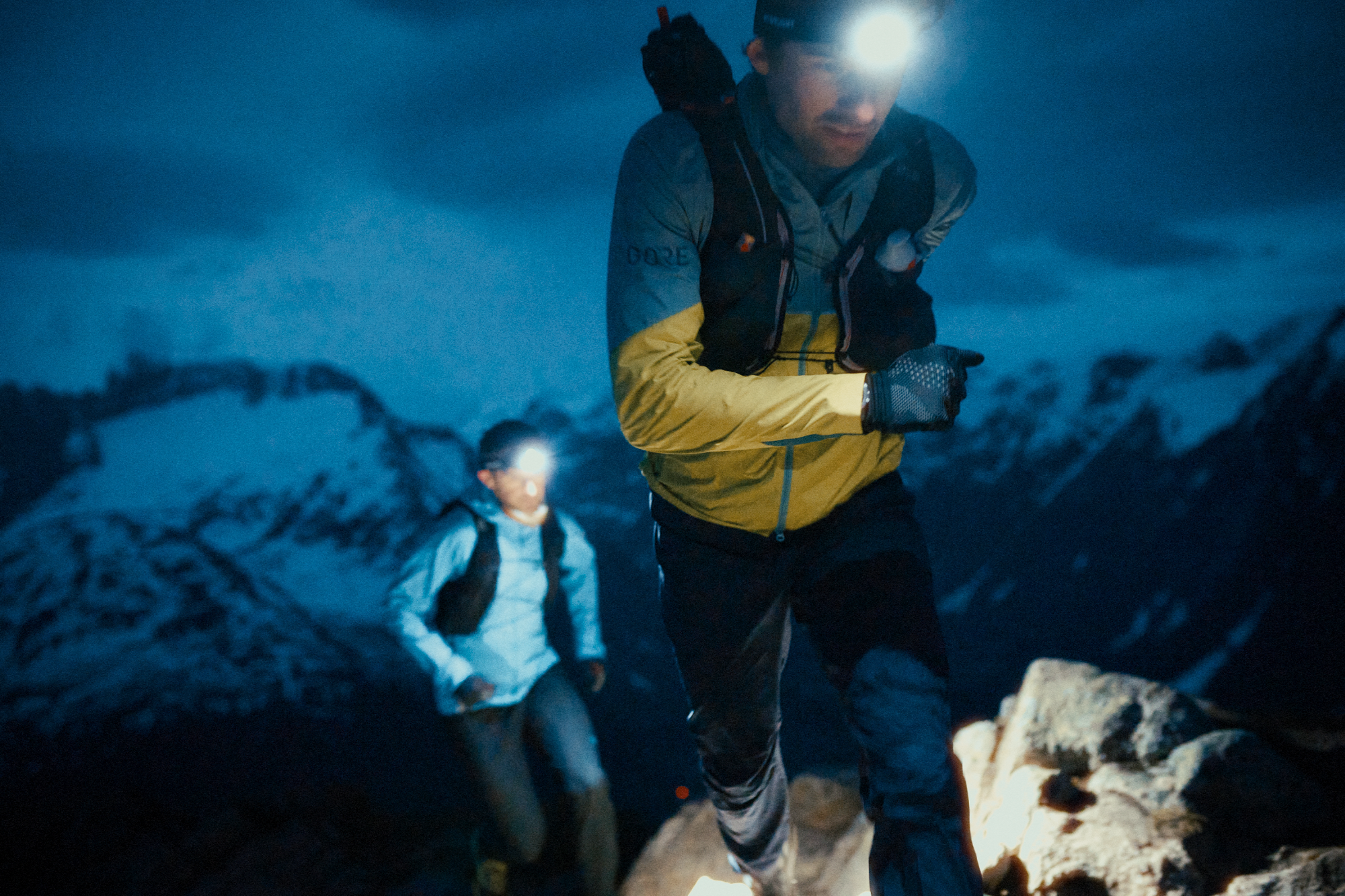
Moonlight was founded by a guy working in a bank up in the north of Norway. This was back in 2014, so about 10 years ago. He just wanted to be able to go outside after work and enjoy the outdoors, but the problem was that the dark winters made it hard. So, he bought one of those super expensive, powerful lamps that you could get at the time. You know, the kind that was like the ones we used to have when we were kids—those big lamps with a huge halo around them.
Yeah, I know exactly what you mean (laughs).
Right? So, that’s how it was. But he actually ended up having a pretty bad skiing accident—he hurt himself on a tree that was hidden in the shadow of his lamp. And that’s when he thought, “I can do better.” He went on to develop a headlamp that had better light coverage, no shadows, and was much more efficient. It was a bit of a revolution back then to have a lamp without those annoying shadows. Sounds funny now, but the technology has come such a long way—especially with the lens quality. I’m sure you've seen those old orienteering lamps in Stockholm, with the aluminum casing? They’re nothing like the gear we have now.
Yeah, totally. I think it’s changed the way people train. Having the ability to run or bike at night makes people fitter and more competitive, right?
Definitely. The average person can now train more, and you see so many people out early in the morning, like at 4 a.m., just getting their workout in. It’s incredible how committed people are. But you’re right, elites usually train during the day. It’s the everyday person who’s using the gear more, getting up early or going out late to fit it in around their lives. And in places like Oslo, everyone’s running or doing some form of outdoor activity.
That’s crazy! But you’re right, training at night makes you tougher, and it’s a way to really push your limits, especially when you’re preparing for an event. Do you think there’s any benefit to night training?
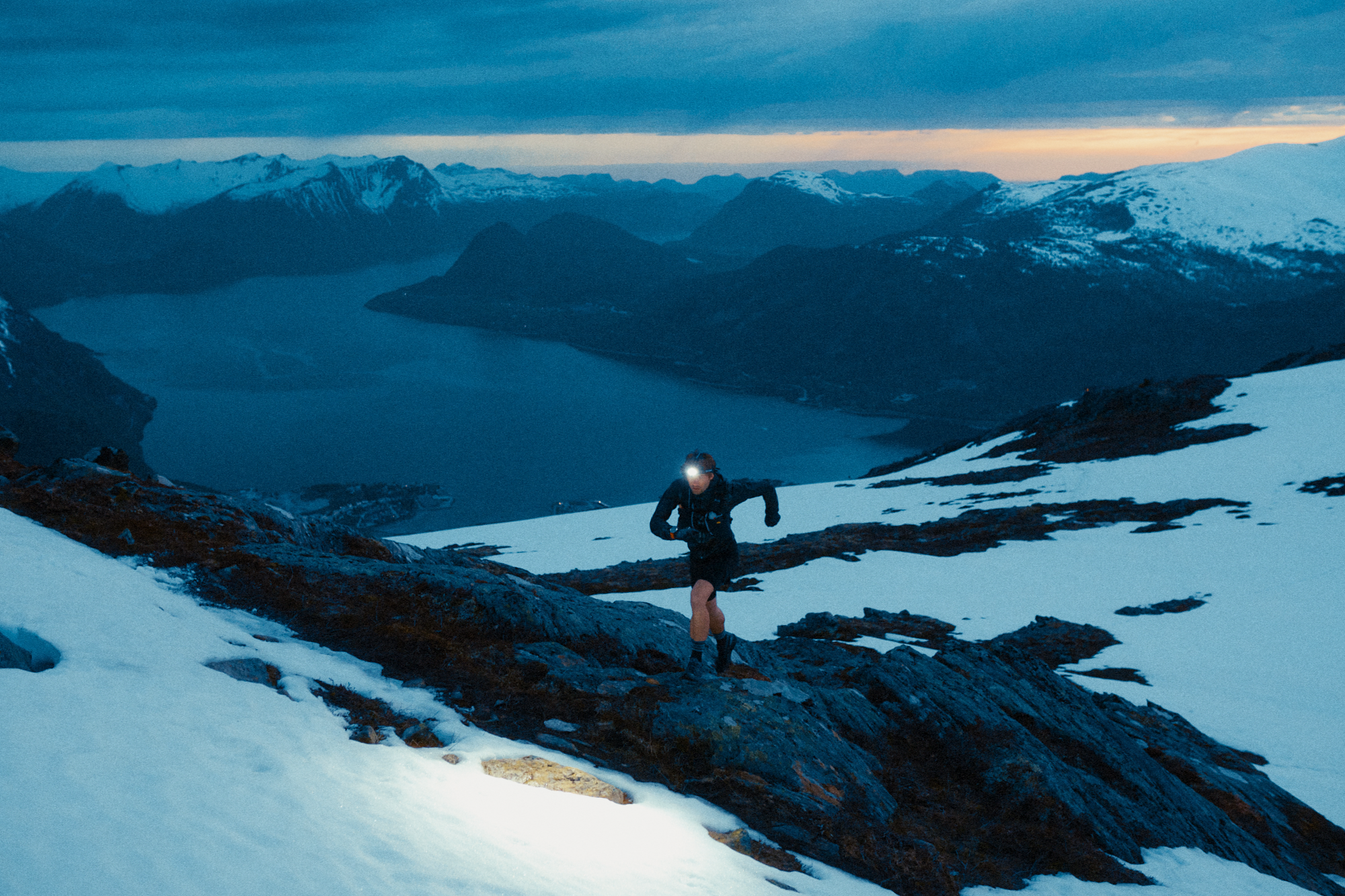
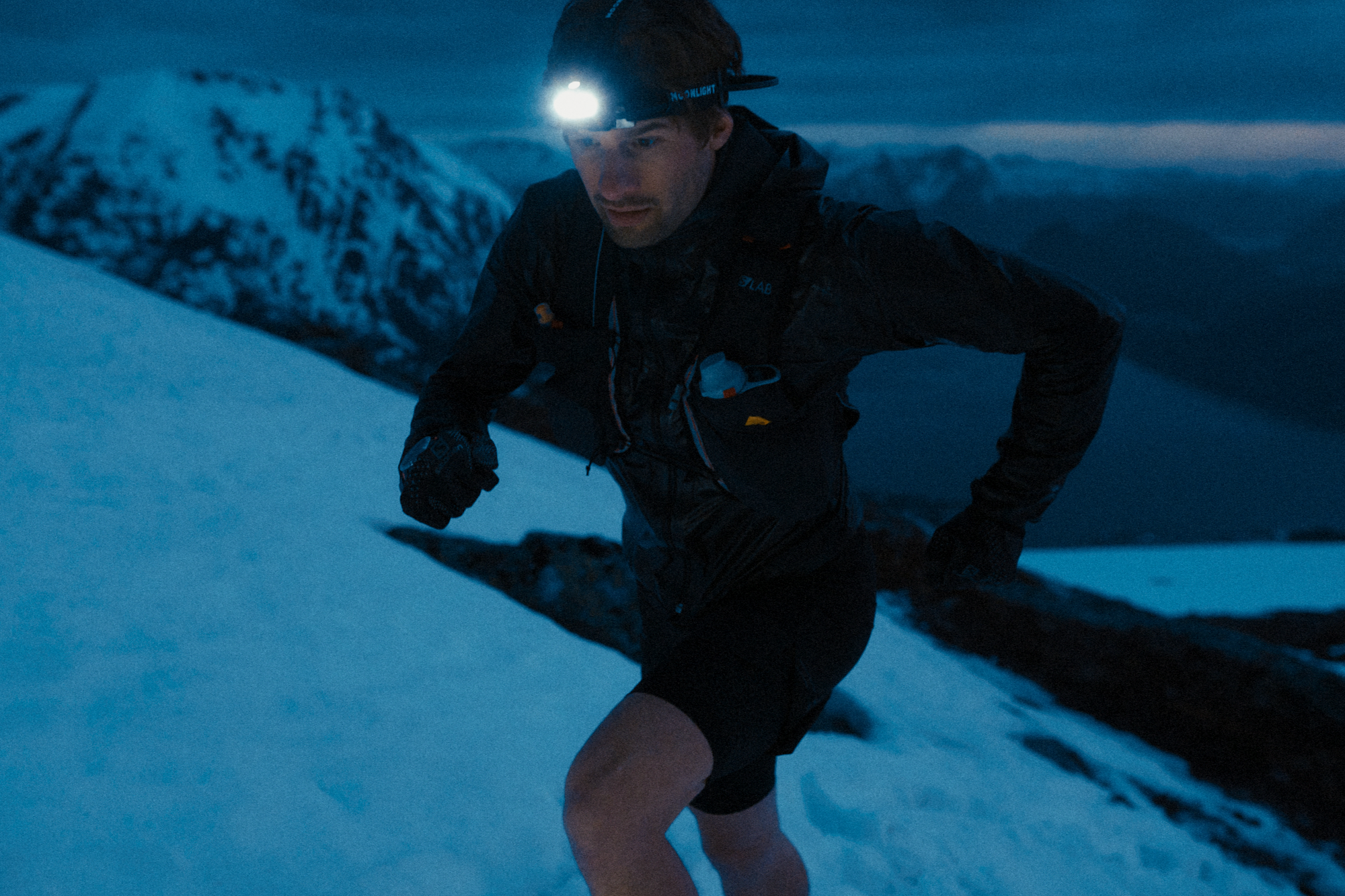
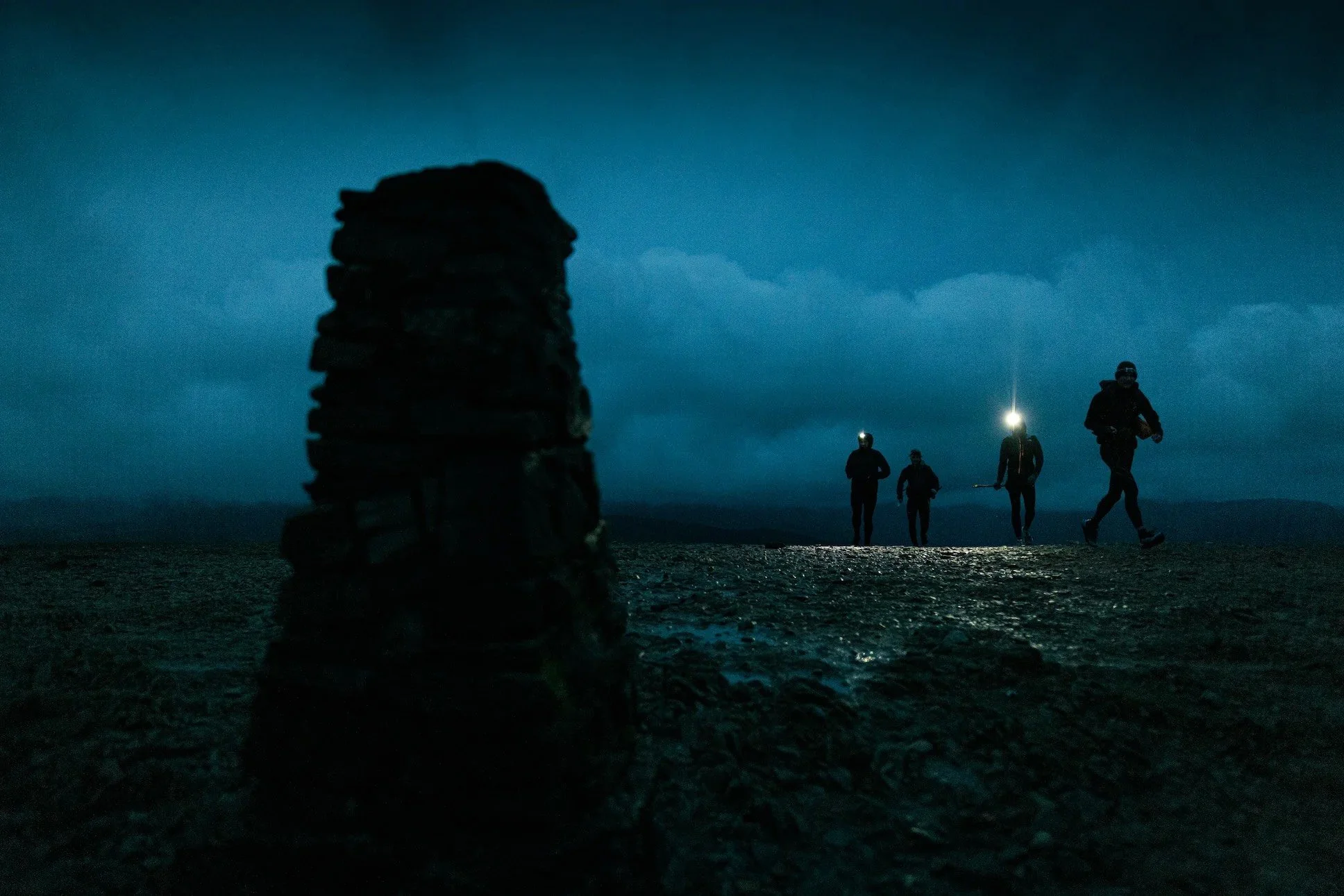
Yeah, absolutely. When you're training for long ultra races, especially those that happen at night, it’s essential. Your senses change—you don’t see things the same way. The roots, the rocks—they look different.
It also teaches you mental toughness. The night can be magical, but it can also be miserable. You learn how to push through, even when conditions are tough. It makes you feel a bit more primal, like an animal. You start to connect more with nature, and that’s what makes it special.
III
There are so many great races that have big night sections now, like the Nordenskiold, or Kullamannen and Nattvasan. It’s amazing how many of these races exist—if you want to keep challenging yourself, you’ve got to embrace the night. I mean, anyone can do a summer marathon in Oslo or Stockholm, but if you really want to dive into it, training for tough conditions like the night is a whole different level.
Yeah, absolutely. There are a lot of events out there, and if you’re looking at ultra distances or multi-day adventures, it’s impossible to avoid the darkness. It’s just part of the challenge.
Right, and what the elites do really changes how we see these night races, doesn’t it? I mean, I know it sounds kind of wild to mention someone like Killian Jornet and the Alpine Connection, but it’s impressive how much he’s pushing the boundaries.
Exactly. The Alpine Connection is on a whole new level. Killian came to Norway recently, and we had some great discussions about it. There’s a blog on the Moonlight website where you can read more. The previous record for the Alpine Connection—Killian’s link-up of the 82 summits above 4,000 meters in the Alps—was set by Ueli Steck at around 60 days. Afterward, Killian admitted that he thought he could complete it in 15 days, given perfect conditions. It’s mind-blowing. He approached the project differently—not as a multi-day adventure, but as one continuous push.
Yeah, that’s insane. It’s like he’s treating it as one long push instead of breaks between days.
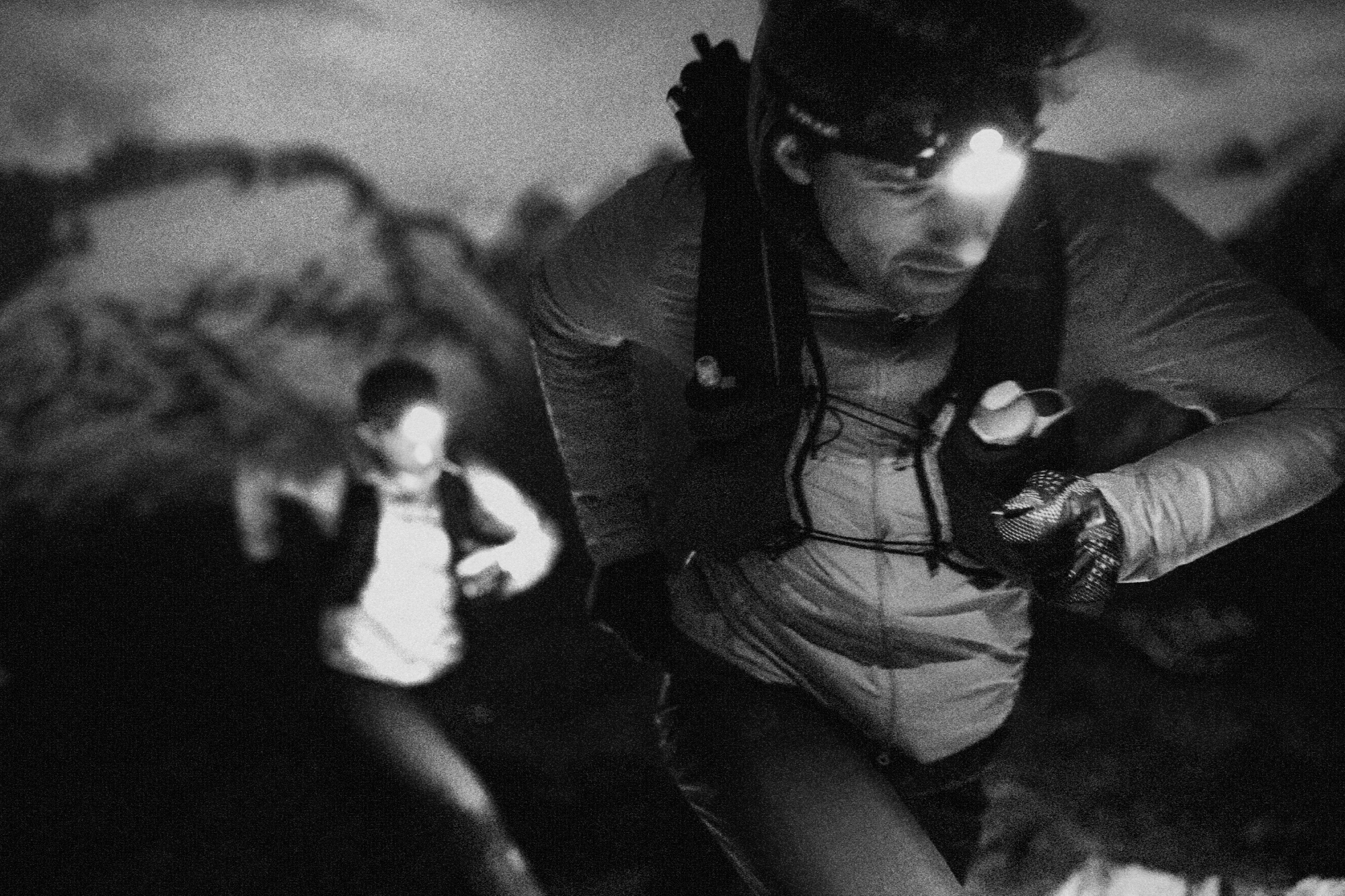
He was more focused on a traditional Fastest Known Time (FKT) approach. It’s not about stopping when it gets dark or when you feel tired—it’s about pushing through. You sleep when you can, even if it’s just half an hour, whether it’s during the day or night. What’s interesting is that he took a big headlamp with him. Normally, people in the Alps use smaller lamps—enough to see the trail, but not to navigate unknown paths. Killian was venturing into areas people don’t usually take, so he needed a larger lamp. It was a true night exploration.
That's a whole new mindset.
For him, there was no difference between night and day. When night falls, you just switch on your headlamp, and it’s the same as daylight. You keep going, no stopping. Of course, you have to be at your absolute best to do that—sleeping only three hours on average while moving for 20 to 24 hours straight. It’s a new way of thinking about mountaineering.
Yeah, I can’t imagine the mental strength it must take. There’s no boundary between day and night. It’s just constant.
Exactly. It’s the same with ultra-cycling and backpacking races, which are also growing a lot. I did my first one this summer, the Bright Midnight race here in July. It was a little different, but it still had a couple of hours of darkness. Whether it's day or night, you keep moving. And honestly, it’s easier to push through at night. During the day, you might be tempted to stop at a gas station or a restaurant, but everything’s closed at night, so you just keep going. It’s better that way—you can keep warm, keep moving, and power through.
IV
It’s so interesting because when you look at people like Killian Jornet at that level, everyone’s always analyzing their gear—everything is so finely tuned. But when you read about Killian bringing a huge headlamp, it’s a totally different approach. It’s a reminder that sometimes bigger gear can actually be more efficient, especially when you’re out on long tracks at night.
I asked him that very question once—why go for a heavier headlamp when you’re so focused on being minimalist in everything else? Why add those extra 200 grams? He told me, “It’s not about having the lightest gear, it’s about optimization.” Some gear can be lighter and faster, but sometimes that can actually slow you down. The goal is to find the most efficient way forward, even if that means carrying a little more weight.
Yeah, that makes total sense. You need to optimize your gear for the specific conditions.
Exactly. Sometimes that means carrying a little more weight, sometimes less. It’s all about finding the balance that works for your specific project.
Totally. I mean, if I go running with a smaller lamp, but it has worse battery life, I’ll only get so far before I have to turn back. People often forget that a minimalist setup isn’t always the best if it means sacrificing functionality.
Yeah, that’s why I tend to stick to ultra running or ultra sports. I don’t like when it’s too easy or too “athletic.” If you do a marathon or 10K, it’s often on a smooth, well-paved road, and you don’t need much gear. You can just show up with a pair of shoes and shorts. You could even run without gear if you really wanted.
V
Yeah, it’s about pushing limits in tougher environments.
So true. When you go off-road, especially on long, rugged courses, that’s where it gets interesting. Gear, bad weather, managing the night—those elements are key to performance. And that’s what I love about races like UTMB. It’s the most competitive trail race, hands down. But this year, I saw top runners show up with ice vests at the start line. It’s like cycling in the Tour de France or Formula 1—gear that’s incredibly specialized.
That’s next-level!
It really is. And while I get the need for that level of preparation, for me, it feels a bit too far from the essence of the sport. But even with all the high-tech gear, UTMB still has that survival element. It’s 100 miles of tough terrain, and at night, there’s always drama. You see people struggling mentally, falling, losing their way. You check the trackers in the evening, and by morning, the lead pack has completely changed—it’s wild. That’s what I love about it. The unpredictability, the struggle, the drama—it makes the sport exciting.
Yeah, I love that too. It’s not just about running fast—it’s about survival.
And that’s what keeps it interesting. It’s not just about running 100 miles. It’s about managing all the variables—gear, weather, the night, the terrain. It’s about outdoor skills. And that’s why races like this are so different from marathons. Marathon times are getting faster and faster, but ultra races have that wild aspect. Now we’re seeing 200-mile, 300-mile running races, and 1000km+ bikepacking races, even transcontinental races that are 4000km. It’s growing because people are pushing further out of their comfort zones. The marathon distance doesn’t feel extreme anymore.
Yeah, that’s what I love about it. It’s still very much about the adventure, not just the competition. So, what’s next for you in terms of your career? You've had the surgery, and now you're back into racing
Definitely. I need a few months of solid training. I’ve got some personal goals I want to chase—like biking from Norway to France, or just doing more personal adventures. But at the same time, I still want to push myself in racing. It’s a balance, you know?
But if I don’t reach a high level again, that’s okay. Sometimes, it’s about enjoying the outdoors, without the pressure of competition.
Yeah, it’s all about finding that balance. But you know, the whole world of ultra sports and endurance running is just so fascinating now. People are breaking limits every day.
It’s definitely pushing the limits of your own limits. It's about embracing those tough conditions, challenging yourself, and seeing what you’re really capable of. That’s what makes ultra endurance so beautiful to me.
Absolutely. Thanks so much, Paul. It’s been an absolute pleasure!
Thanks, Henrik. It was great chatting with you.
SHARE
OTHER STORIES
-
born to endure
CULTURE
-
from the track to freedom
INTERVIEW
-
The first step
CULTURE
-
A Nordmarka Classic
CULTURE
-
The Art of Fast Skis
INTERVIEW
-
Nattvasan
CULTURE