
Starting from
Where you are
Words by Henrik Rostrup
Photos by Matti Bernitz
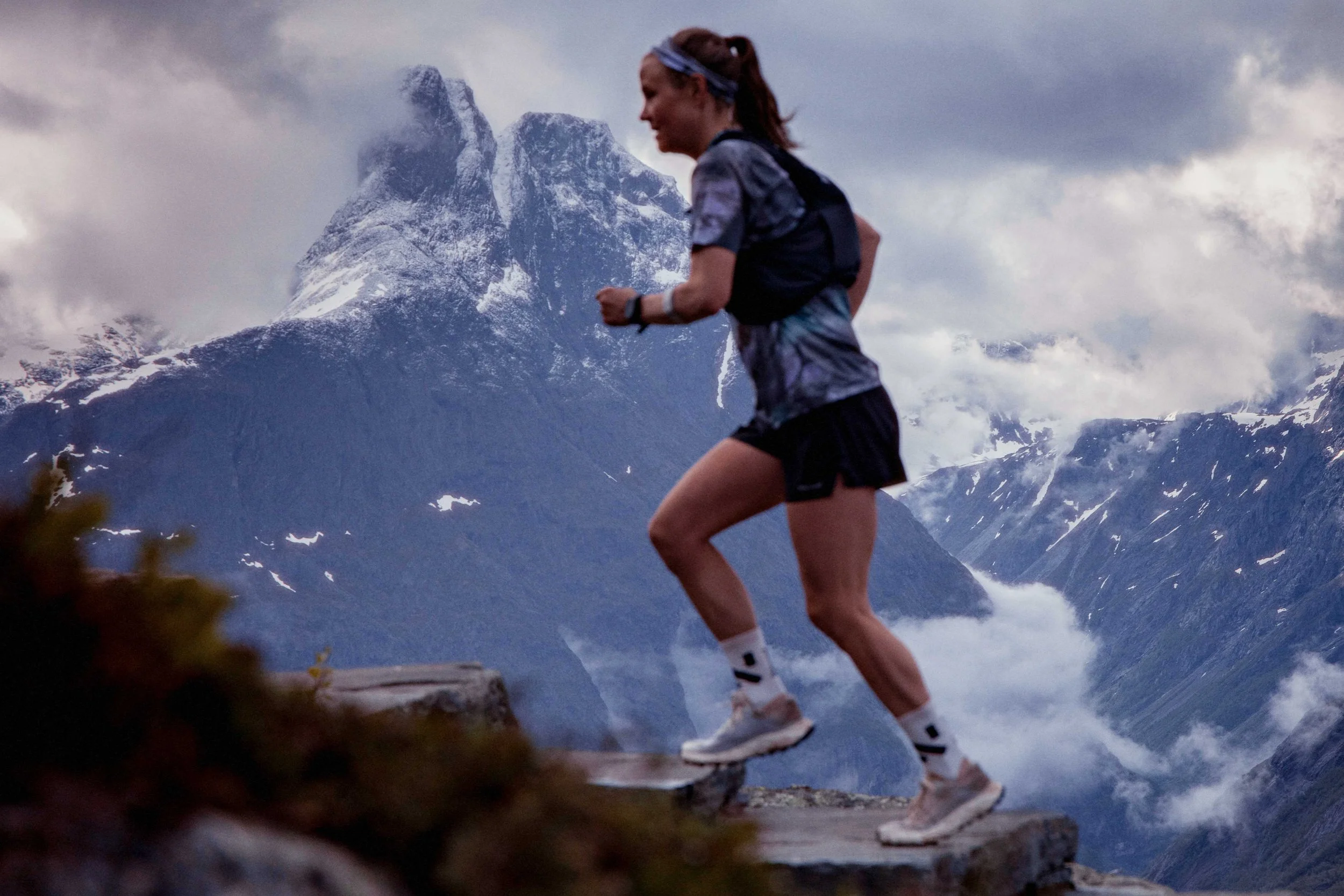
After time away from competition and structured training, Emelie Forsberg is returning to the mountains with a renewed sense of purpose—not chasing numbers, but reconnecting with the feeling that started it all. From her home in Romsdalen, she reflects on rebuilding slowly, letting go of comparisons, and the quiet strength that comes from simply being out there, one step at a time.
Let’s start with the feeling. What’s it been like reconnecting with trail running after time away? Has it felt like coming home, or more like starting from scratch?
When I manage to let go of expectations, like comparing myself to how I felt before pregnancy or looking at pace or times, I can truly enjoy just being out there again, moving through the mountains and trails. That feeling is so important to protect, because it’s how it all started for me. I love being out there, and I want to take care of that love.
Adding structured training again is fun and interesting, especially from the perspective of evolving as an athlete. But the base—the joy of movement in nature—has to come first.
You live in one of the most beautiful mountain areas in the world. How has Romsdalen shaped your return to running?
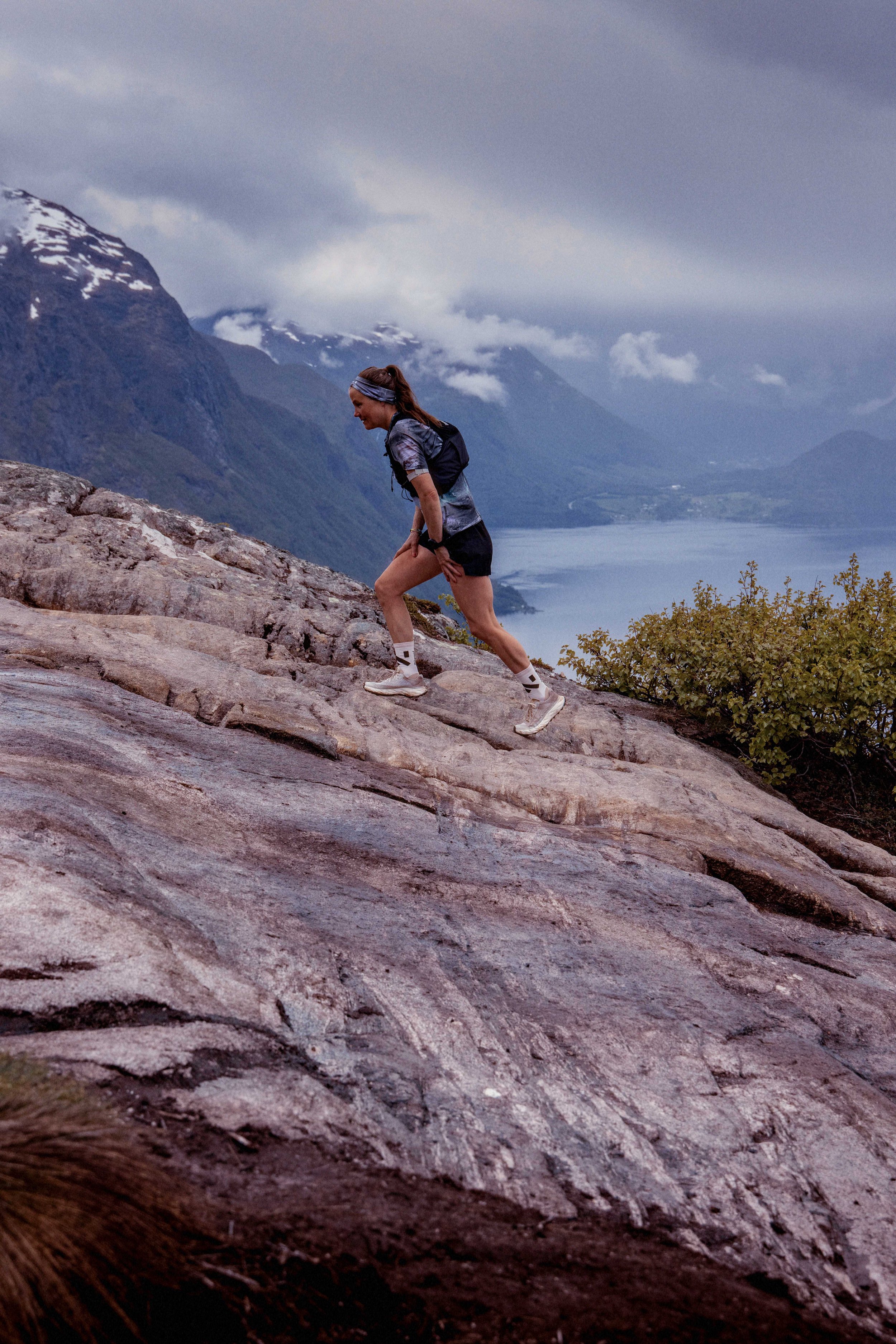
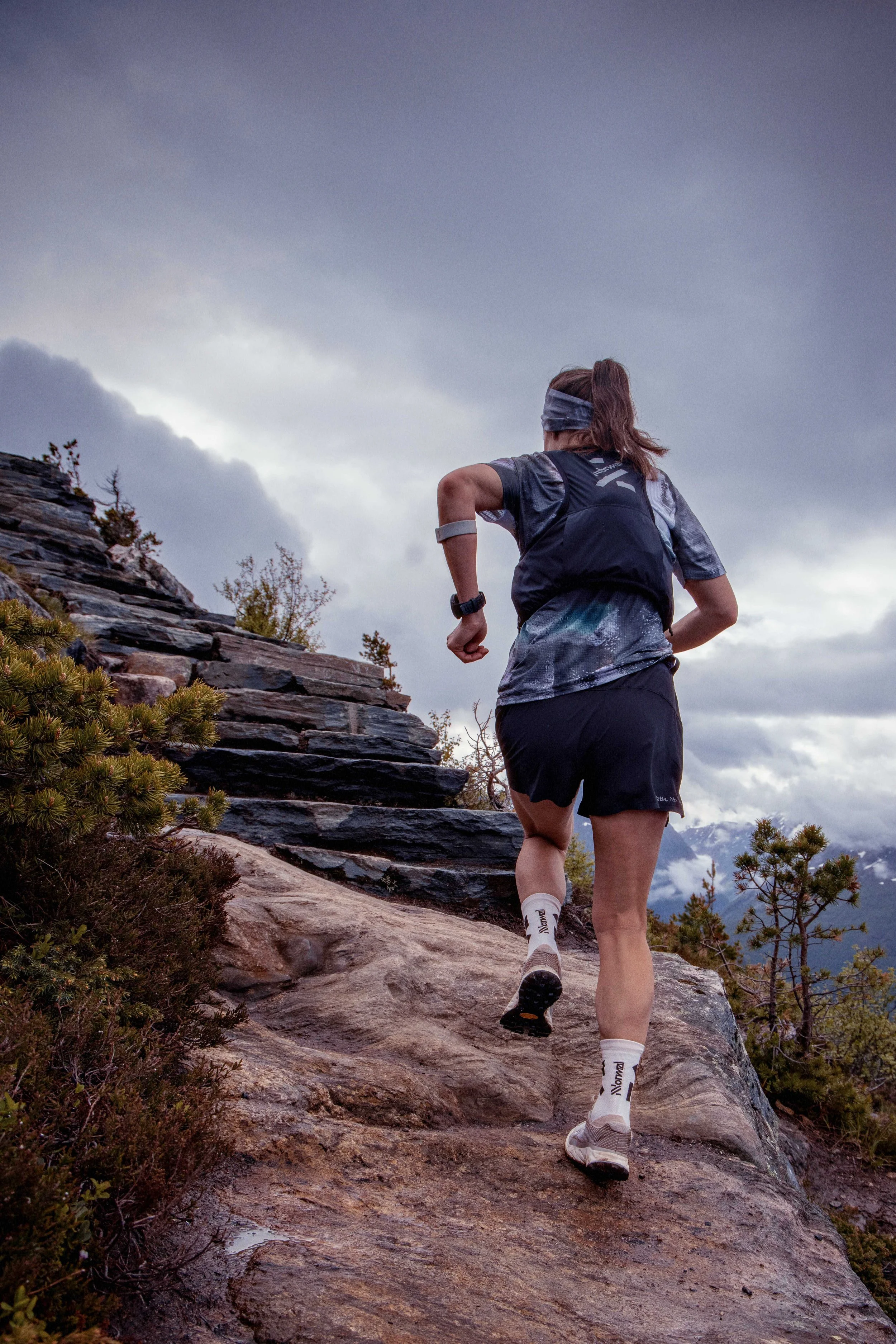
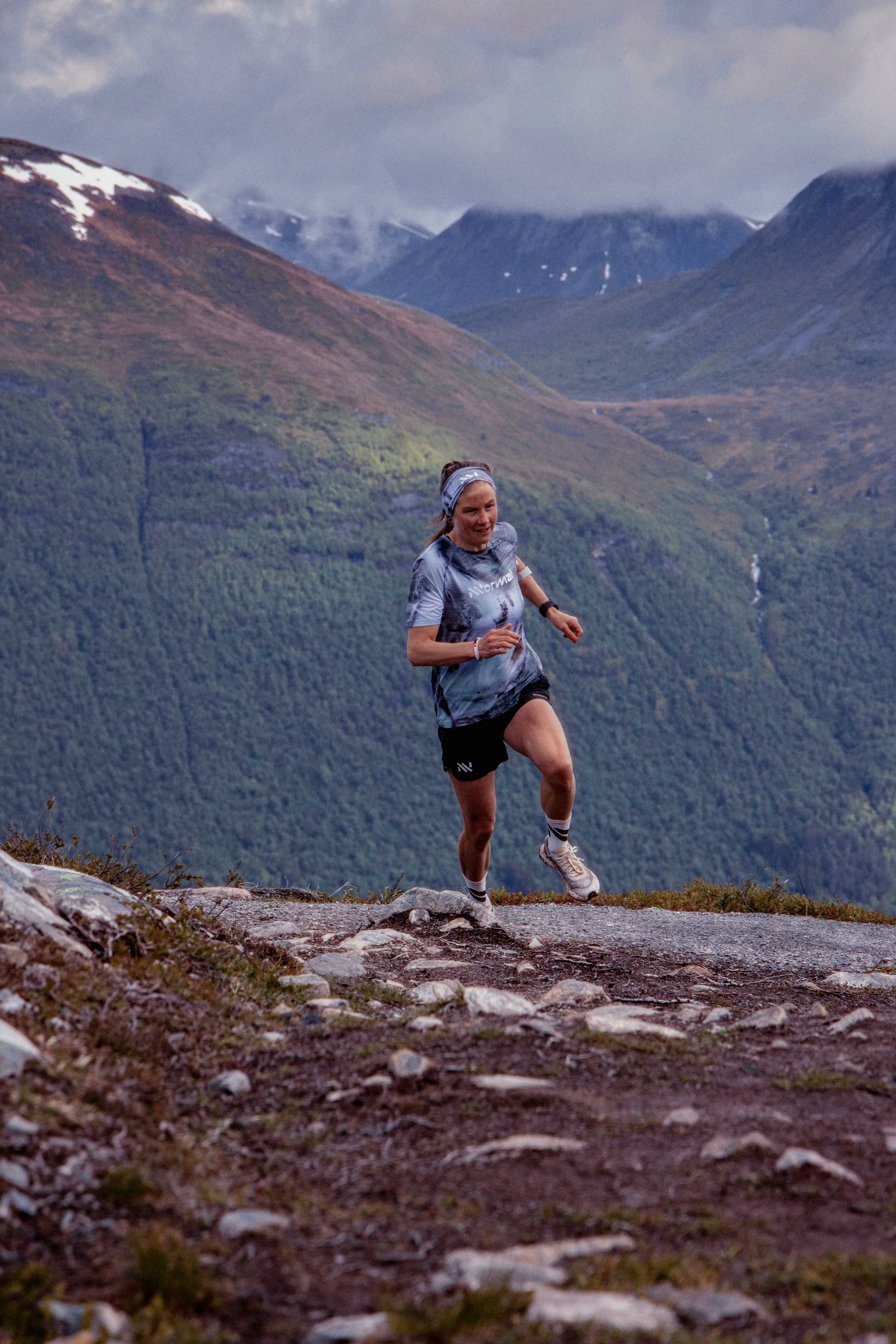
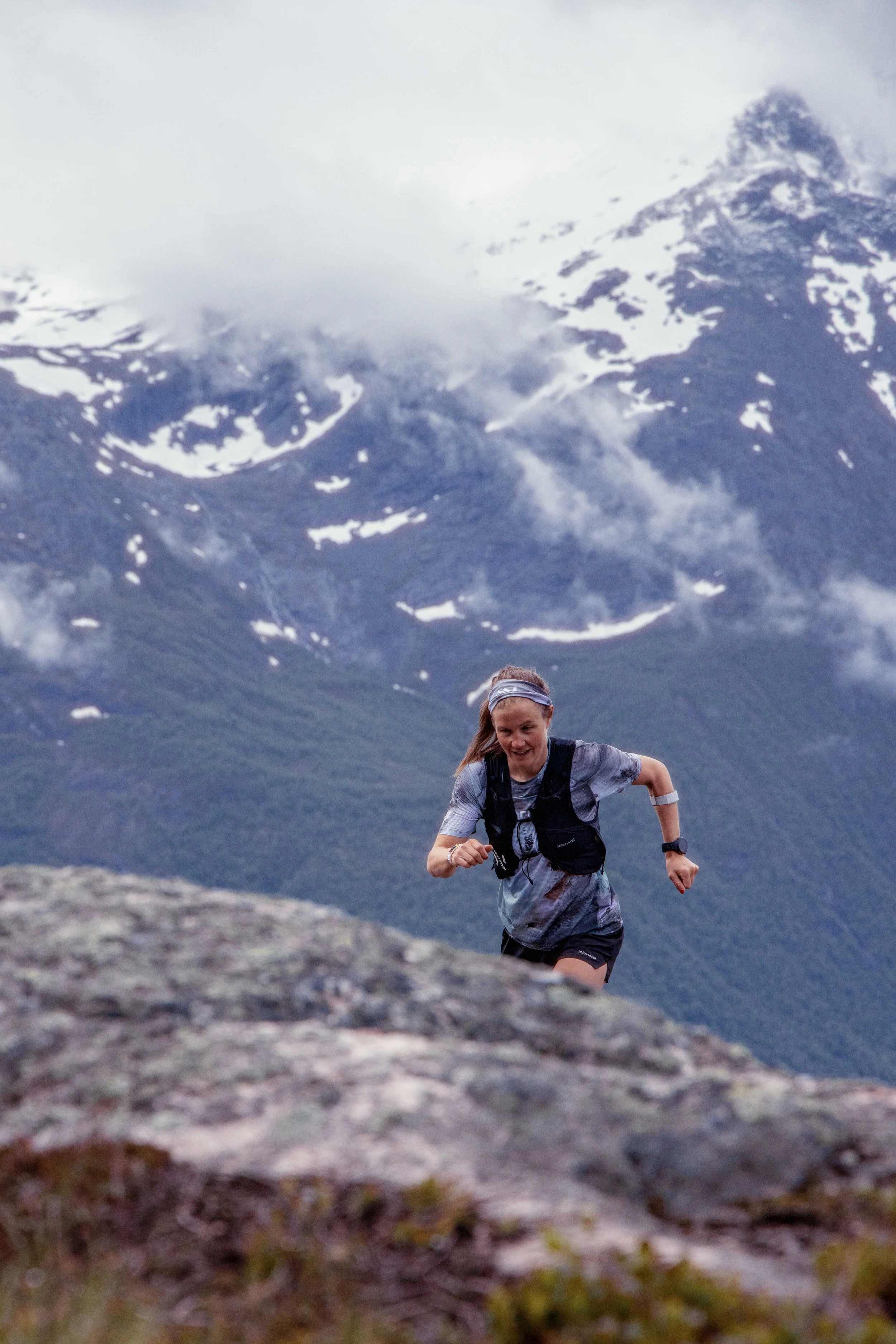
It really does feel like a fairytale here. Every now and then, actually quite often, I’m still totally taken by the landscape. Romsdalen has very wild trails, and sometimes no trails at all, so finding a flow for running can be tricky. But some loops and summits are more runnable, and I enjoy both.
When I’m building a base, I prefer the rugged, less-trodden terrain. I love simply being out there, moving slowly and quietly in the wild.
For many of us, getting back into shape can feel daunting. What helps you stay patient and enjoy the process?
Oh, absolutely. I think most of us know that feeling. And I think it’s okay. The important thing is to shift your focus away from comparison, whether that’s to your pre-injury self, your pre-pregnancy self, or whatever version you think you “should” be.
Sometimes I really have to work on that. It takes effort to stop overthinking and let go of what I feel I should be doing. Instead, I try to focus on small steps, one day at a time.
Do you think the emotional journey of returning to running is similar for pros and amateurs? What mindsets or struggles do we all share?
If I weren’t a professional athlete, I’d probably just be enjoying the process, and that’s something I’m trying to do more of now anyway. As a pro, I’m also working to build back toward a high level of training.
But I think one thing we all share is the habit of comparison. And that really is the thief of joy. Whatever paused your journey—injury, life changes, time away—that experience shaped you. You have to start from where you are, not from where you used to be.
Has your approach to training changed over time? Do you focus more on how it feels now, and less on numbers?
Each pregnancy has taught me to scale down my expectations around recovery. I might want to train 20 hours a week, but my body simply wouldn’t recover from that.
So I use the COROS app to guide me. I track sleep, heart rate variability and general recovery with their watches, which I combine alongside how I feel. I do love numbers, so I keep an eye on the data, but only when I feel strong enough not to be stressed by it. It helps me understand where I’m at and what’s realistic to aim for.
What’s your advice for someone who’s feeling “out of shape” and unsure where to begin again? What early signs or small wins do you look for?
When I'm just starting again, I actually like to track some numbers, not to analyze deeply, but to have a starting point. Then I can look back later and see how I've progressed, which COROS makes it easy to see trends from the past.
In those early stages, I try not to overthink it. Just move, stay consistent, and let the improvements come quietly.
How do you balance ambition with acceptance, the drive to progress with the wisdom of slowing down?
It can be really hard. When you have a goal or a plan, and suddenly you can’t follow through, it’s easy to feel lazy or frustrated. But I’ve learned that accepting those moments is part of becoming a better athlete. It’s not always about doing more. Sometimes it’s about listening more carefully.
What role does strength or cross-training play in your return? Anything different this time around?
I’ve focused more on strength this time, especially for my lower back, which has been a weak point. I’ve done a lot of core, back, and stability work, and it’s made a big difference.
Ski mountaineering has also been incredibly helpful for me over the years. It’s a gentle but powerful way to move, especially during pregnancy, and it keeps my endurance and leg strength in a good place.
Can you share a recent moment that reminded you why you love this sport?
Yes. Just yesterday, I spent three hours out in the mountains, and it brought back that same feeling I had when I first fell in love with trail running.
I was around 20 when I realised that running in the mountains gave me more freedom than climbing, which I had done more of at the time. All I needed was a pair of shoes. That feeling of exploration and simplicity still means everything to me.
Do you still plan your season around specific goals, or do you let things unfold more naturally now?
I still plan my season around certain races and then work toward them. But I’ve learned to stay flexible. Life has more moving parts now, and sometimes plans need to shift.
What does “using your time wisely” mean to you right now—as an athlete, a mother, and a human being?
For me, it’s about finding balance. I want to train, but I also want to be present with my family, have enough energy to recover, manage sponsor work, and take care of our farm.
“Less is more” is something I believe in, but it’s not always easy to follow. Most days, I’m still learning how to make time for what really matters.
For more background on Emelie’s approach to training visit COROS.
SHARE
OTHER STORIES
-
born to endure
CULTURE
-
from the track to freedom
INTERVIEW
-
The first step
CULTURE
-
A Nordmarka Classic
CULTURE
-
The Art of Fast Skis
INTERVIEW
-
Nattvasan
CULTURE