
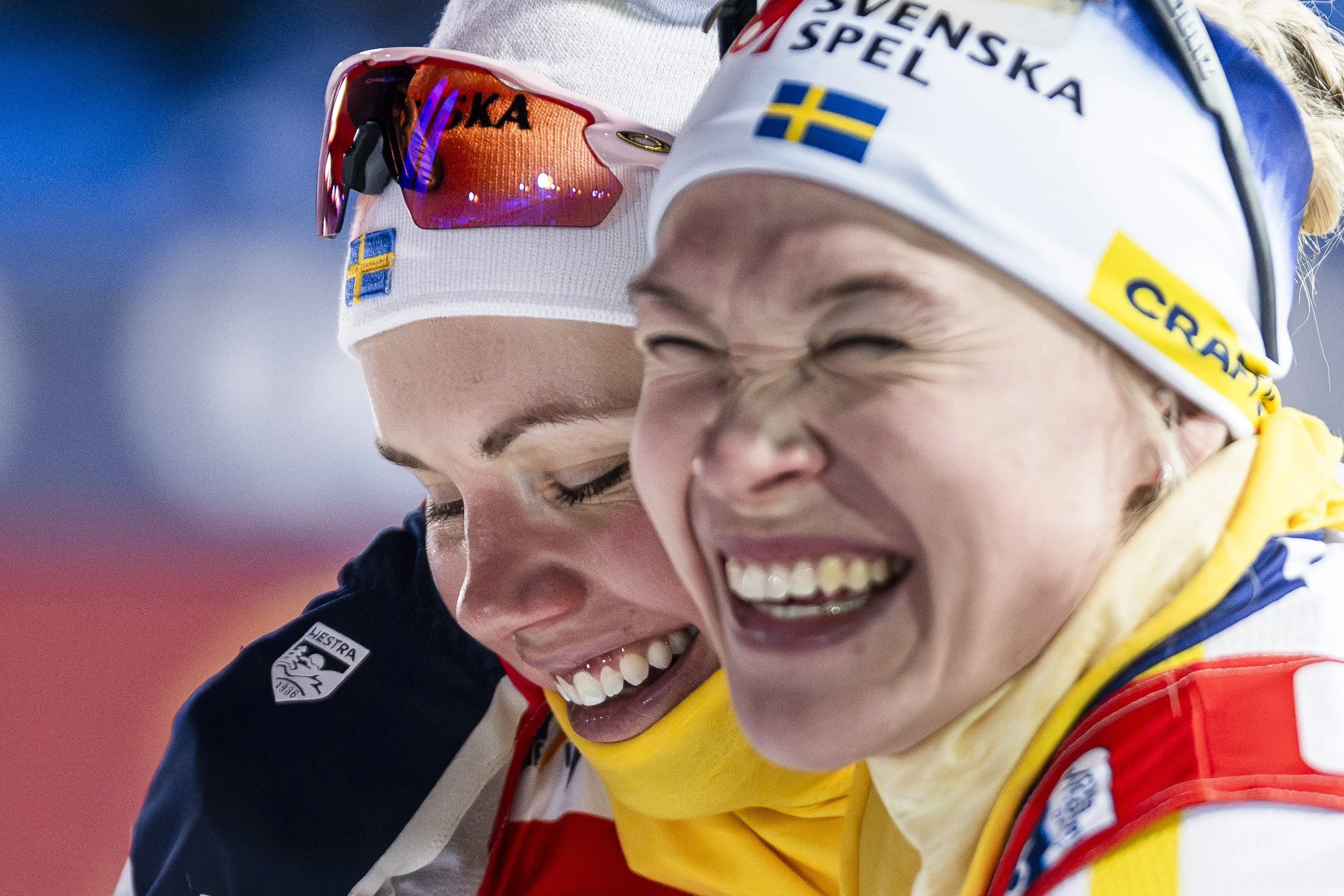
INSIDE THE LENS
Maxim Thoré on Sports Photography, Journalism, and Chasing the Shot.
Words by Henrik Rostrup
Photos by Maxim Thoré/Bildbyrån
Swedish sports photography is an ever-evolving industry, and Maxim Thoré is one of the rising stars making his mark. At just 18, he became one of the youngest photographers to join ‘Bildbyrån’, Sweden’s largest sports photo agency. With a sharp eye for storytelling and a deep respect for journalism, he brings a fresh perspective to capturing the world of sports. We caught up with Maxim to talk about his journey, the intensity of sports photography, and the evolving role of press photographers in today's media landscape.
I
Let’s start with the basics—how did you get into photography at such a young age?
I think I was around seven when I got my first camera. My mom had just upgraded to a new one for her birthday, so I inherited her old camera. I started bringing it to school and taking pictures of my friends during breaks. Then my aunt had this bigger camera—it could shoot multiple frames in a row—and I was completely fascinated by it.
When it was time to pick a focus in high school (gymnasium), I chose photography and media. That’s when it really started to grow. The program covered everything—studio, portraits, all of it—but I was only interested in ‘press photography and journalism’. It’s always been close to me because my mom is a journalist, so I guess it runs in the family.
In my last year of school, I emailed Bildbyrån asking for an internship. They said no because those spots were reserved for university students. I was a bit disappointed, but I moved on. Then, after I graduated, they sent me another email—’Hey, do you want to grab a coffee?’
At that point, I was planning to start studying photojournalism at Biskops-Arnö, and I had already been accepted. But a week before the program started, I had this meeting with Bildbyrån, and they offered me a job. So, yeah—plans changed, and here I am.
Correct me if I’m wrong, but weren’t you the youngest photographer ever hired by Bildbyrån?
One of the youngest, for sure. I have a colleague, Peder, who also started with them in high school, but I’m not sure if he was actually employed at 18. I was, so I guess that makes me one of the absolute youngest.
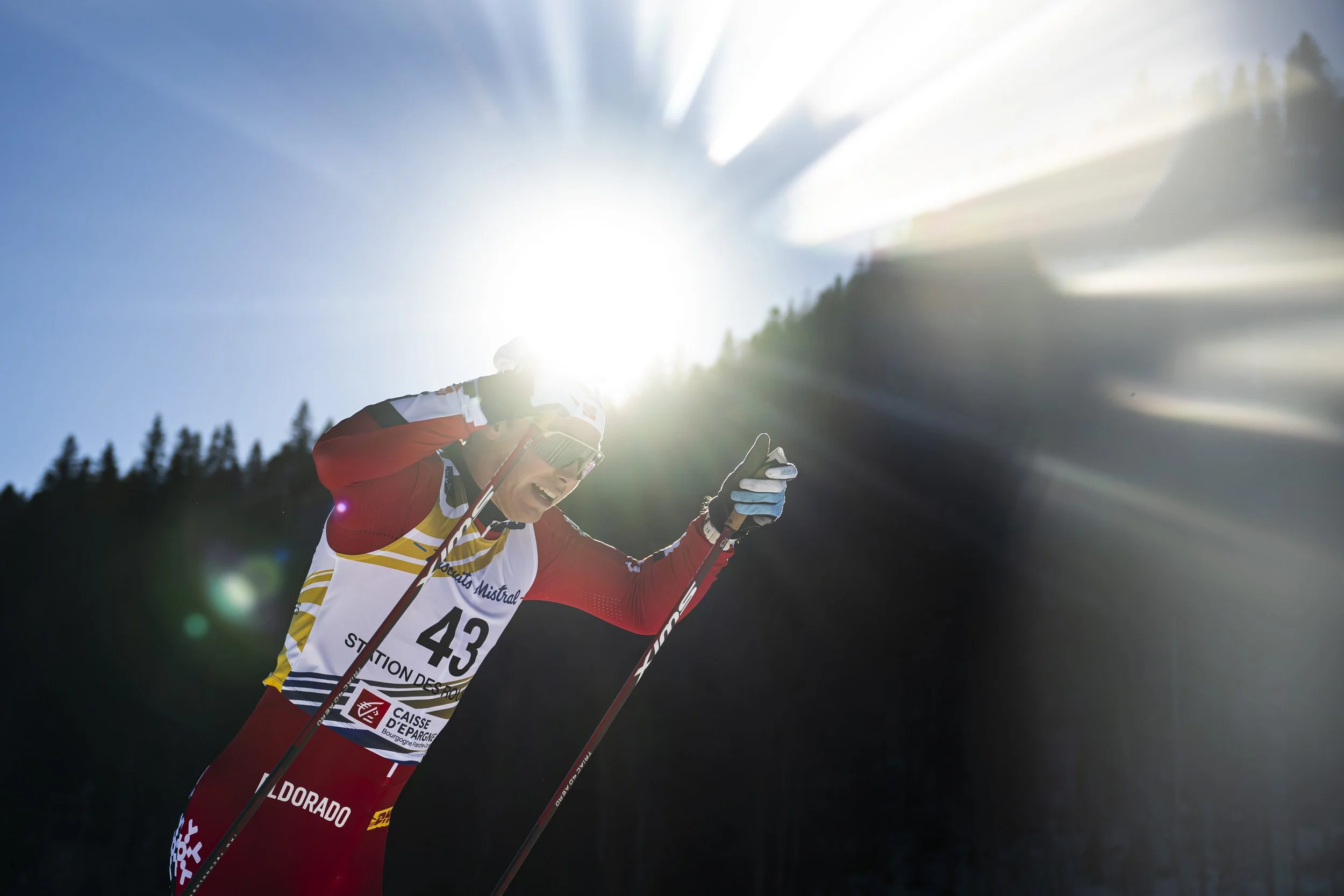
‘If you want to become a great photographer, you need to shoot sports. It’s the best training.’
II
Your focus is sports photography. What’s the connection there? Did you always love sports, or was it more about the challenge of capturing motion?
Funny enough, I wasn’t that into sports at first. But during my last year of high school, I had an internship at Lidköpings Tidning, and the photographer there told me:
‘If you want to become a great photographer, you need to shoot sports. It’s the best training.’
At first, I didn’t get it, but he explained—’sports photography forces you to be fast, to anticipate moments, to adapt to different lighting conditions in every arena.’ You can’t afford to miss a single moment because sometimes there’s only one goal in a game. If you miss it, it’s gone.
So, I started shooting games around Stockholm, and I really, really liked it. I wouldn’t say I was passionate about sports itself, but I found it exciting, challenging, and beautiful in a way. That’s what got me hooked.
So, you were an 18-year-old actually listening to someone older giving you advice? That’s rare.
Haha, yeah, I really looked up to him. Also, I was working weekends at a local camera store in Stockholm, and they would lend me all this brand-new gear—like a 400mm lens. That was a game-changer. Being able to test out pro equipment early on made a huge difference.
Have you always had a photo eye? Like, do you see everything in compositions, or do you switch into that mode when you’re working?
I always see things in pictures. I can’t even watch a TV show without analyzing the cinematography. I automatically divide a room into potential shots. If I see a great light, I think, ‘That would be perfect for a portrait.’ It’s just how my brain works.
III
Since you didn’t start as a huge sports fan, has working in this field made you more interested in sports?
Yeah, definitely. I now read all the newspapers multiple times a day to stay updated. When I was younger, I wasn’t obsessed with football or watching the Champions League like my friends. But now, I follow sports because it helps my job.
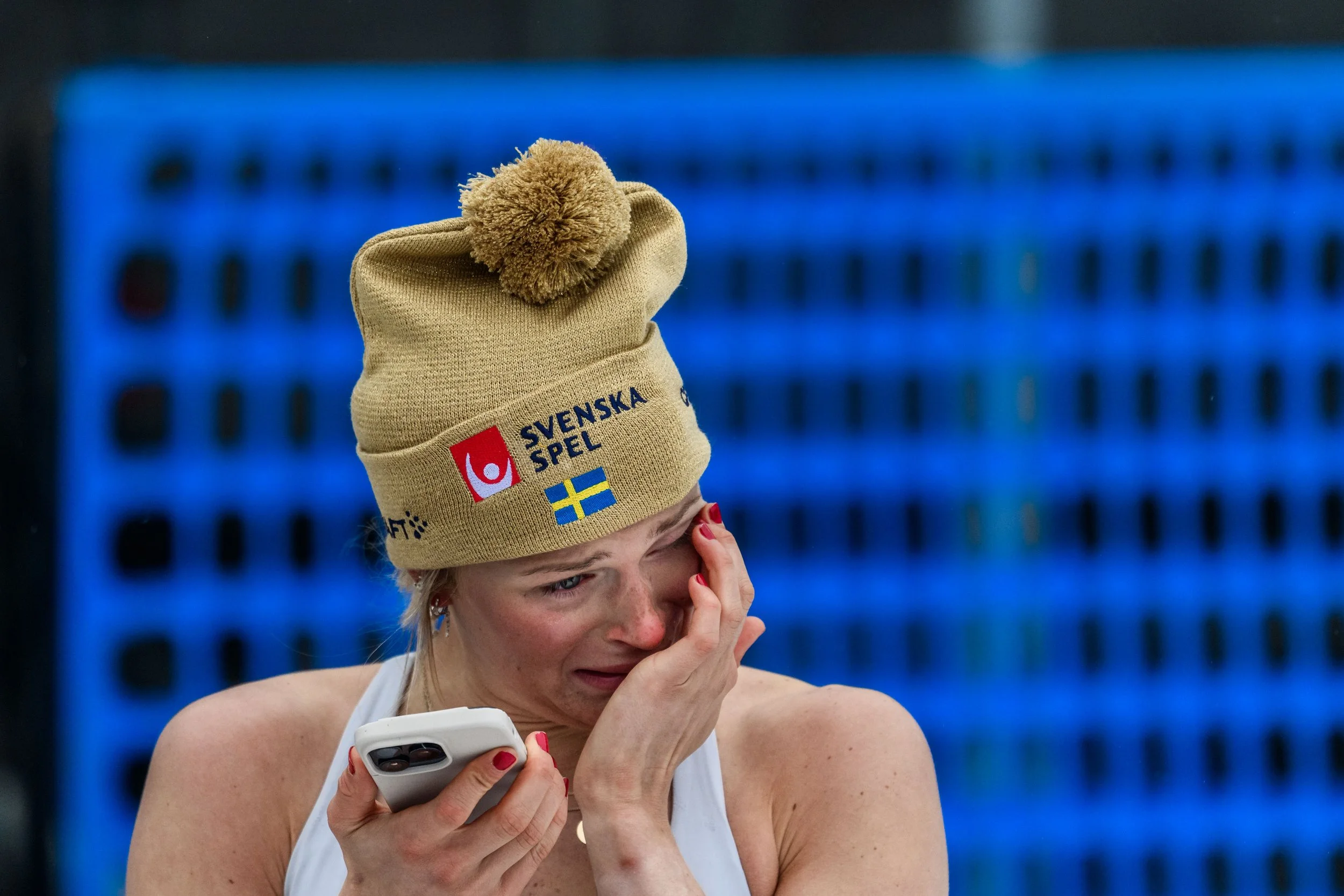
If I don’t know the context—like if an athlete is making a big comeback—then I can’t tell the story properly through my photos. It also helps me respect the athletes and their journeys.
How has your photography evolved since you started?
I think it’s constantly changing. I’m always trying to find new angles, new techniques—like, ‘Can I put a remote camera in this corner?’ What happens if I do this or that?
The basics stay the same—I have my own visual language—but I push the limits all the time.
Also, I used to beat myself up over mistakes. If I missed a shot, I’d think, ‘I’m useless’. Now, I try to analyze why it happened and learn from it instead of dwelling on it.
Do you care about what gets published? Like, do you ever shoot an amazing photo that never sees the light of day because a newspaper just wants a simple winner’s shot?
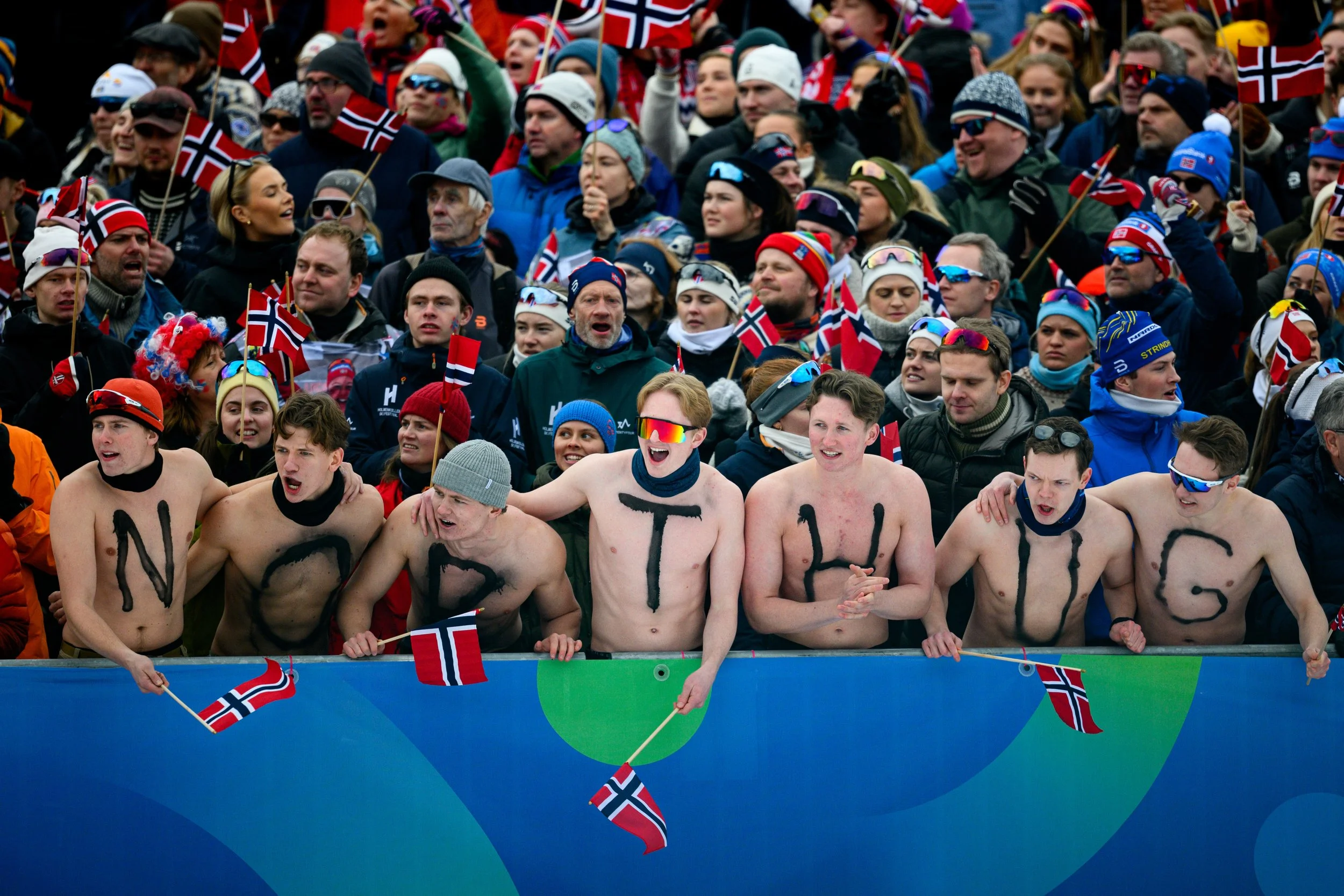
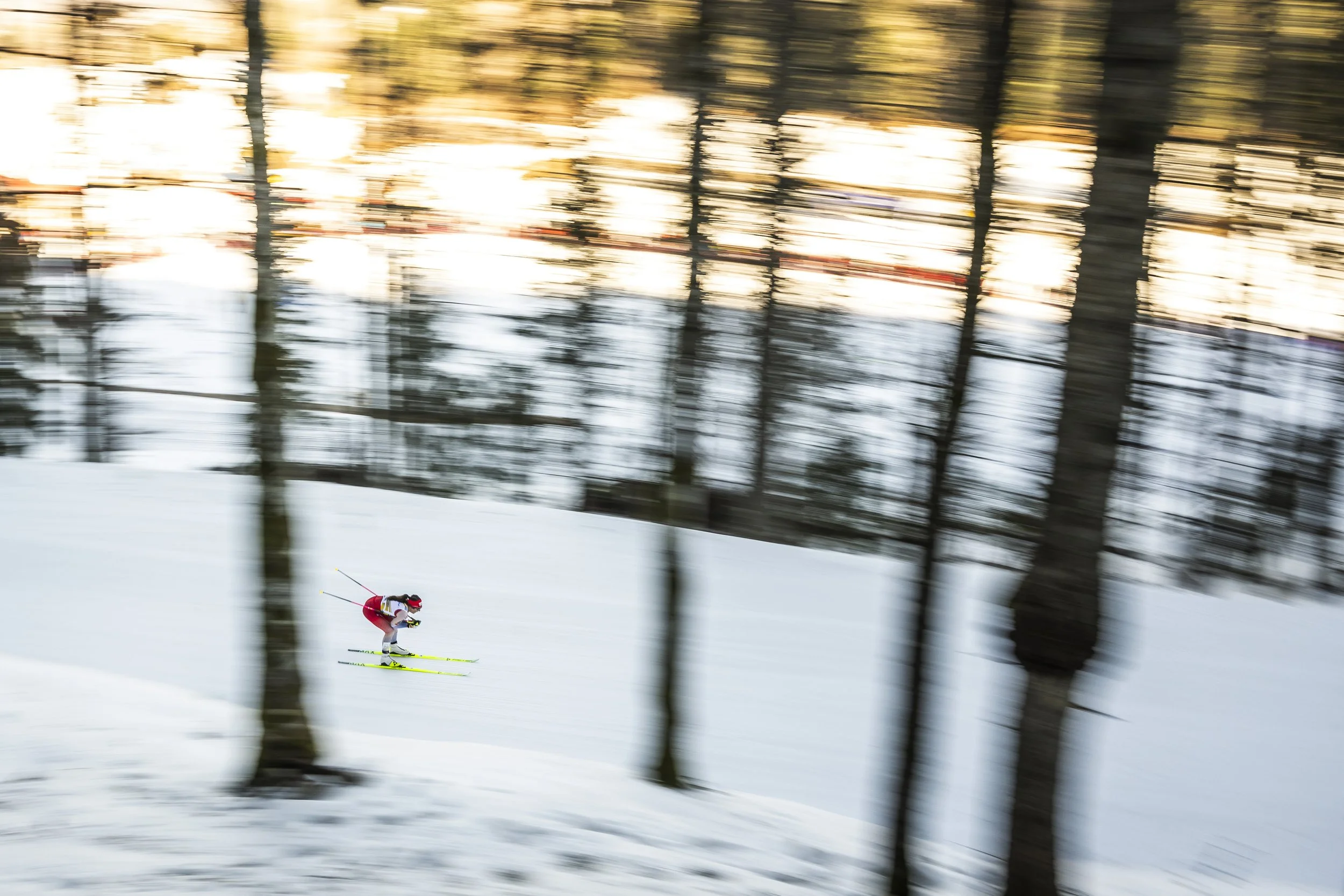
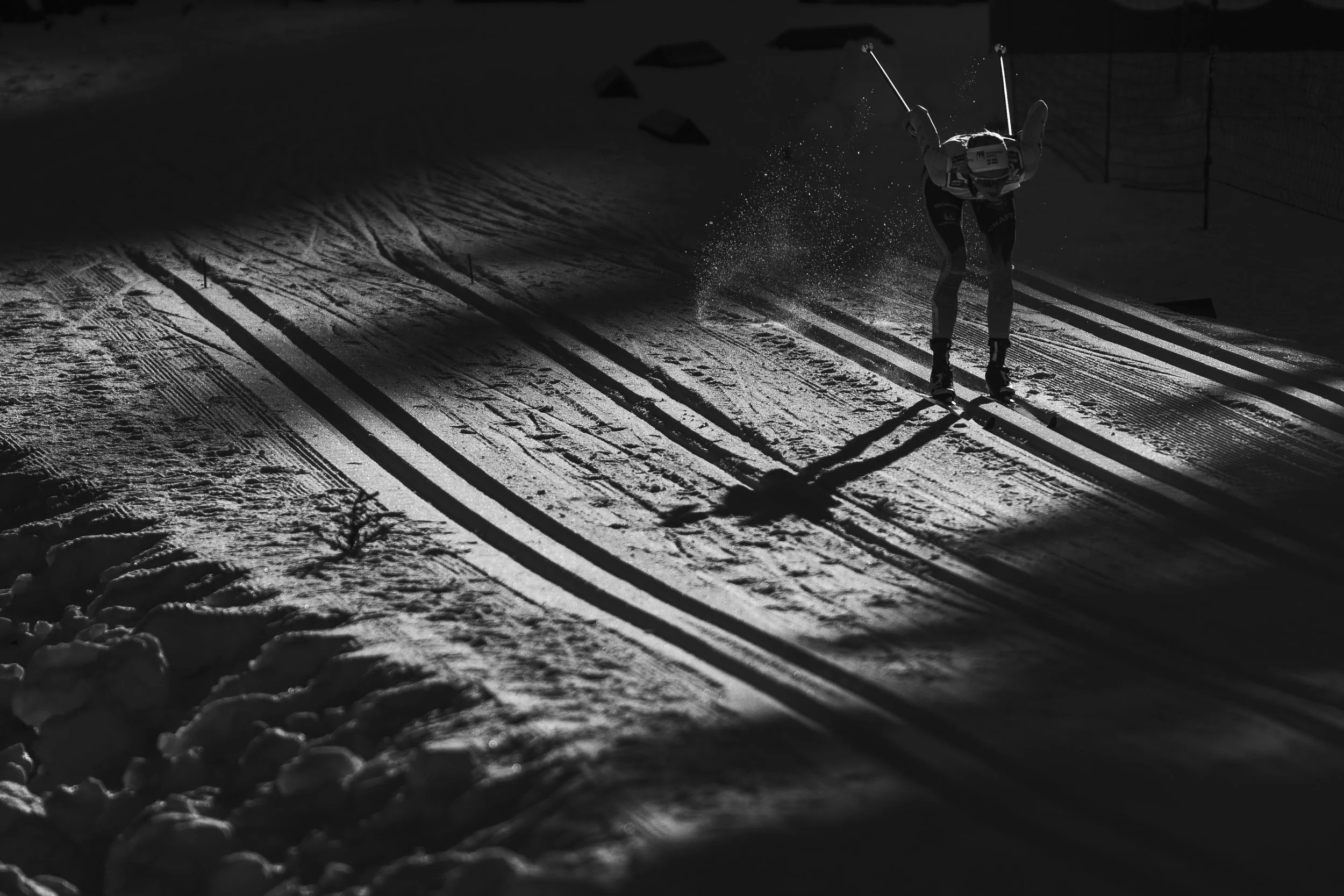
Yeah, that happens all the time. You can take the most beautiful shot of a skier with perfect light in the mountains, but in the end, the papers will publish a standard celebration photo instead.
But I’ve learned that different photos serve different purposes. Some shots might not be used immediately, but they could end up in a commercial or a magazine feature months later. You have to think long-term.
IV
What’s your favorite sport to shoot?
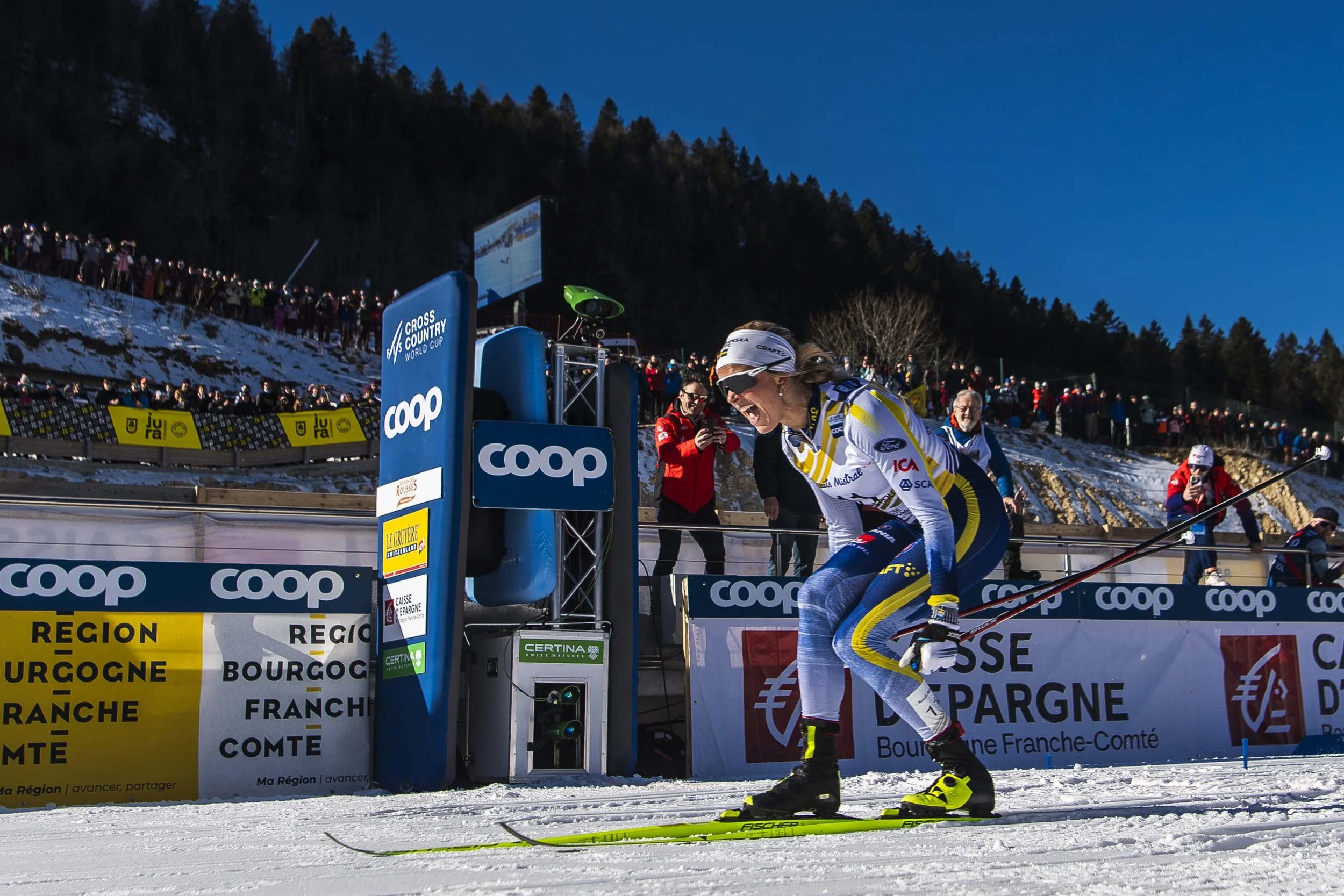
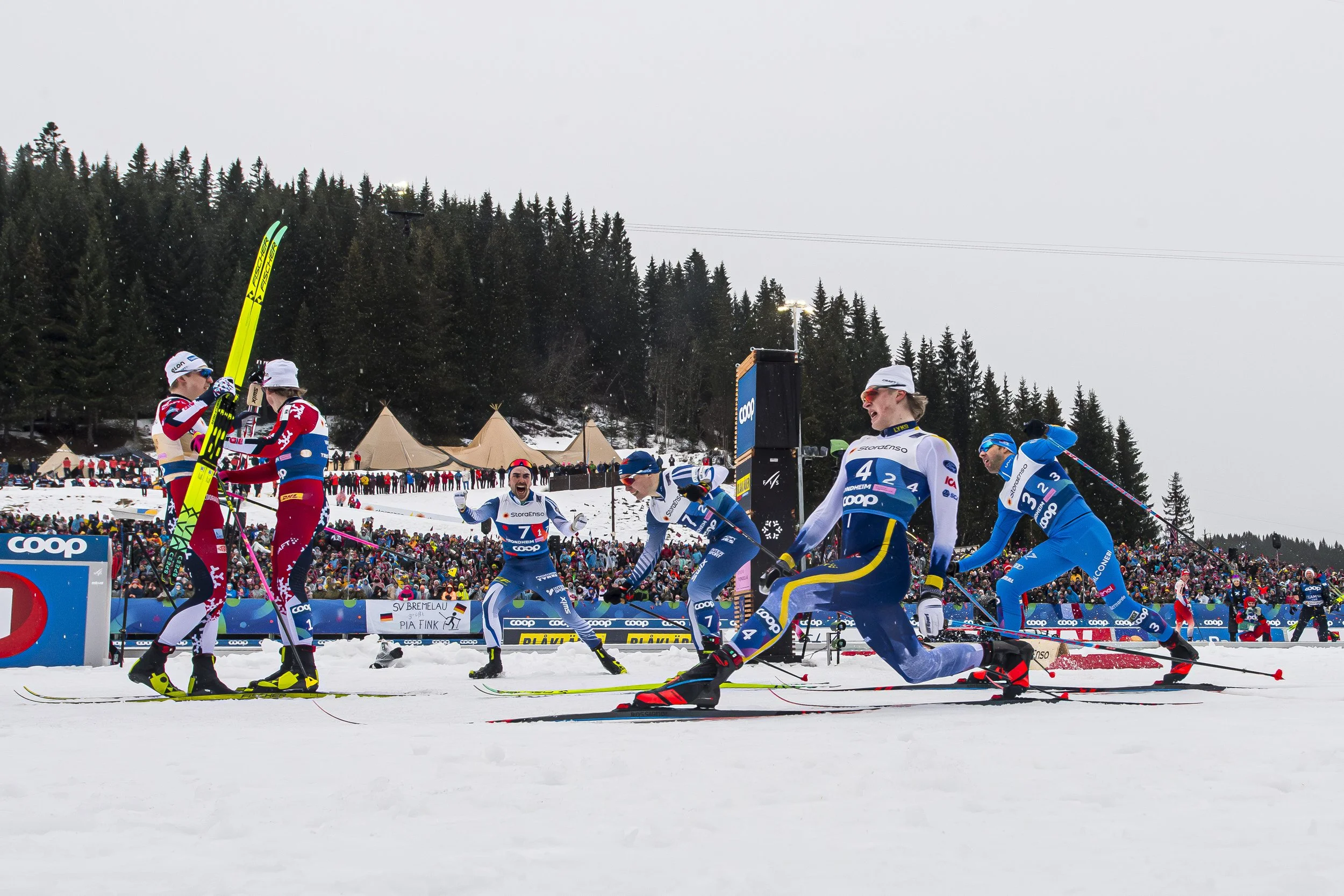
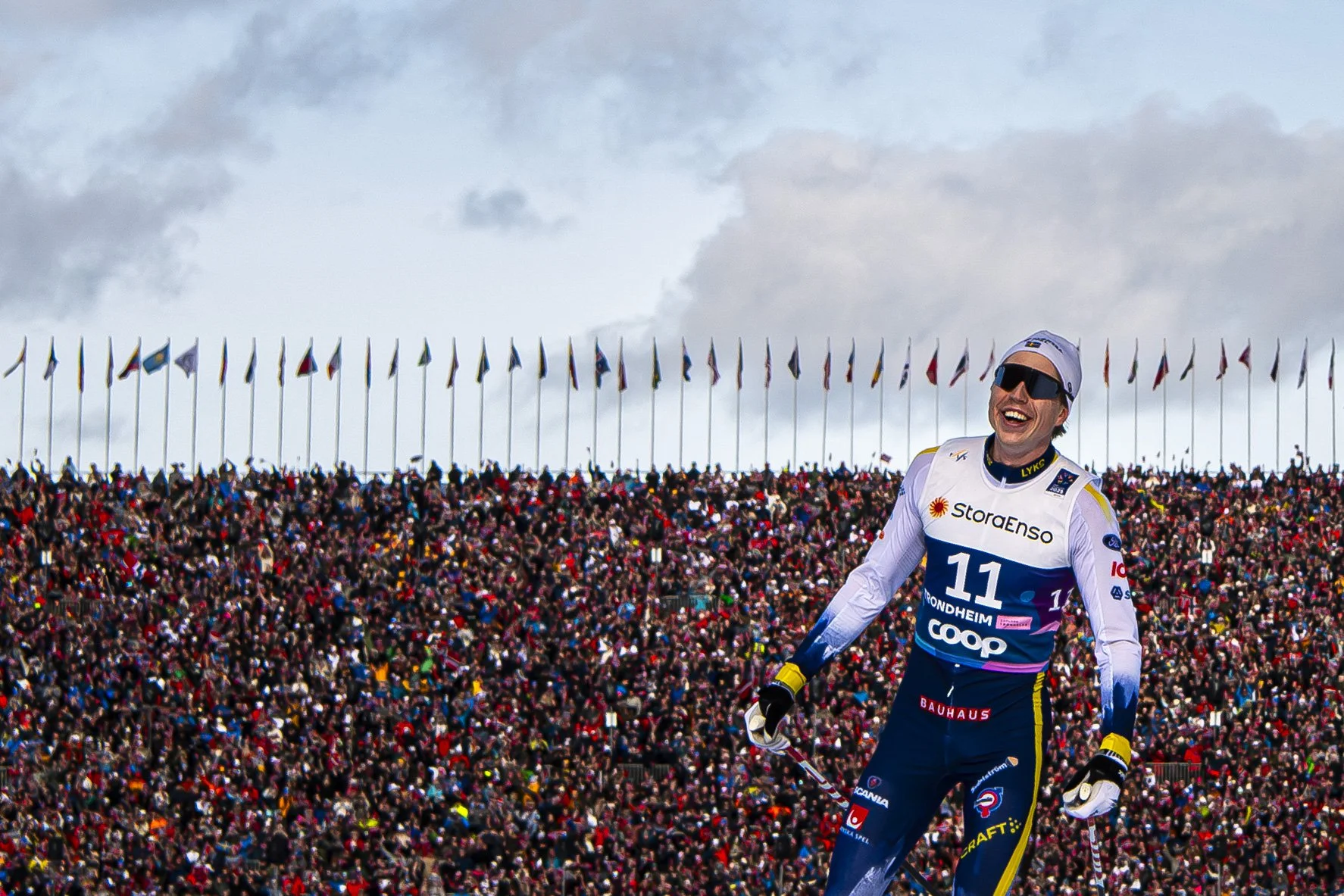
I love shooting cross-country skiing. I enjoy sports where the venue constantly changes. Soccer is great—especially when Sweden scores—but skiing forces you to reset your brain every day. You wake up at 5 AM, hike to the track before sunrise, and imagine the shots before the race even starts. It’s a challenge, and I love that.
The Olympics are also intense—you barely sleep, jumping from one sport to another, editing in between. It’s brutal, but you take your best pictures when you’re fully immersed.
Do you ever get hassled by security or suddenly find yourself blocked from a spot? Like, does it turn into a cat-and-mouse game sometimes—rushing to get in place before something changes?
Oh yeah, for sure. Sometimes you're set up in a perfect position, and then out of nowhere, a security guard or a volunteer shows up and says, ‘You can't be here.’
And I’m like, ‘Why? Who decided that? It was fine five minutes ago!’
Then you end up in this back-and-forth that’s completely exhausting. Sometimes, they just make up rules on the spot, or maybe someone higher up changed the layout last minute. Either way, you have to adapt fast.
One of the worst situations is when you’re already in position, and then they move you last second. Maybe you spent hours scouting the perfect spot, getting your remotes in place—then suddenly, a camera crew or sponsor setup appears out of nowhere and you have 30 seconds to relocate.
TV is king in these events, and sometimes you end up in their frame. If that happens, they’ll push you out because they’ve been there for three days, so technically, they have the rights to that spot. But, of course, we don’t get three days to prepare—we have to react instantly.
It’s definitely a game, and sometimes you win, sometimes you lose. But the best photographers are the ones who can think on their feet and still get the shot, no matter what.
V
Where do you see photography heading in this AI-driven world?
I think AI is a great tool, but it won’t replace real journalism. Sports photography isn’t like product or fashion photography, where you can generate an image. You can’t fake real stories.
AI helps us distribute images faster, but at the end of the day, it’s still about being in the right place, at the right time, with the right instincts. That’s something a machine can’t do.
That’s a solid take. Thanks, Maxim—good luck with the rest of the season!
Thanks, man. See you out there!
SHARE
OTHER STORIES
-
born to endure
CULTURE
-
from the track to freedom
INTERVIEW
-
The first step
CULTURE
-
A Nordmarka Classic
CULTURE
-
The Art of Fast Skis
INTERVIEW
-
Nattvasan
CULTURE