
In the Absence of LighT
Words by Lasse Finstad
Photos by Zoltan Tot
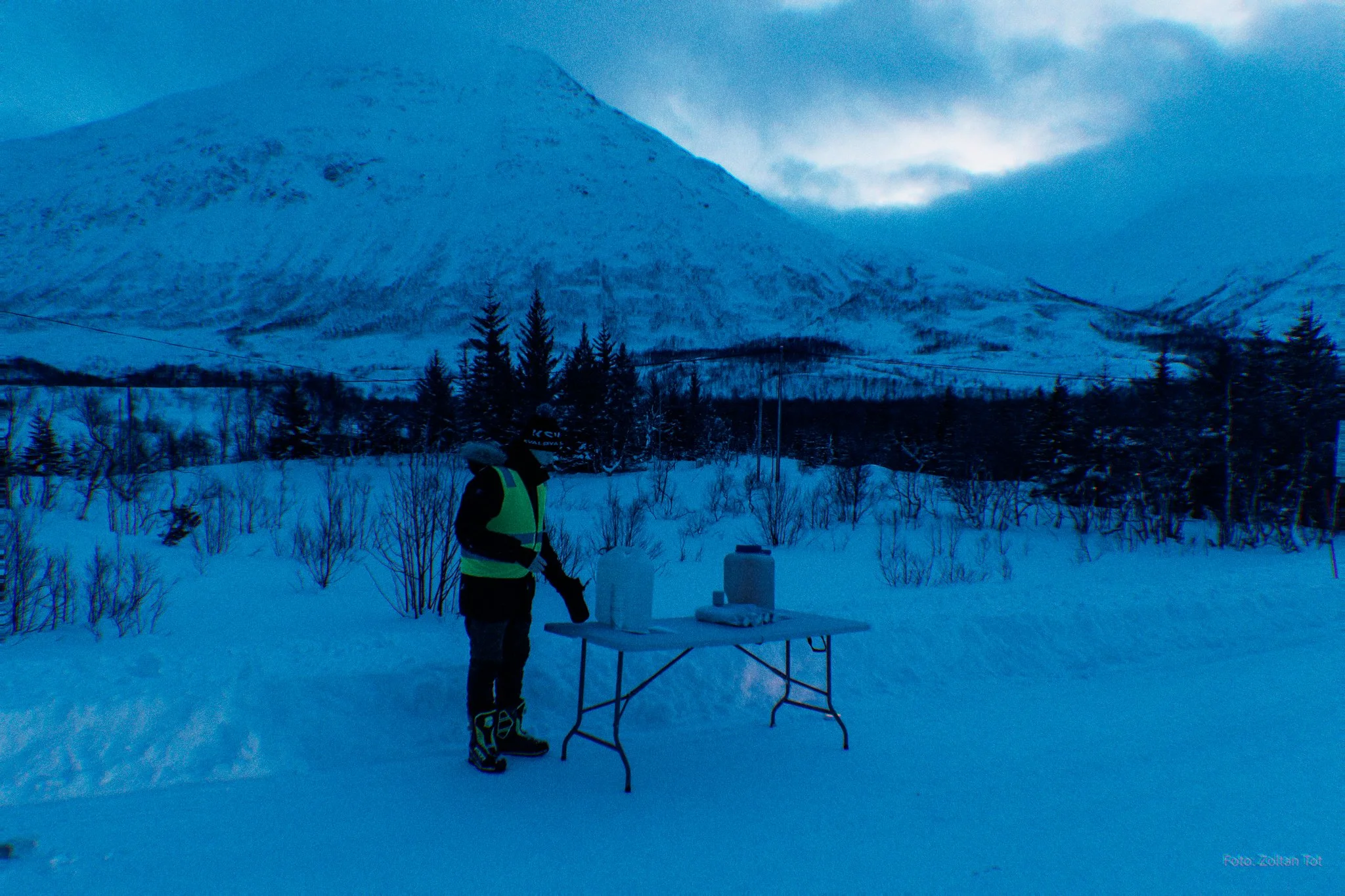
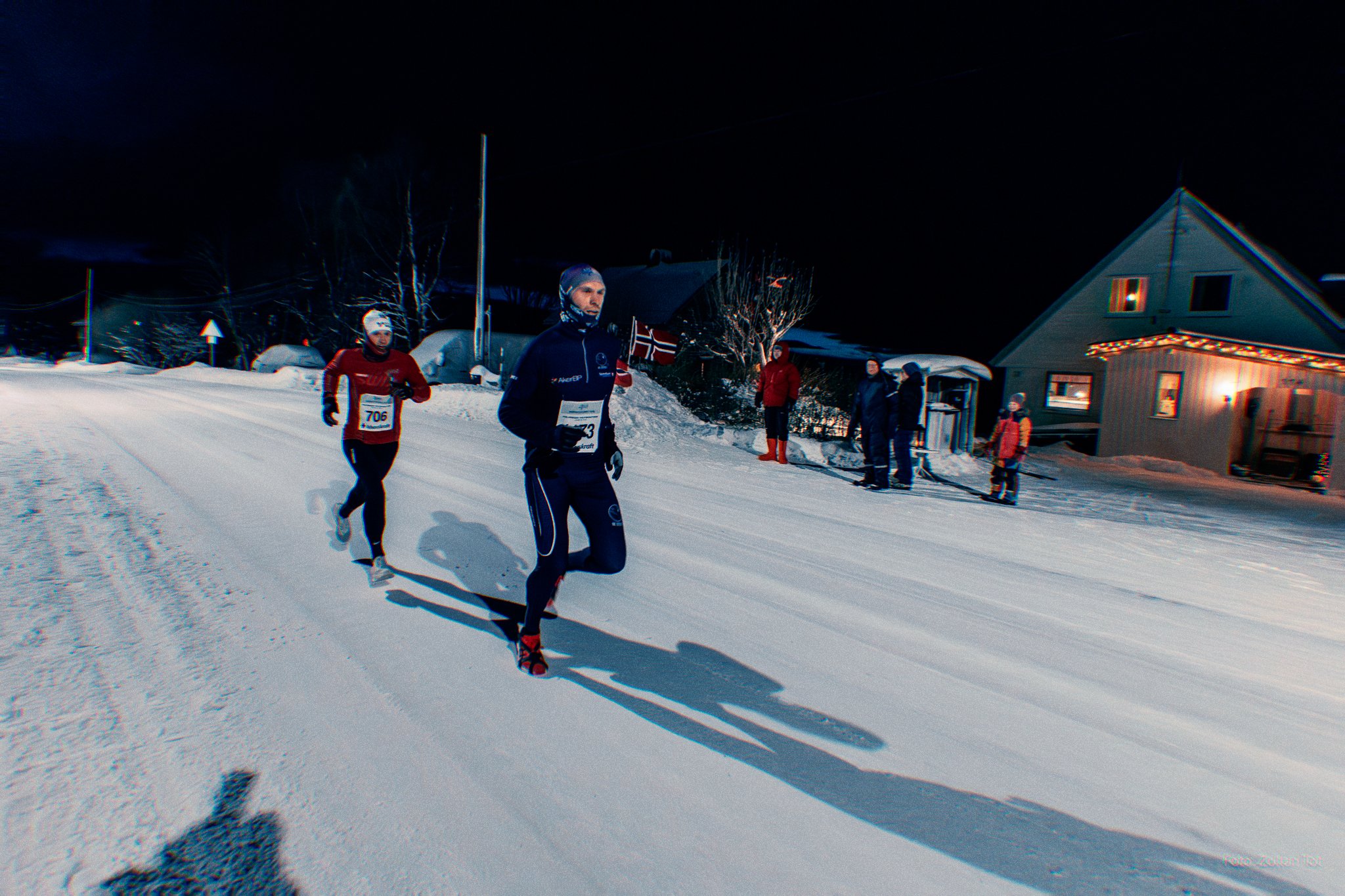
Written by Lasse Finstad, winner of the Polar Night Marathon in Tromsø, this is not a race report. It’s an account of what 42.2 kilometers feel like when winter is fully in control.
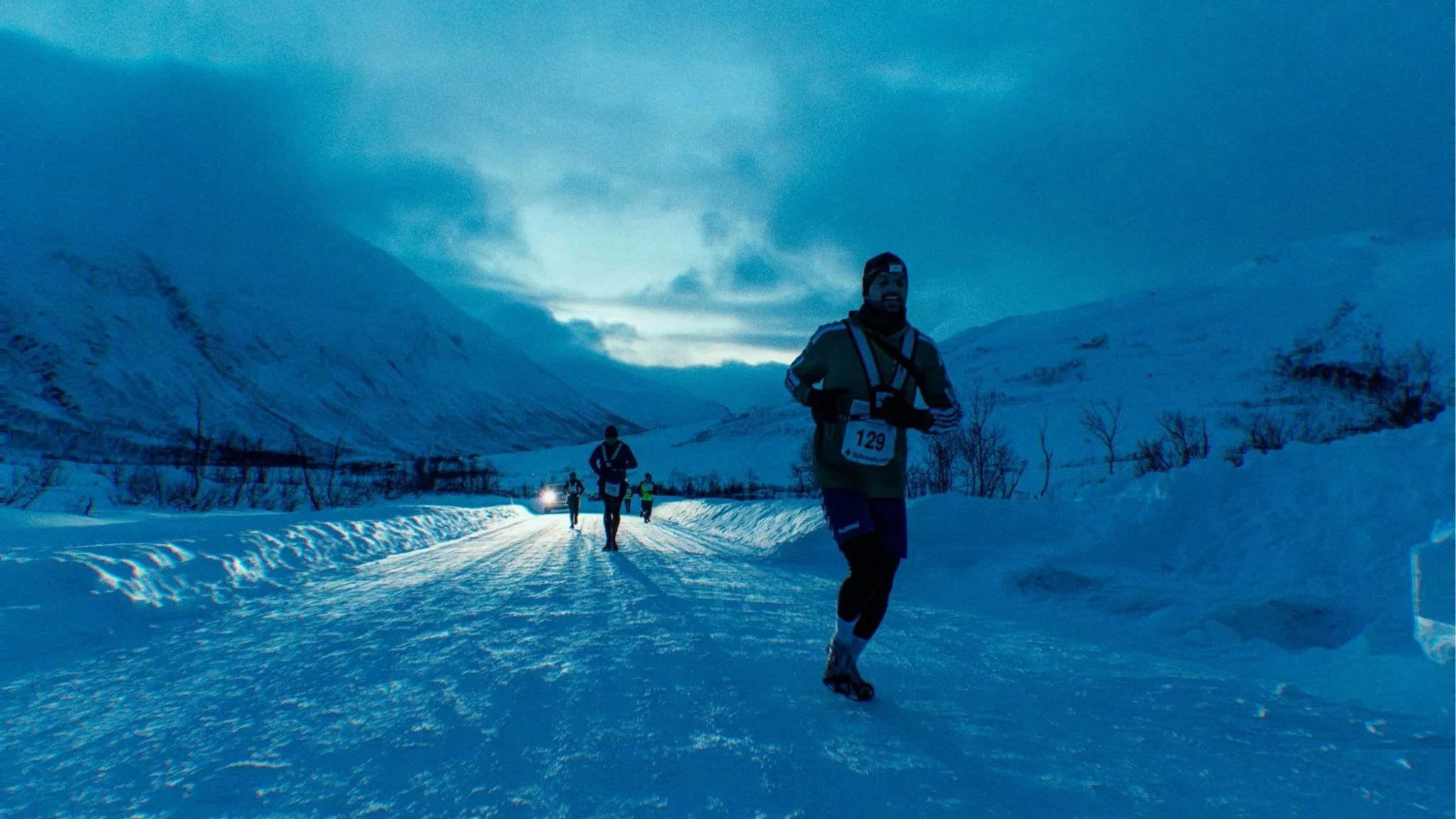
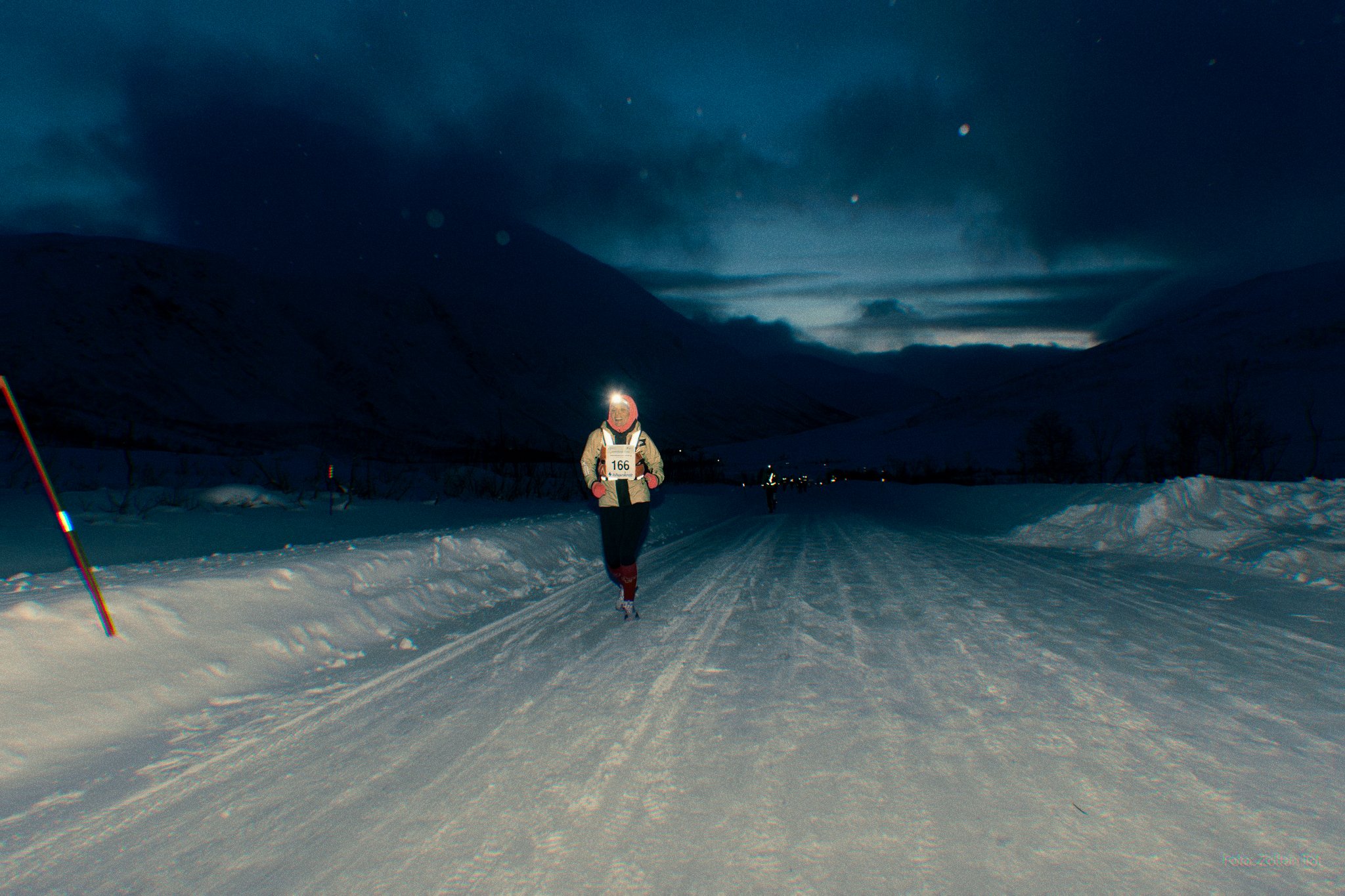
In Tromsø, the marathon begins before the sun — because the sun doesn’t show up.
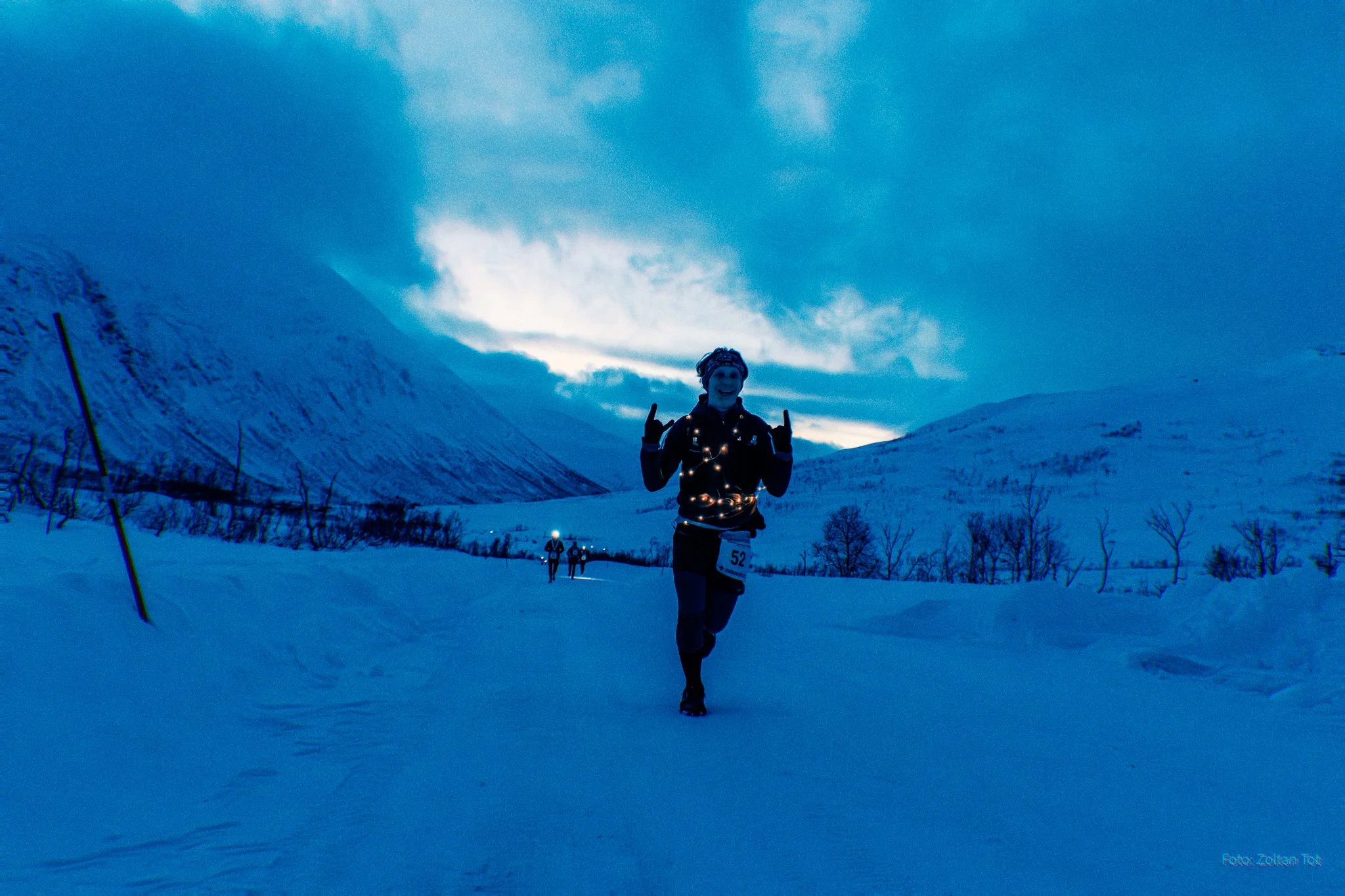
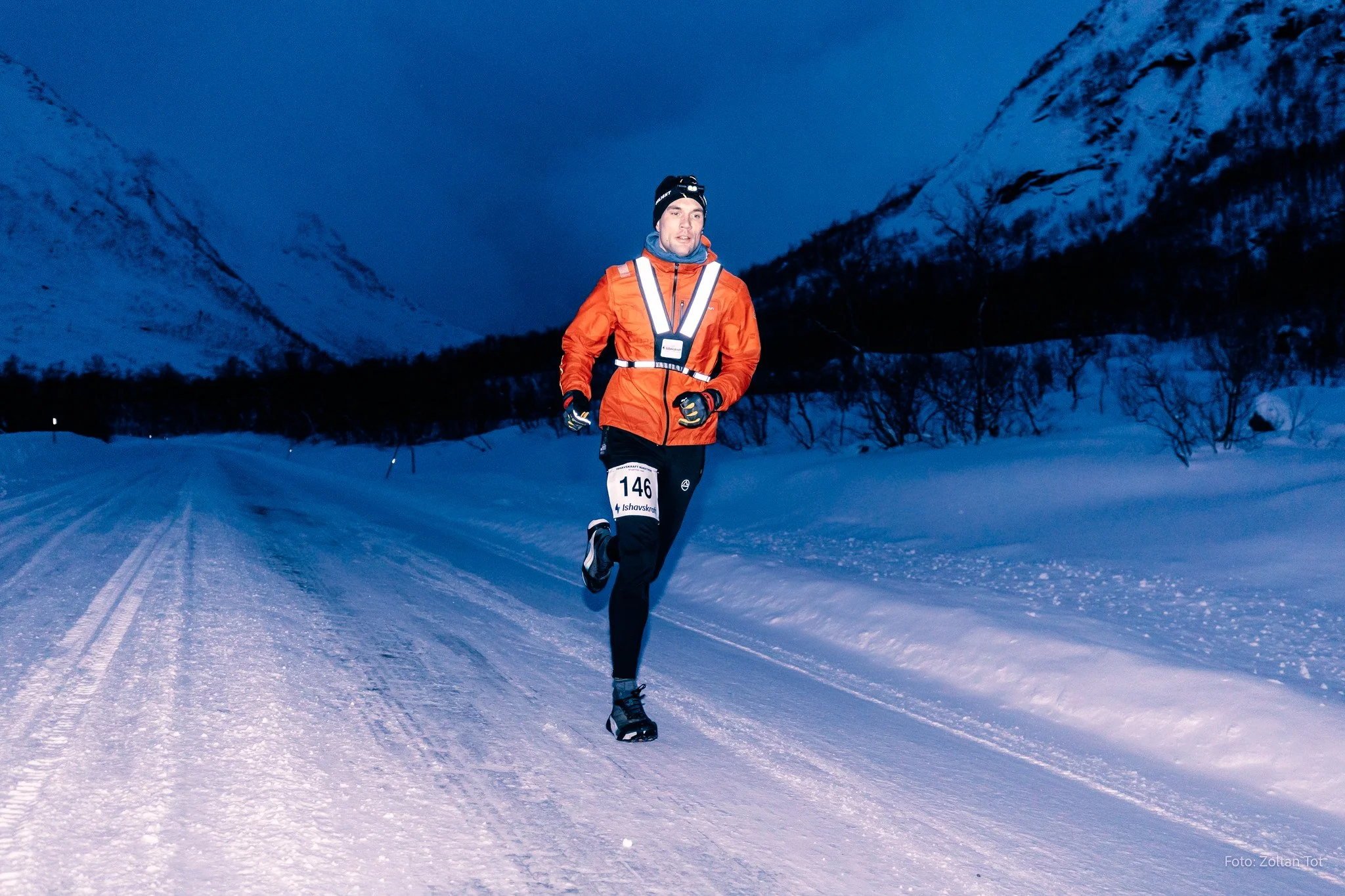
The Polar Night Marathon doesn’t break you all at once. It works on you in detail: zippers that won’t cooperate. A gel that turns into something you have to chew. Fingers that stop being fingers. A wind that feels targeted — not just cold, but personal. And the constant check-in, over and over: Is this pain, or is it just winter doing what winter does?
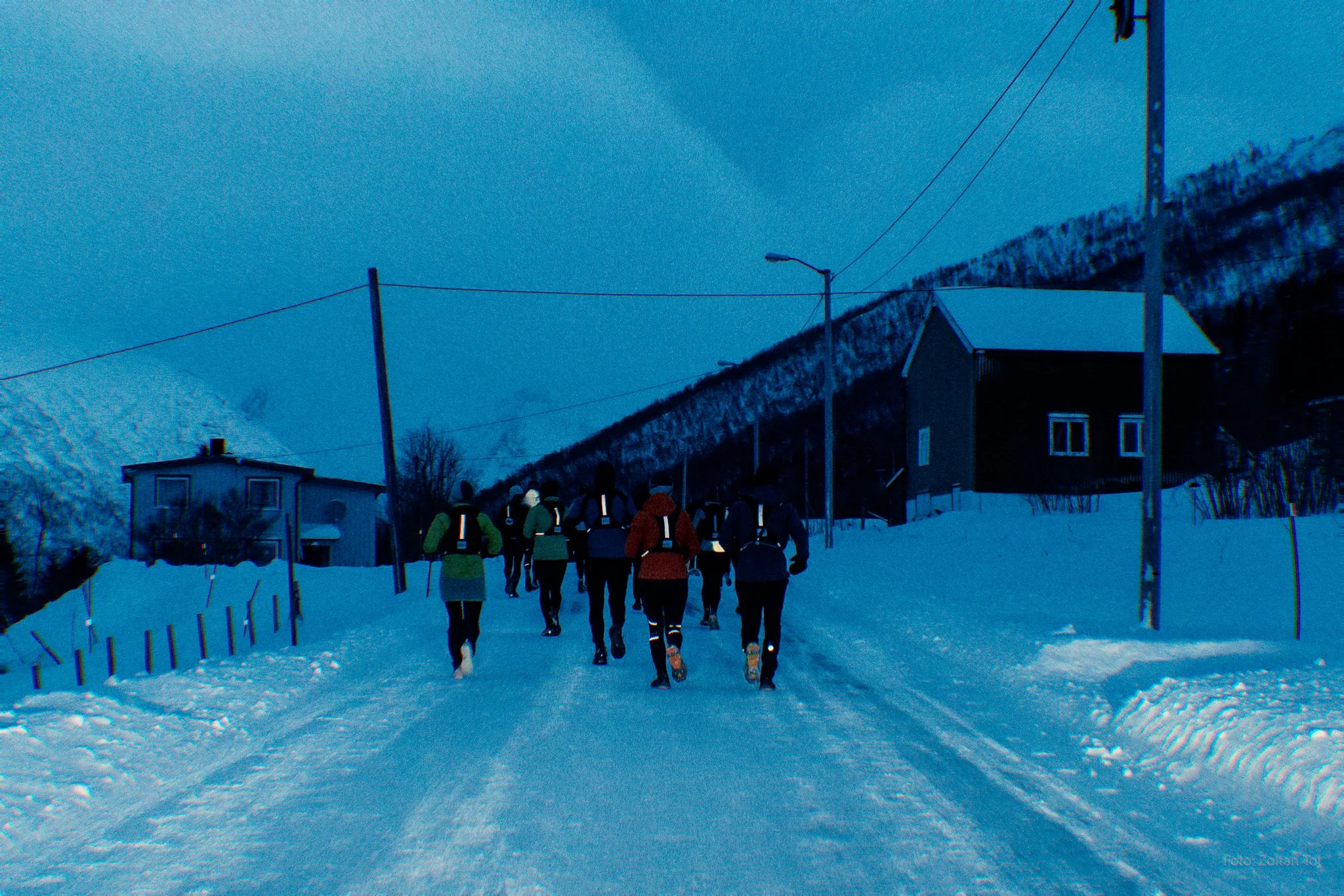
The road kept changing its mind as the kilometers stacked up, packed snow to loose snow, then hard ice, then the gritty relief of asphalt before it turned slick again. The dangerous parts weren’t dramatic. They were subtle. Ice where the light lies. Corners that looked safe until your foot landed and the ground reminded you who was in charge. At some point you stopped chasing a perfect pace. You started chasing stability. Smaller steps. Softer landings. Less fight. More patience. Letting your body stay calm when everything in you wants to tense, brace, protect.
And yet, there were moments that felt almost tender.
It wasn’t the full spectacle, not the green curtains everyone hopes for. But there was a flicker. A suggestion of movement above the city glow. Enough to make people point with mittened hands. Enough to make tired runners lift their eyes and remember where they were: running a marathon in the polar night, under a bright moon, with the possibility of aurora like a secret held just out of reach. The last stretch didn’t ask for speed. It asked for patience. The cold had settled into muscle, the kind that makes every step feel like it costs something real. But the finish area sounded different: louder, closer, alive. A folk fest you don’t expect in darkness: music, laughter, cowbells, people wrapped in blankets and pride. A winter city turning endurance into celebration.
Crossing the line felt less like victory and more like arrival. Not just at the end of a course, but into something shared, the simple truth that you can move through the darkest season and still find light. In the crowd. In the moon. In each other. In the quiet decision to keep running.
It became a story about winter accepting you, briefly, on its own terms. About ice and breath and belief. About hoping for the northern lights, and finding something just as rare: a whole city cheering like it means it.
SHARE
OTHER STORIES
-
born to endure
CULTURE
-
from the track to freedom
INTERVIEW
-
The first step
CULTURE
-
A Nordmarka Classic
CULTURE
-
The Art of Fast Skis
INTERVIEW
-
Nattvasan
CULTURE