
ENDURANCE
REWRITTEN
Words by Henrik Rostrup
Photos by Jacob Zocherman, Johan Lantz, Göran Assner
and Elov Olsson
I’ve always been drawn to stories of reinvention. Of people who start over when life pushes them off their expected path. This conversation with Elov is one of those stories. It’s about movement, resilience, and the quiet power of changing your mind — and your life — when you least expect it.
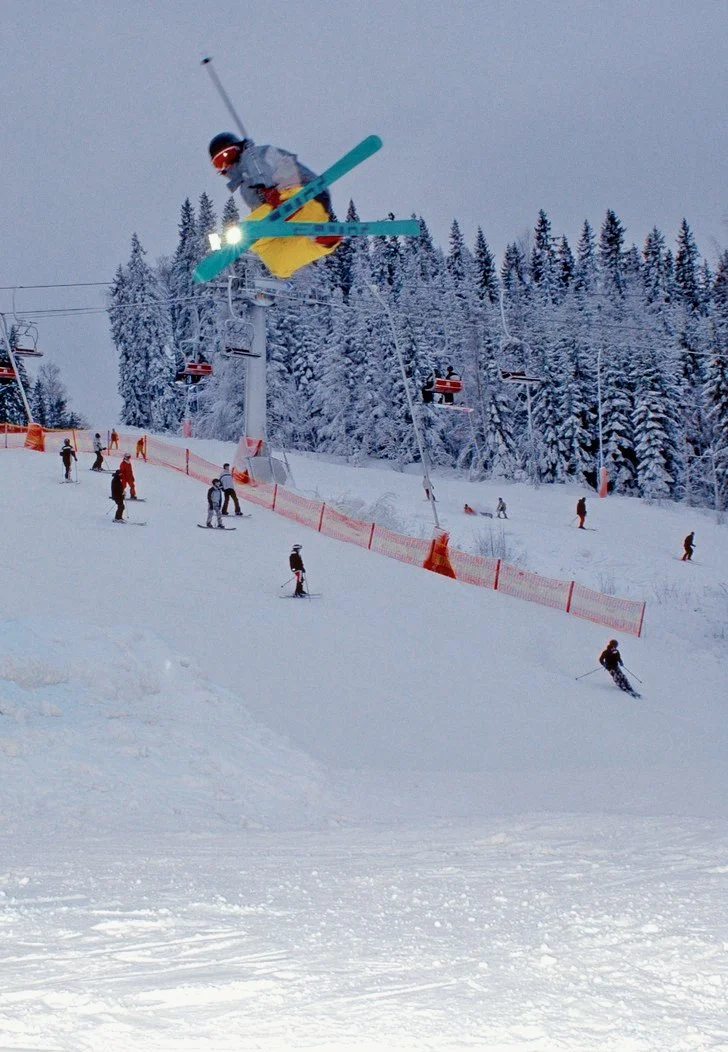
In the early 2000s, I made ski films. One of them, “Teddybear Crisis”, ended up capturing something bigger than I expected — a moment when freeskiing and new school park skiing hit a cultural high point. For those of us who were there, it was more than tricks and style. It was an identity. Movement. Belonging.
I left the ski industry after that. Became a director. But those films kept surfacing. Kids still find them. They still mean something. And maybe that's because, in some way, skiers never really stop being skiers. The mindset stays, even if the sport changes.
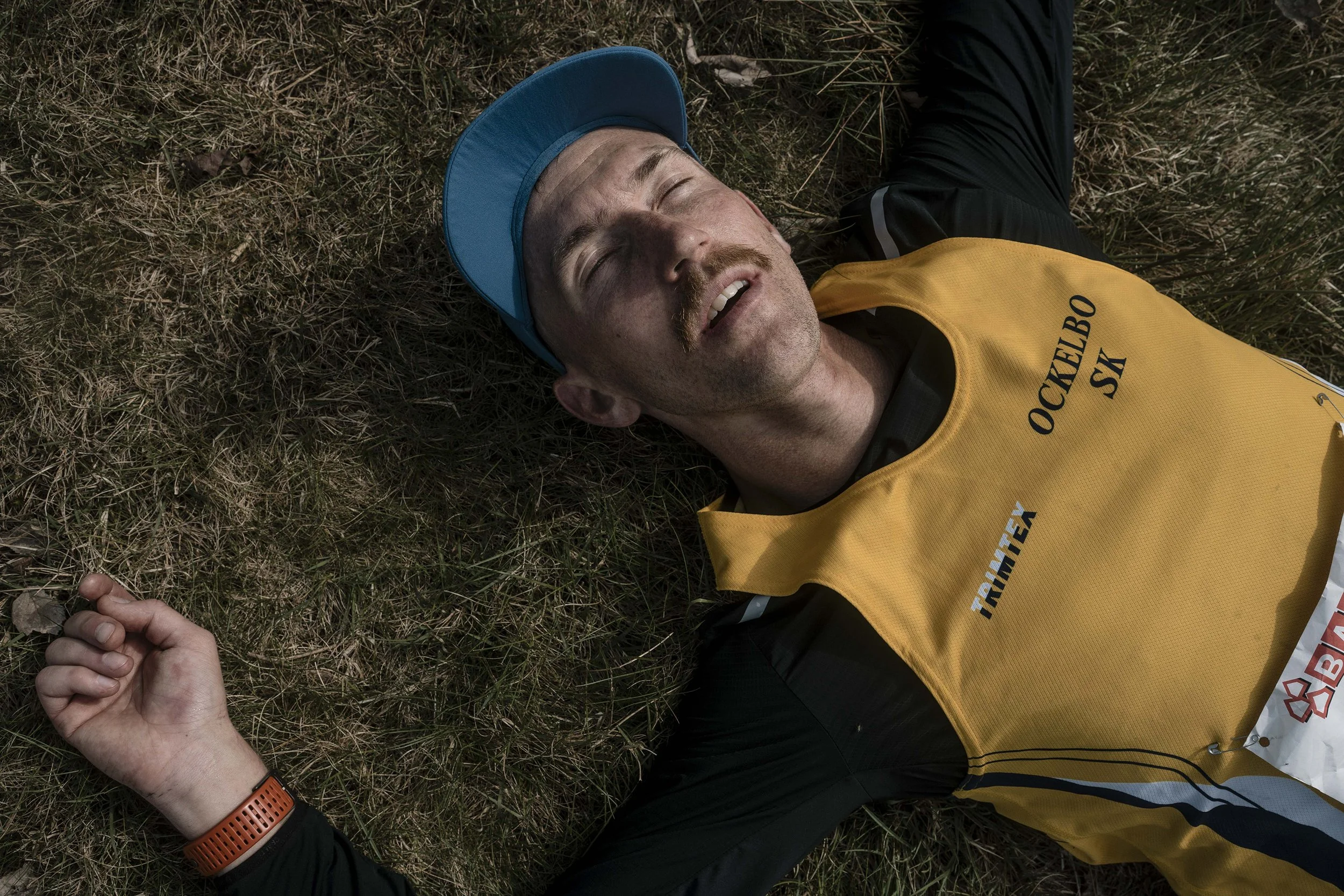
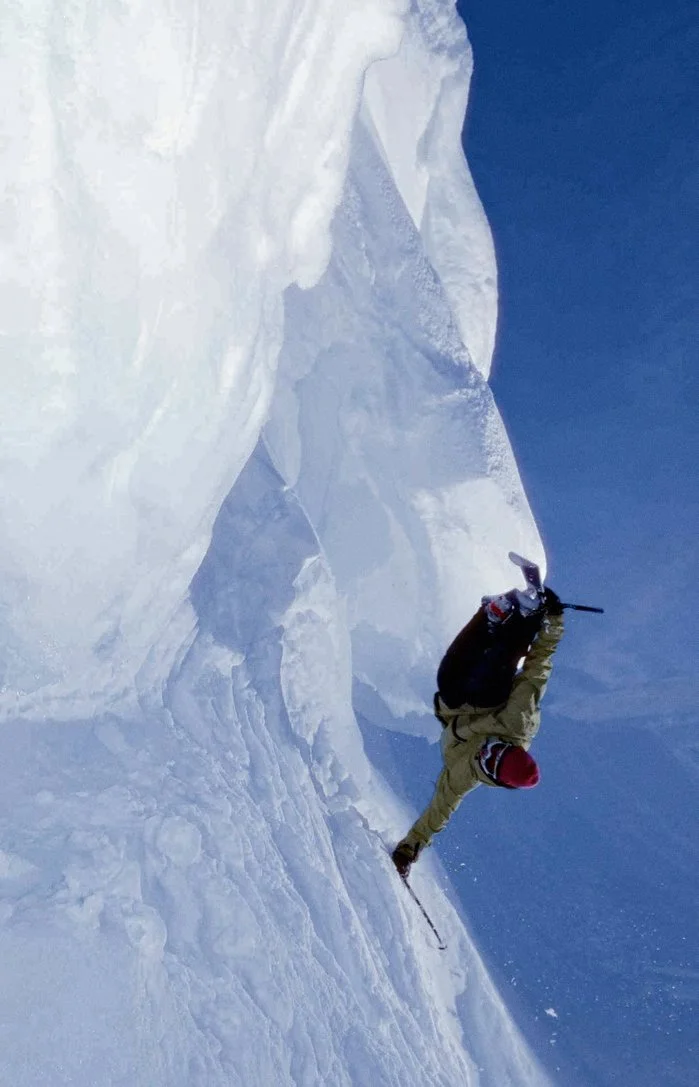
Fast forward to now — Elov Olsson sets the Swedish 24-hour running record. I start hearing whispers: “He used to be a skier.” At first, I didn’t think much of it. But then Elov sent me some old videos. There he was — baggy pants, big airs, one of those kids from that era. Part of a generation of hucksters who lived for the mountain and the moment. And suddenly, his story made perfect sense — and no sense at all.
Because changing paths like that isn’t common. Especially not from a loose, expressive sport like skiing into something as structured and solitary as ultra running. Back then, running didn’t even have a culture to lean on. No scene. No style. Just the idea of forward motion.
But Elov found his way into it — not through ambition, but through necessity. A serious knee injury ended his skiing career. And where most would’ve let go, Elov started again. First with short runs. Then with mountain marathons. Eventually with 24-hour races that demand everything you’ve got — physically, mentally, spiritually.
I
You mentioned the ski film “Teddybear Crisis” — Johan (Lantz) reminded me about that just yesterday when we were in Stryn. That was such a legendary time. You guys built those massive jumps up there — what was the cat driver's name again? Laffa, right? Yeah, those were absolutely huge. I remember Jon Olsson came out on a snowmobile to help two people in so they could actually get enough speed.
We went up there after you had been filming, just to see it for ourselves. We wanted to check how big the jump really was and test if we could get the right speed. I don’t think we had any real plan to hit it — we just wanted to feel it out. In the end, we didn’t jump. We came to our senses pretty quickly. The speed just wasn’t there, not without the snowmobile tow-in. But I remember standing there, maybe 15 or 16 years old, thinking maybe, like if I really tucked and committed... But honestly, you’d probably land flat. Still, just being there — testing it, imagining it — that was part of the magic of that time.
Yeah, without a snowmobile tow-in, I don’t think you’d ever clear that jump. You’d probably come up short and just slam the knuckle.
I don’t know — I felt like I almost had enough speed, just barely. But yeah, best-case scenario you’d land in the flats and wreck your knees. It was fun testing it though, just being up there, standing on the in-run where all that filming had happened. That era left such an impression on us.
That period was wild. I’ve got so many great memories from that time too. A few skiers from then are still around, doing their thing, but most people either quit or just faded away. Some kept skiing, others went in completely different directions — like Jon Olsson, who ended up doing cars and YouTube and all sorts of other stuff. But I haven’t heard of many who stayed in sports in some other form, or transitioned into something just as intense. You’re the exception — you kept going. Just in a completely new way.
It’s kind of rare, right? To take a sharp turn like that and not just dabble, but really commit — and keep going. I mean, we do bump into former skiers now and then in the running world, but not many have made the full transition like Johan and I have. You’ll see someone like Lars Ylis pop up, or Tom-Oliver Hedvall — he shows up in Åre sometimes and runs a few mountain marathons. And Jeppenator, he’s around Gävle now and then, at local events like the ones at Dome. It’s fun when we run into each other. It’s like this little reunion, except now we’re all in running shoes instead of ski boots.
Yeah, and now there’s this huge running wave — or fitness wave, maybe — sweeping through. You see more and more people coming into the sport, sometimes later in life, after trying all sorts of other things first. But I’ve honestly never seen that ski-to-running transition at this level. I get the adrenaline and drive you had in skiing — how hard you worked back then. But the way that has carried over into running, especially at an elite level... that’s something new to me.
Yeah, I think it’s important to highlight stories like this. Just because you grow up identifying as one kind of athlete doesn’t mean you’re locked into that forever. You can change paths completely — even into something that feels unrelated. For me, that change came through injury. I blew out my knee in a skiing crash, and suddenly, it wasn’t just a question of what I wanted to do — it was what I could do. Skiing became too risky. I didn’t fully trust my body on skis anymore, not after that.
But I never really had a crisis about it. It was more like a quiet shift. Rehab turned into training, and one day Johan said, “Let’s sign up for a cross-country race.” That was it. It snowballed. Soon I was running longer than I’d ever imagined — longer than a marathon, without even knowing how far that actually was a year before. You realize your identity as an athlete can evolve. And sometimes it takes getting knocked off your original path to discover a better one.
II
It’s wild how different things were back then. When did you actually start skiing? Around 12?
I think I was about 13. Johan and I met in junior high school — we weren’t close at first, but we ended up in the same math group. I was sitting with his friend, and Johan joined us. We got to talking, and eventually he invited me out to Kungsberget. That’s when it all started for me.
So early 2000s — ski films, baggy pants, big tricks. That whole scene was blowing up.
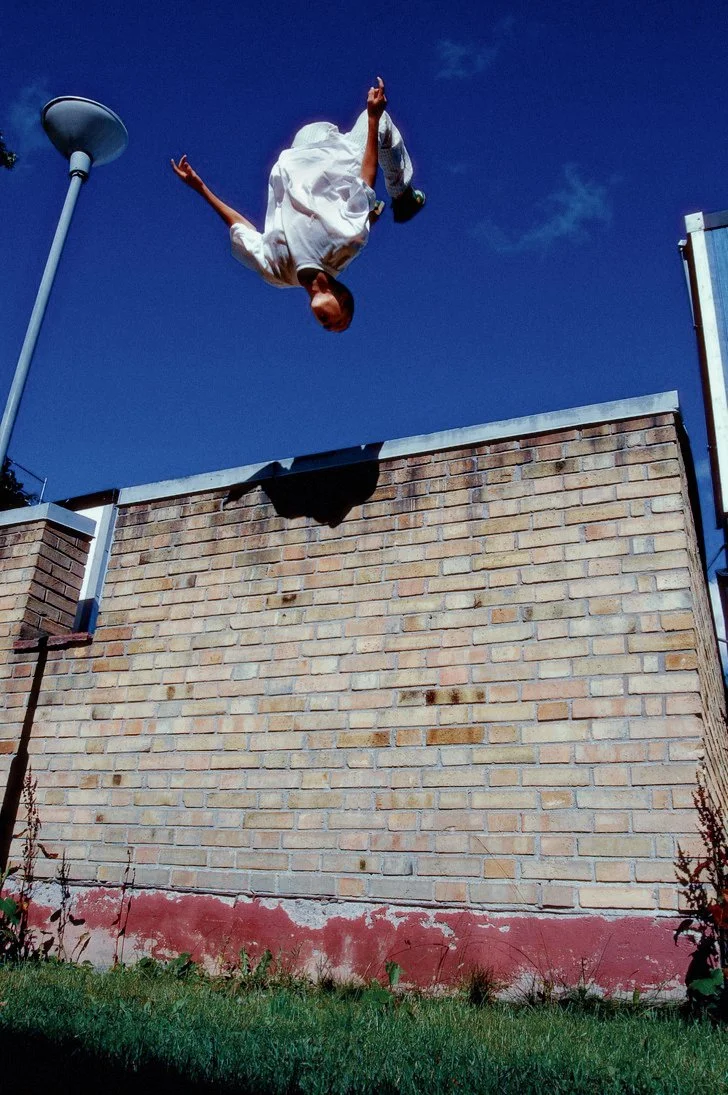
Exactly. We were right in the middle of it. Jon Olsson was pushing the limits, guys were landing double flips. Everything was progressing fast. I was obsessed with T.J. Schiller for a while — tried to mimic his tweaked mute grabs. Probably overdid it. Snapped a few skis. But it was such a good time. We were filming our own edits, which is why we went into photography and media in high school — we just wanted to capture it all. That’s actually helped later on with running — being able to shoot and share that side of things.
Looking back, I’m almost glad we didn’t stick with skiing. The level today is absolutely insane. The tricks, the risk — it’s hard to believe. That sport has evolved so fast.
Yeah, same with snowboarding. The landings now are like hitting concrete.
Right? But it’s like that across the board. Same with running. It’s not something you can just casually step into anymore — not if you’re aiming for the top. Everything takes time. But back then, it felt more accessible. More personal. You had heroes, you knew the scene, and it was all built on passion.
And when your knee gave out — did the rehab just naturally take over? Was it obvious skiing was done?
I knew I didn’t want to go through something like that again. Two years of rehab takes a toll. At some point, I just accepted that I wasn’t coming back the same way. And to be honest, there wasn’t much of a rehab culture in skiing then. People got injured, but most didn’t take it seriously. That’s why a lot of talented skiers just disappeared. Tanner Hall was one of the few who pushed through all that. For me, I think it came down to loving the process — training, rebuilding. That mindset made it easier to switch sports and start over.
I’ve always been into sports. Growing up, I played just about everything — football, basketball, floorball, hockey. You name it. Then skiing took over. But I’ve always just loved moving, using my body, and being active. That always felt natural to me. Even now, I enjoy going to the gym — not that I’d call myself a gym rat or particularly technical. But I like the environment, I like the process. And the more I do it, the better I get.
Funny thing is, some of the exercises actually felt easier during rehab than they do now. Like squats — at one point I could do 80 kilos for 15 reps, full depth to 90 degrees. I’m nowhere near that today. I’d probably struggle with 50 kilos. So yeah, in some ways I was stronger during that period. Though if I looked at footage, maybe my technique back then wasn’t perfect either — hard to say now.
III
It’s strange how that works — the body shifts, adapts. But I guess your training load now is a whole different beast compared to those focused rehab days.
Completely different. Back then it was structured around rebuilding, targeting weak spots. Now it’s built around maintaining a high volume of running and staying healthy. With skiing, the training was less structured — it felt more like play. Even though it demanded a lot physically — especially the landings, the impact — it wasn’t training in the same sense.
And now skiing is as serious as any endurance sport in terms of training. Same with climbing, same with running. Every sport’s shifted that way. But when you first started running, was it just for fun? Or did it feel like part of rehab — a way back?
It was both. At first, it was just movement again — that feeling of being able to use your body after so long being limited. But skiing had already started to feel like something I couldn’t fully return to. Two years away from it changes your perspective. And deep down, I didn’t trust my knee anymore — not enough to throw myself into the air like before. I still ski sometimes now, maybe once a year. I can hit some black runs, maybe throw a trick if I really wanted to. But I don’t take big risks. Just the occasional off-piste or small jump. I’m okay with that.
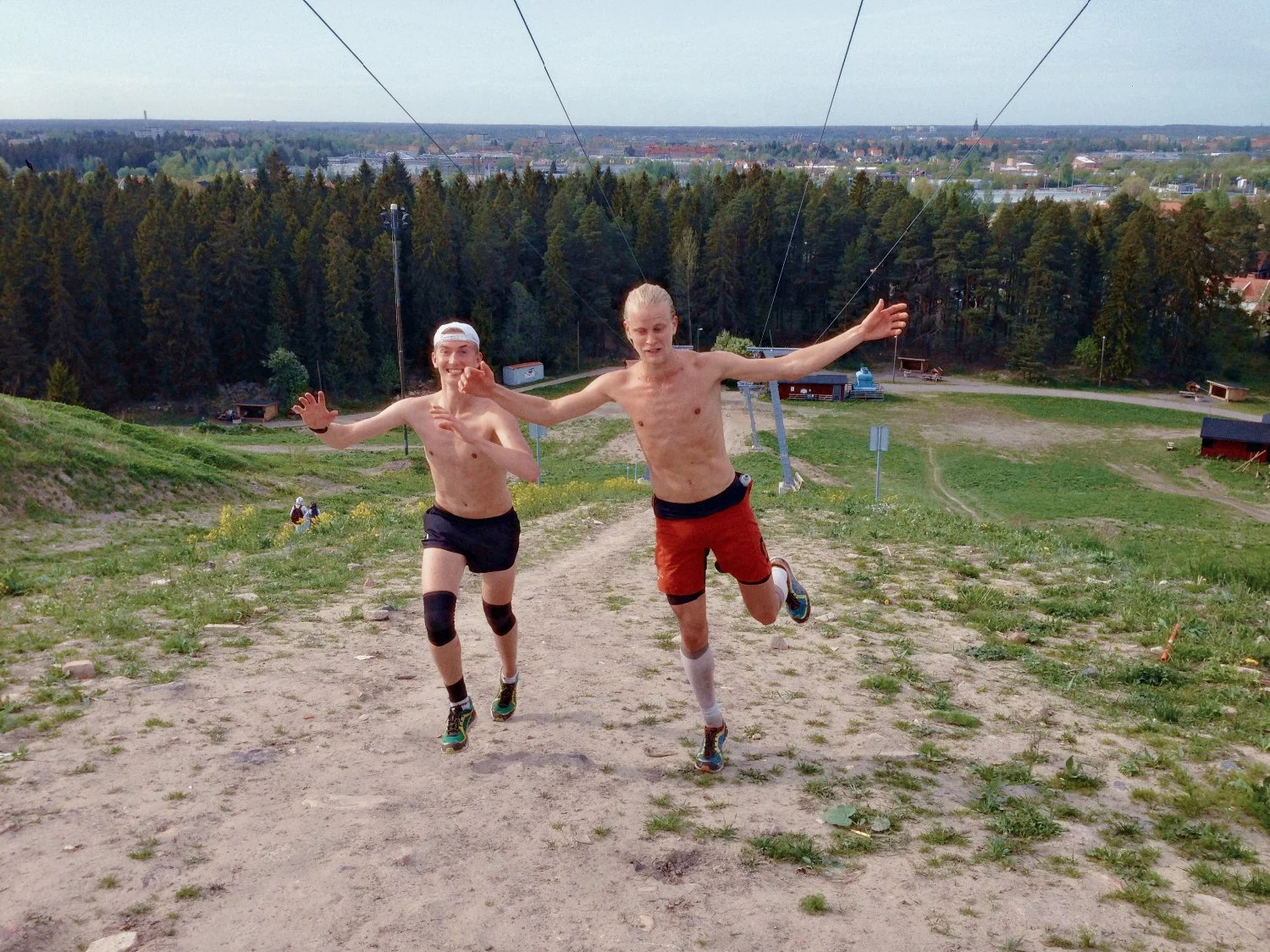
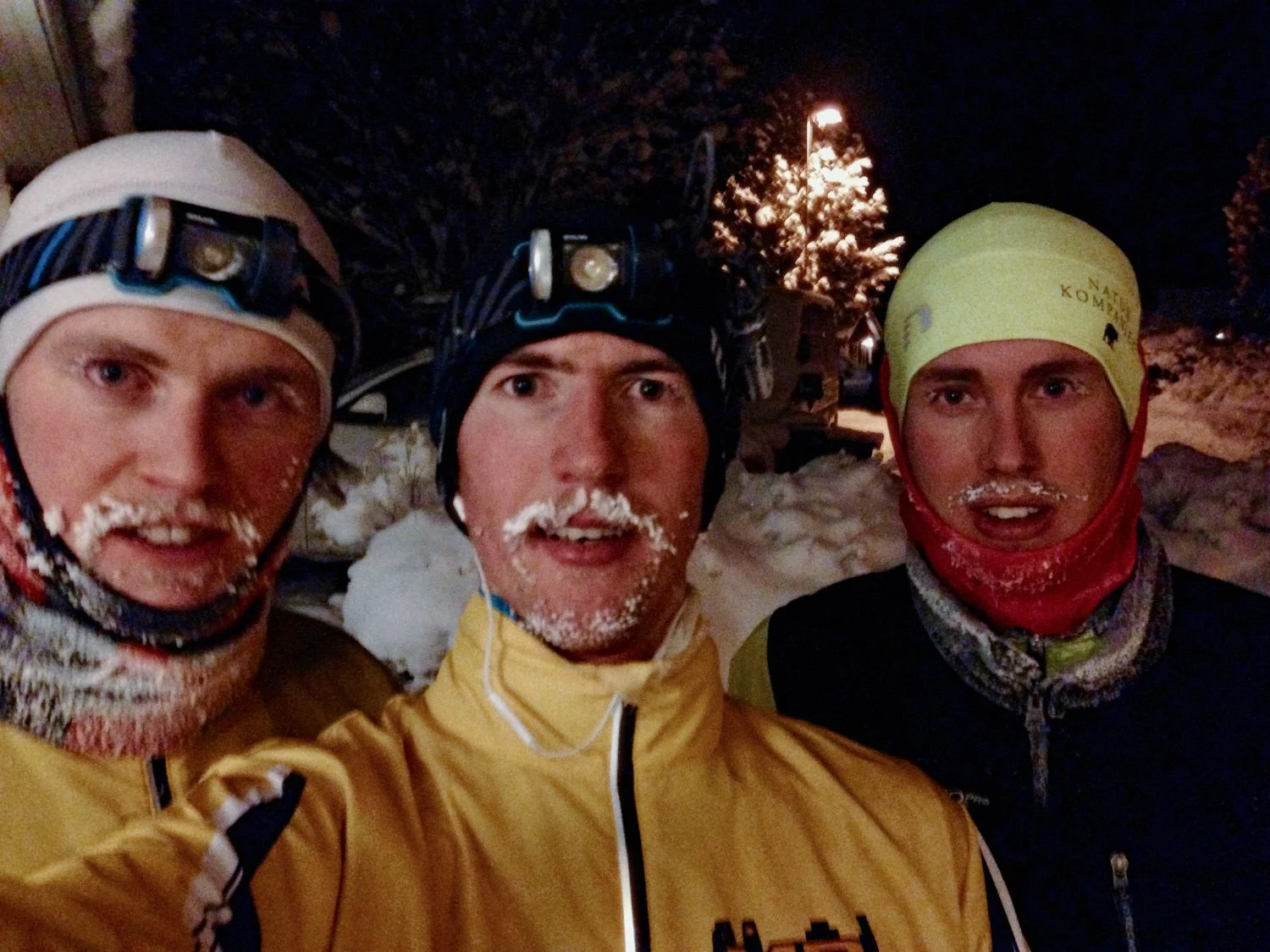
Johan got us into the Open Track race at Vasaloppet. I missed the first year — still on crutches from my last surgery — but I went along and cheered him on. The next year, I joined. Then Jocke, who is Johan’s brother, joined too. We probably did it three years in a row. Johan started four times but had to drop out once due to illness. And it was during those years that we both started getting more into running—kind of in parallel with it all. It felt like a natural progression, shifting from skiing to more structured summer training.
We’d done a bit of running earlier—mostly from other sports like football and hockey, where hill sprints and short intervals were part of the deal. But it wasn’t structured training. Maybe one run a week, if that. It wasn’t until later, after rehab, that we started approaching running more seriously—more like runners. That first year, I think I logged maybe 1,000 kilometers — not much by today’s standards, but it was a start. From there, it just grew. Year by year. And before long, the volume really ramped up.
You’ve mentioned Johan a few times now—that you started running together. Was it important to have someone close, someone building toward something with you?
Absolutely. Honestly, I don’t think it would’ve happened the same way without him. Johan’s always been the one to move things forward, to bring structure into the mix. I’ve probably been more of the “let’s just go out and see where it leads” type. But Johan’s more deliberate—he’s the one who first suggested we sign up for Vasaloppet. From there, it all started rolling. We set goals together and signed up for races. We were curious, experimental. Without that dynamic, I might’ve stayed in casual jogger mode—just going out for the occasional run. He pushed things in the right direction.
And having someone who can match your pace—physically and mentally—that’s rare.
It is. We were really lucky in that way, because from the start, we found a really natural rhythm training together. It wasn’t about who was ahead or behind—we were just both curious and motivated, and that created a kind of flow between us. Once we got going, it became this shared loop: you show up because the other person does, and that consistency builds over time. You go through the same struggles, celebrate the small gains, and somehow it all feels easier when you’re not doing it alone.
And today? Do you still train together?
Not as often, unfortunately. We live in different cities now, and our routines don’t overlap like they used to. But we still keep in close contact—checking in on how training is going, what’s working, what’s not. It’s more of an ongoing conversation than anything formal. Sometimes we meet up for training weekends, which is always great. So no, it’s not like before, but the bond is still there. That sense of pushing each other—even from a distance—that hasn’t gone away.
It really sounds like this whole journey—from skiing, to injury, to where you are now—was something you both eased into together. It wasn’t rushed.
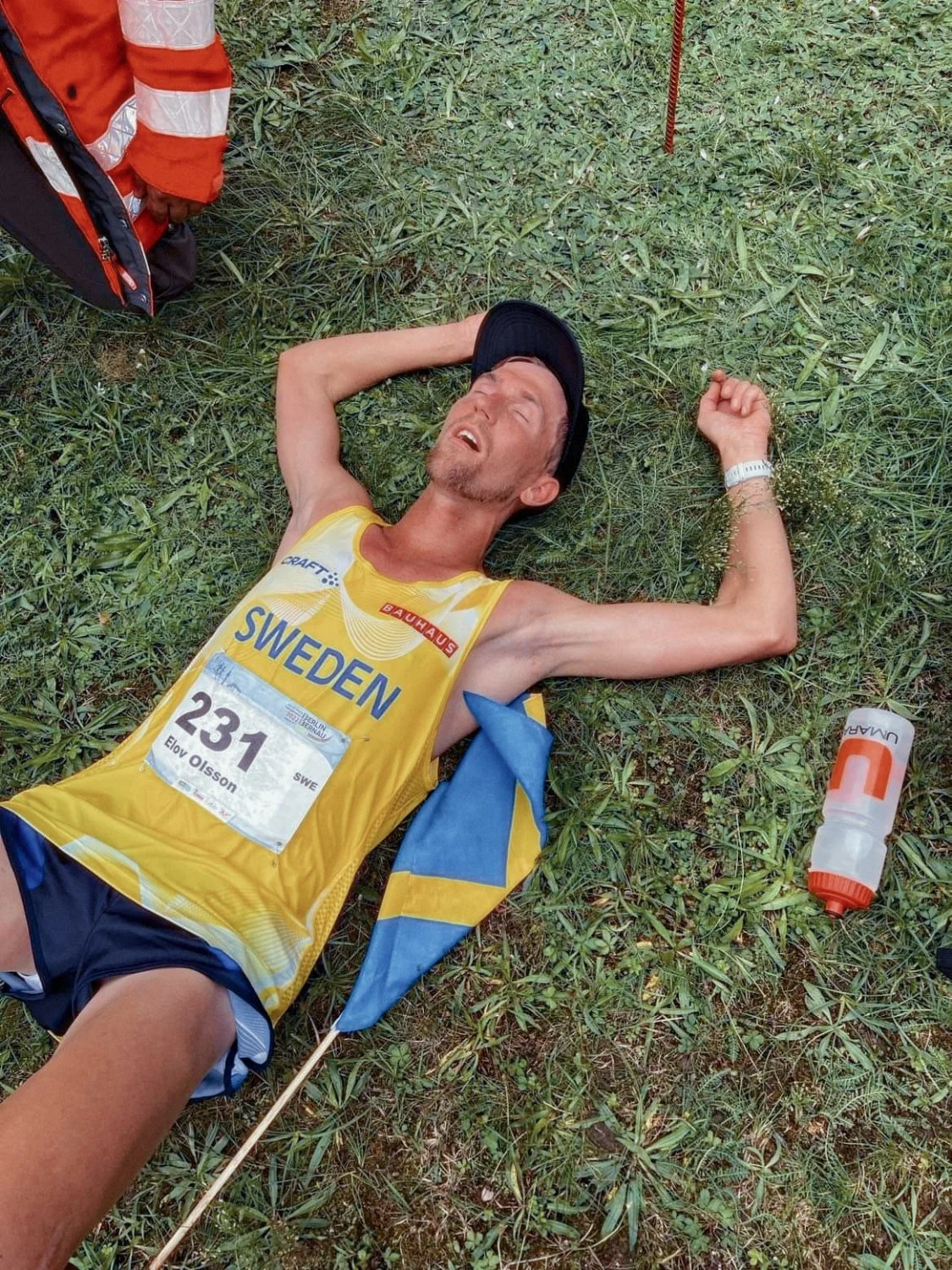
Exactly. But honestly, we weren’t as structured as it might sound. Johan was more focused from the start—he trained with more purpose early on. I just tagged along at first and picked things up along the way. It escalated pretty quickly for both of us, and with that came the usual injuries and setbacks. But over time, we started to figure it out—how to handle the training, how to recover, how to keep going. And it’s important to mention Jocke, too. He was part of this from the beginning, even if his journey toward the longer distances took a bit more time.
IV
Was there a moment where it shifted from being just a hobby to something more serious? When did you realize, “Okay, I want to actually compete at a high level”?
It’s hard to pinpoint exactly, but I think one of those turning points was Fjällmaraton in Åre. That was my first real test—longer distance, technical terrain, big climbs. It was hard, but beautiful. That’s when I started thinking, “Okay, maybe we’re actually good at this. Maybe there’s more here.” From there, the races got longer. And the ambitions grew with them.
Now you’re doing the big stuff—races like UTMB, some of the most demanding ultras out there. Did that feel like a natural progression?
Yeah, it sort of unfolded step by step. You start with a marathon, then maybe a mountain marathon—something with more elevation, a bit more technical. That’s how it was for both Johan and me. I actually ran my first ultra, 50 miles, before we debuted at the Stockholm Marathon. Then came our first real mountain ultra, TransGranCanaria. In 2014 alone I ran seven ultras, finishing the year with my first 24-hour race.
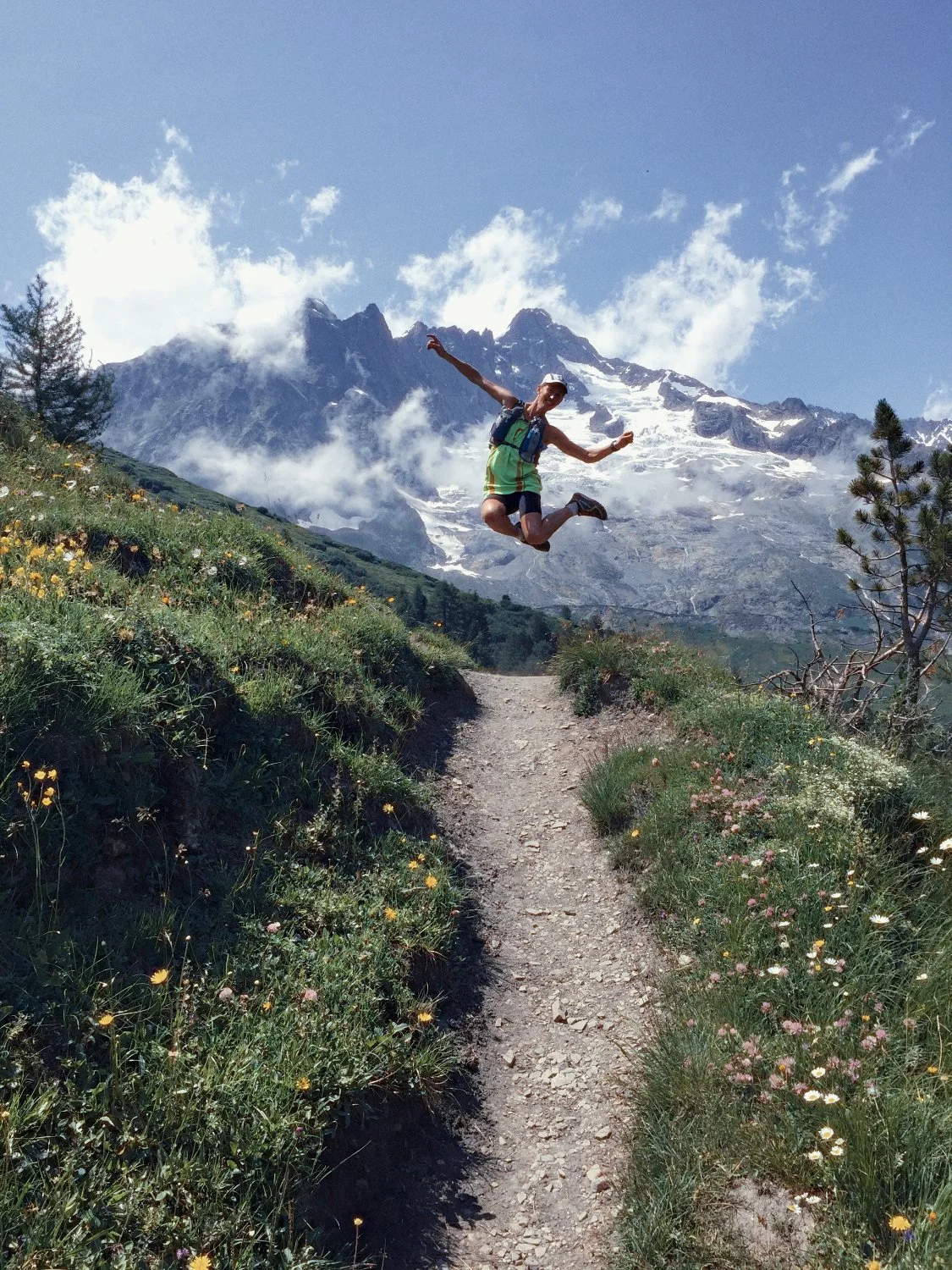
And once you’ve done that, you want to see what’s next. You realize that the challenge isn’t just about speed anymore—it’s about endurance, about solving problems as they come up, about managing yourself when things fall apart mid-race. That’s what draws me in. There’s a simplicity to being out in the mountains for hours, even when it’s brutally hard. You’re stripped down to just your body, your mind, and the landscape. It’s difficult, but there’s a strange kind of peace in it too.
And what about the mental side of it? That must be massive.
It’s everything. The physical part—of course it’s tough—but in many ways, that’s the easier part. You can train for that. The mental game is something else entirely. In a 100K or a 24-hour race, your mind goes through all kinds of phases. Doubt, boredom, pain, clarity, joy. You question yourself, then you come back again. It’s this constant loop. You have to manage your energy, your expectations, your pacing—but also your inner dialogue. For me, ultras are like moving meditations, but taken to the edge. You’re out there long enough that you start to see yourself clearly, for better or worse.
Do you think your injury experience gave you some of that mental edge?
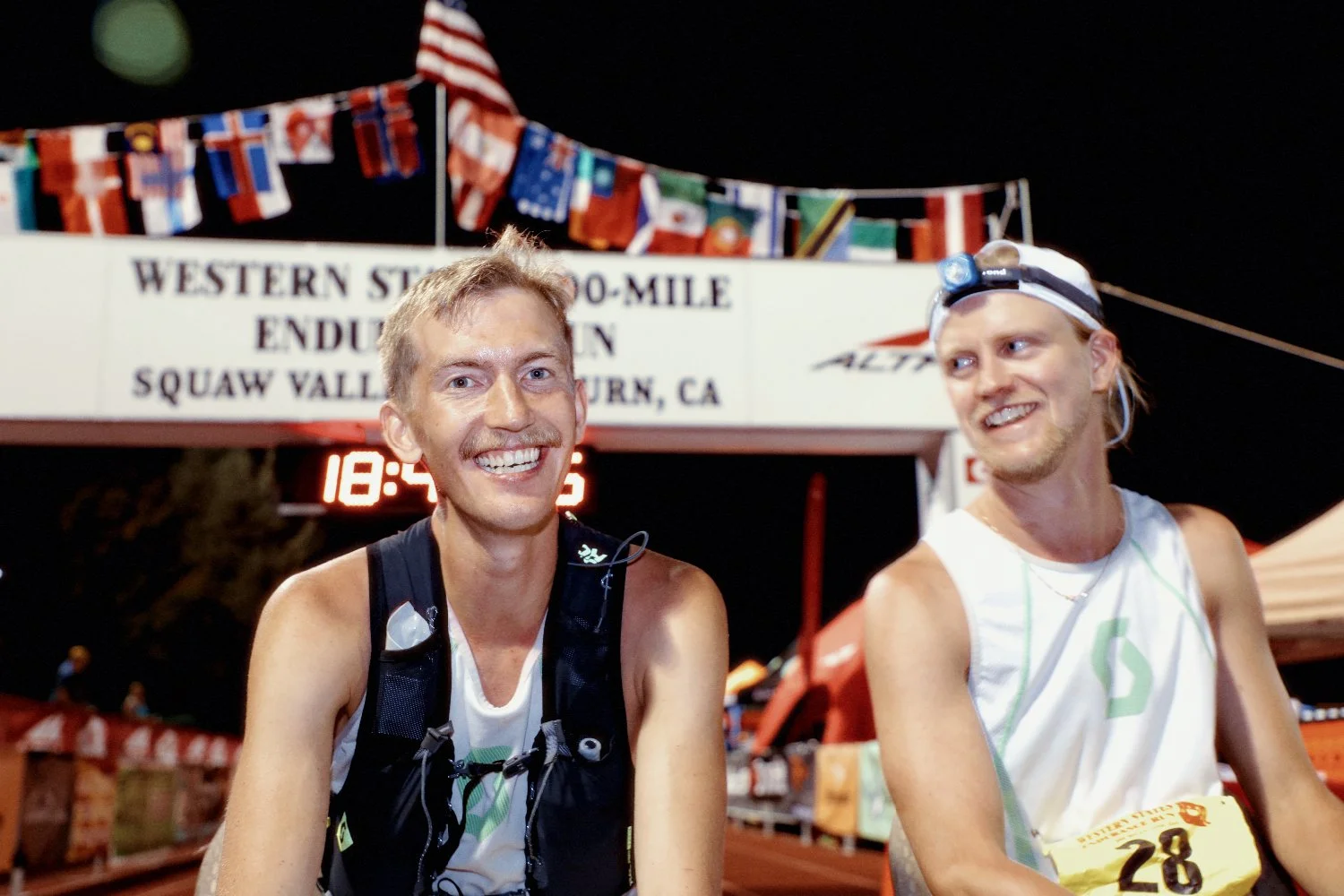
Definitely. When you’ve had to learn how to walk again—literally—and then build back up to running, you get perspective. That long rehab period taught me patience and resilience. It also made me deeply appreciate the ability to move. So now, even in races when I’m suffering or questioning everything, there’s this layer of gratitude underneath it all. I know what it’s like not to be able to do this. That makes a huge difference when things get dark out there.
V
And what about the day-to-day side of things? What does a typical week of training look like for you right now?
It shifts a bit depending on the season and what I’m building toward, but generally it’s 10 to 12 sessions a week. That includes two or three hard sessions—could be intervals on the track, hill repeats, or a longer threshold run. Then I’ll usually do one or two longer runs, sometimes back-to-back on weekends, depending on what I’m preparing for. The rest is easy running to get the volume in. When I’m in a build phase, I try to stay around 150 to 210 kilometers per week. If I’m tapering or recovering, I’ll drop that down to 100 or 120. I’m definitely someone who focuses on the numbers—but not at any cost.
How has the season been overall?
It’s been a bit of a rollercoaster. I’ve had foot trouble since July — it crept up on me right after I felt like I was starting to come back, doing some smaller races. Looking back, maybe I pushed too hard too soon; I got fitter than my body was ready for. Muscles, tendons… the foot flared up and it’s been unpredictable ever since. But I’ve kept it under control. Since coming back from the U.S. I’ve been averaging 30K a day and it’s still improving, which tells me I’m doing something right. It’s not a full-blown injury, more like a nagging issue that’s always in the corner of your eye.
Pretty much every championship I’ve run has come with some issue — an ache, an injury, some mental stress. In a weird way it sharpens you. You stop overtraining, you focus on the right things. The only time I remember everything going perfectly was my 100-mile race in the U.S. in 2023, when I broke the Swedish record. Twelve weeks of training, no illness, nothing went wrong. Otherwise it’s always been a slalom course.
Absolutely, but from the outside, you never really show that. Every time I see a post from you or catch a photo mid-race, you just look genuinely happy. Like you love what you’re doing. And it’s contagious. But then I think about the reality of what you’re putting your body through—running for 24 hours straight, for example. That’s not something most people can even comprehend. Yet there you are, smiling through it. It’s powerful, but also kind of mysterious. How do you actually feel during those darker phases—when you know your body isn’t at full capacity? You’ve said you handle it, but is it just part of the deal now?
Yeah, in general I’m okay with those phases. I’ve learned not to panic when things dip. But it definitely depends on the timing. It’s harder when the slump comes at a moment when you really want to be flying—like before the 100K World Championship last December. I think I pushed a bit too hard leading into that. I raced quite a bit late in the summer and into fall— some shorter races and a 63K mountain race in France. Then I jumped straight into prep for the Worlds.
And then my body just hit the brakes. Out of nowhere, I started feeling this heavy stress sensation in my chest. Not tightness exactly, but more like pressure—like my whole upper body was buzzing, tense. I wasn’t super worried that it was heart-related, but just to be safe, I reached out to the national team doctor. She sent me for a proper checkup.
They compared my ECG with an old one and saw some changes. That got me referred to the emergency room to rule out something serious—like myocarditis. But it turned out it was nothing dangerous. The changes they saw were just signs of what’s called an “athlete’s heart”—enlarged heart muscle from years of training. All my bloodwork was perfect. What I was feeling was essentially the result of serious overexertion. A full-system stress response, probably my nervous system going into overdrive. My resting heart rate was up by 10 beats per minute—sometimes even more. So I had to back off, let things settle, give the body a break.
But you still made it to the race?
Yeah, I made it there. I wasn’t in top shape, but I managed to stabilize a bit during the lead-up. I made it through the race, but early on I knew it wasn’t going to be one of those special days. So I switched mindsets. It became about damage control—minimizing time losses over the final 60 kilometers, staying mentally locked in.
So, yeah, it depends on when the slump hits. If it’s in the off-season or just a lower-stakes moment, I can ride it out pretty calmly. But when it shows up before a major goal race? That’s tough. That’s where planning your season becomes really important. You can’t just race everything. You have to be strategic.
Maybe that’s one of the upsides of shorter distances—you can race more often?
Maybe. But it’s a different kind of pressure. If you’re doing a 10K, you need to be razor sharp. You’ve only got 30 minutes or less to execute. That’s not easy. And honestly, I don’t like to say one distance is harder than another. Because it’s all hard, in its own way. It depends on what you’re asking of yourself. Trying to reach your full potential—that’s brutal, no matter the race.
Running a 12:44 5K like Almgren? That’s insane. Just as much as running 270 kilometers in 24 hours. It’s all demanding if you're all in.
Exactly. In the end, it becomes what you make of it. That’s what makes it beautiful—and tough.
Exactly. And what about training now? With so much more information out there—thresholds, fueling strategies, training plans—do you feel like your approach has evolved? Has your improvement come from better training, or more from just maturing into the sport?
Definitely a bit of both. I’ve gotten more structured over the years, and I’ve picked up more knowledge, but I’ve also kept some of that freer mindset from skiing. I still go a lot by feel. I don’t follow a fixed schedule with double thresholds or strictly timed blocks. I’m disciplined, but I like to keep it flexible. That’s my baseline.
That said, I do track more now. I’ve even started measuring lactate occasionally—just to get a sense of things. But honestly, as an ultrarunner, that kind of lab data isn’t what matters most. What matters is staying healthy, fueling properly, building volume, and being mentally dialed in when things get hard.
VI
And you’ve clearly got that mental strength.
Yeah, I think so. I can keep going when it’s miserable—when the legs feel like junk and you’re hours from the finish. And over time, I’ve seen how the consistency pays off. It took six or seven years before I started to really level up. And since then, most seasons I’ve had at least one breakthrough race. But you have to be patient. The breakthroughs come when they come.
And one thing I’ve learned to appreciate is that I don’t get cramps. It’s not something I talk about much, but it’s a real advantage. A lot of people struggle with it. I think it’s just how my physiology works—maybe my fueling, maybe efficiency—but I’ve never really had cramping issues. That’s huge in ultras.
Do you recognize yourself in the newer wave of ultrarunners coming into the sport now?
In some ways, yeah. But the level has definitely gone up. Faster marathon runners are making the jump to ultras, and the gear is better—shoes especially. But experience still matters a lot. A 2:10 marathoner doesn’t automatically become a good ultrarunner. You need different tools. You have to manage energy and discomfort over a much longer time. You have to be smart, not just fast.
The times have gotten sharper across the board. At the 100K World Champs in 2022, I finished seventh with a time of 6:30—that would’ve been medal-worthy just a few years earlier. Same at Comrades. I placed seventh again there, with a time that could’ve won the race ten years ago. So the sport is definitely progressing.
What do you think makes a truly great ultrarunner—aside from good shoes and nutrition?
You need to be durable. Absorb training. Avoid major mistakes. Fuel like a pro. Stay healthy. But above all, you need to believe in what you’re doing. That mental part—the belief in your own capacity—that’s what sets people apart. You have to believe in goals you haven’t yet achieved. That can take years to build.
For me, breaking the 24-hour national record didn’t happen overnight. I believed I could do it long before I actually did. But belief is something you grow into. You can’t just declare it; you build it through smaller steps, smaller wins. That’s also why I started focusing on speed over shorter distances—it gave me evidence. If I could run this pace for 10K, then maybe I could carry a slightly slower pace for 100K. You build belief that way.
Conversion tables don’t mean much. My VO₂ max isn’t that high, for example. But I have a good economy—I use energy efficiently. And that matters more over time.
Do you think that’s something you brought with you from skiing—the ability to visualize progress?
Yeah, I think so. I visualize a lot during training. When things are clicking, I imagine how a race might feel—how I want to move, how I’ll respond at key moments. It gives me motivation. But during races, I try not to project too far ahead. I want to stay in the moment. If I start thinking too much about what’s coming, it usually backfires. In training, visualizing is energizing. In racing, presence is more important.
How are you feeling now with the Worlds so close?
Better every day. When I got back from the U.S. I was exhausted, but I’ve taken it one day at a time — training, eating well, resting. The foot is improving, treatments are helping. Yesterday I ran a 25K session and felt that “24-hour rhythm” coming back — the sense of just moving forward endlessly. It even went faster than I expected. That’s the feeling I want in France.
I’m in my last big training week now—should land around 200 kilometers. Then I’ll start tapering. Next week I’ll only run about 10K per day, which is pretty low for me. And the week after that I’ll cut back even more—just a few short runs to stay loose. The goal is to show up fresh and healthy.
I’ll keep training consistently, but lower the volume step by step. I’ll also get a few more treatments to get the body in the best possible shape. Finalize the nutrition plan down to the last detail. Then, when the race starts—it’s all about execution. Go into robot mode and just grind for 24 hours.
It’s inspiring, really—how you’ve built this from the ground up. From snapping skis as a teenager to running 24-hour races at the world level. It’s not just talent—it’s commitment, curiosity, and a lot of resilience.
Thanks. Yeah, it’s been a long road, but one I’m really grateful for. It didn’t start with a goal to become a pro runner—it just started with wanting to move, to test myself, and to find out where the limits were. And it turns out, those limits can shift. Year by year, race by race, belief by belief.
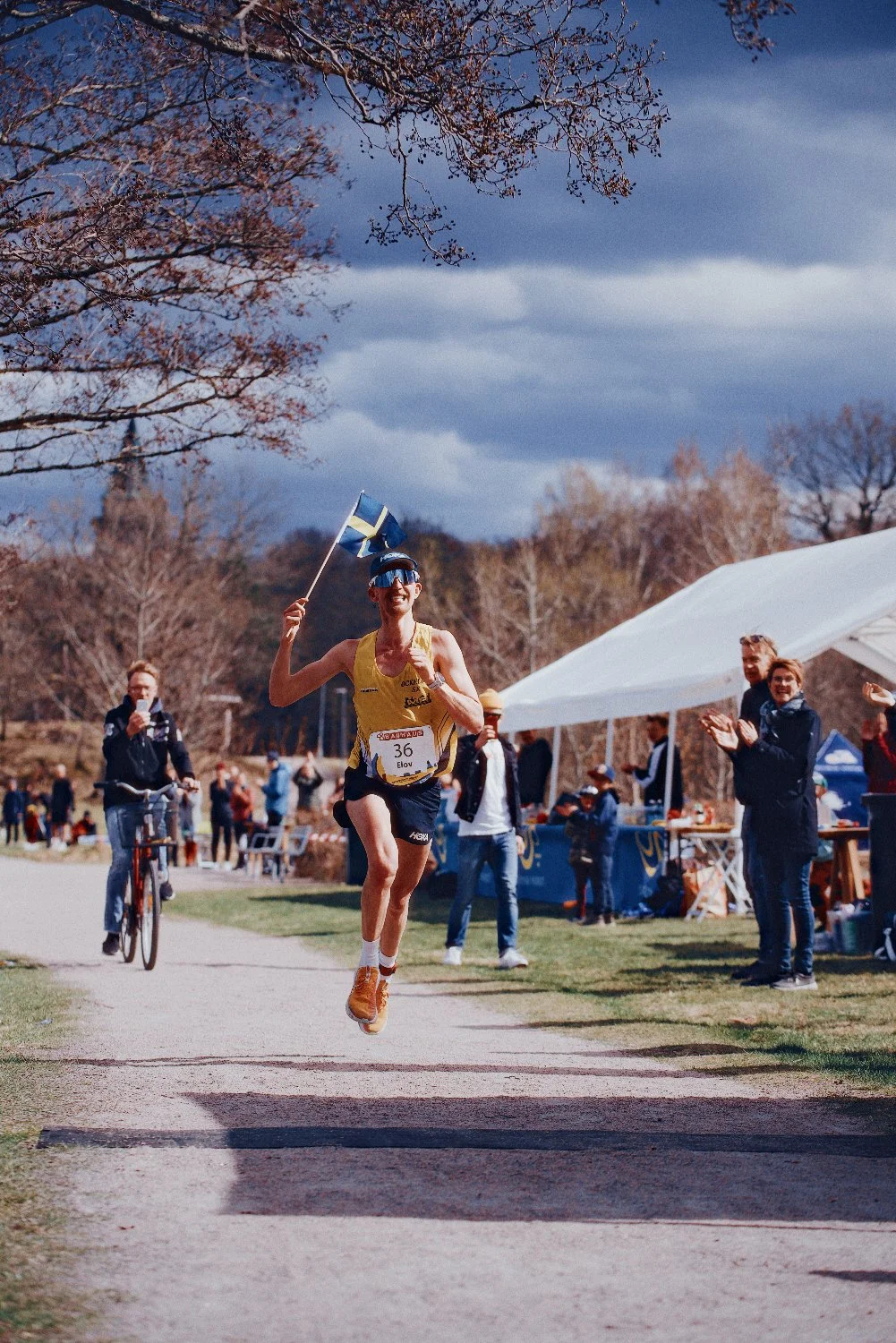
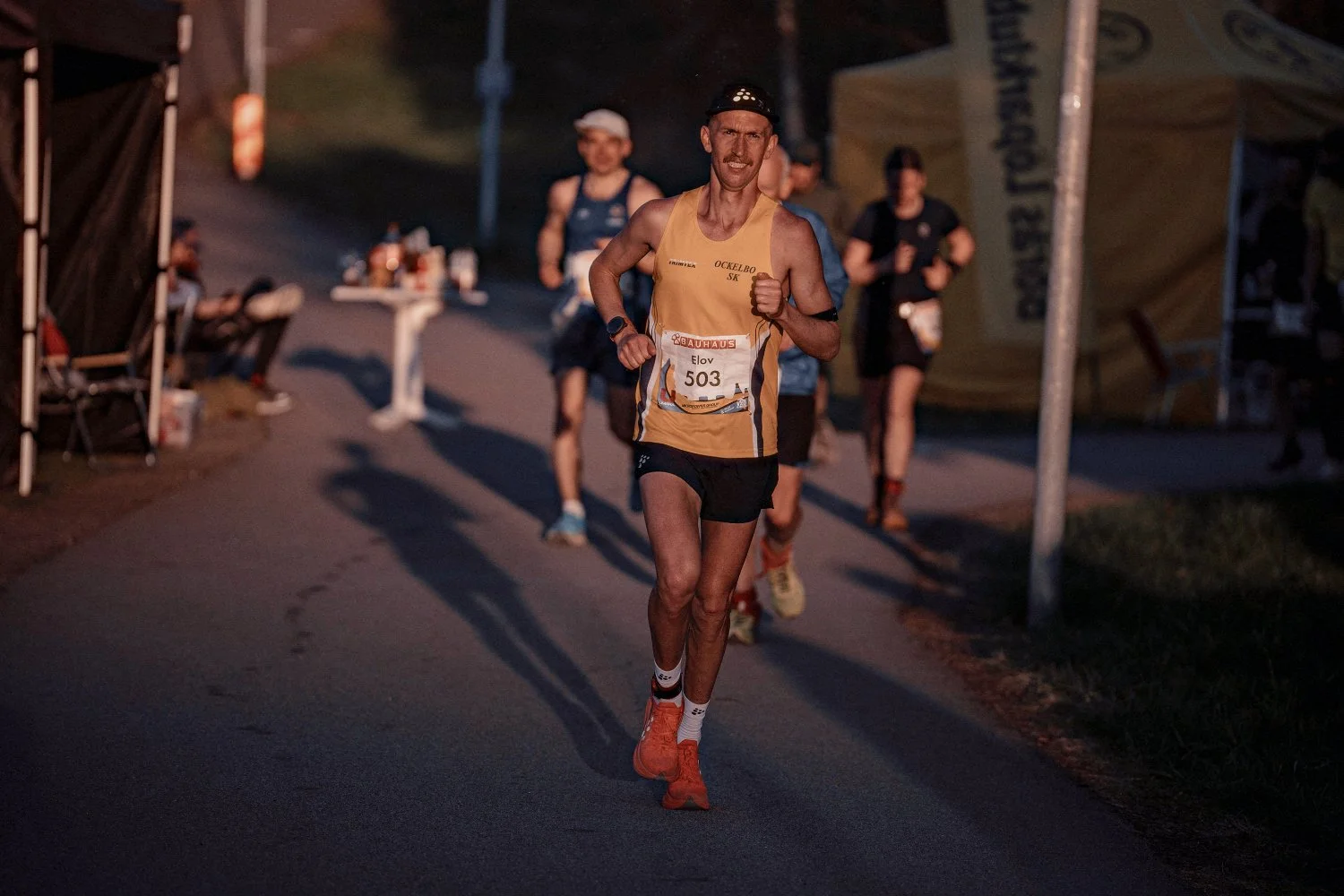
Next up is one of Elov's biggest steps yet: the 24-Hour World Championships in France this October. After everything that’s led to this point—from park jumps to split times, rehab to records—it’s clear Elov isn’t just chasing distance anymore. He’s chasing what’s possible.
SHARE
OTHER STORIES
-
born to endure
CULTURE
-
from the track to freedom
INTERVIEW
-
The first step
CULTURE
-
A Nordmarka Classic
CULTURE
-
The Art of Fast Skis
INTERVIEW
-
Nattvasan
CULTURE