A Nordmarka Classic
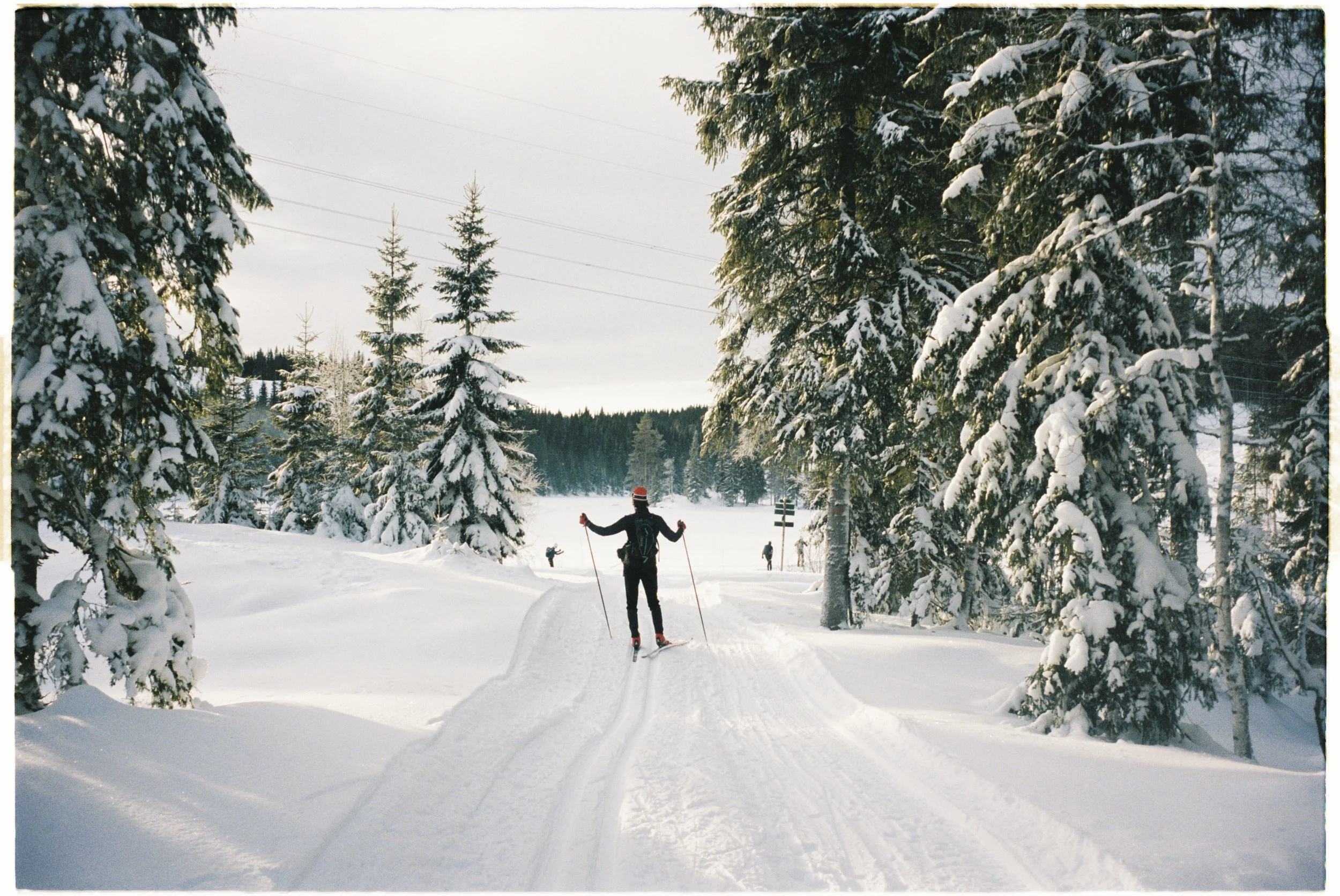
Mention Marka to any Oslo resident, and you’ll likely get an appreciative nod. Just outside the city, the forest begins. Close enough to reach without much planning, but large enough to disappear once you’re there.
A group of friends and acquaintances decided to do exactly that, aligning their schedules and spending a night out in January, right in the middle of the workweek. The plan was simple: start and end in the concrete jungle of downtown Oslo, with a ski paradise just a 40-minute train ride away. Take one day off, explore the hidden gems of Nordmarka on cross-country skis, cruise singletracks for hours, and finish it with a three-course dinner, a sauna with a view, and insider knowledge from a løypebas*.
It’s a concept that blends the joy of skiing and nature with the social energy of run clubs and group rides.
*Track machine drivers — Skiforeningen employs several who work early mornings and late nights to keep the tracks in shape. Few know Marka better.
Written by Lars Kurås
Photos by Emil Sollie
December 2025
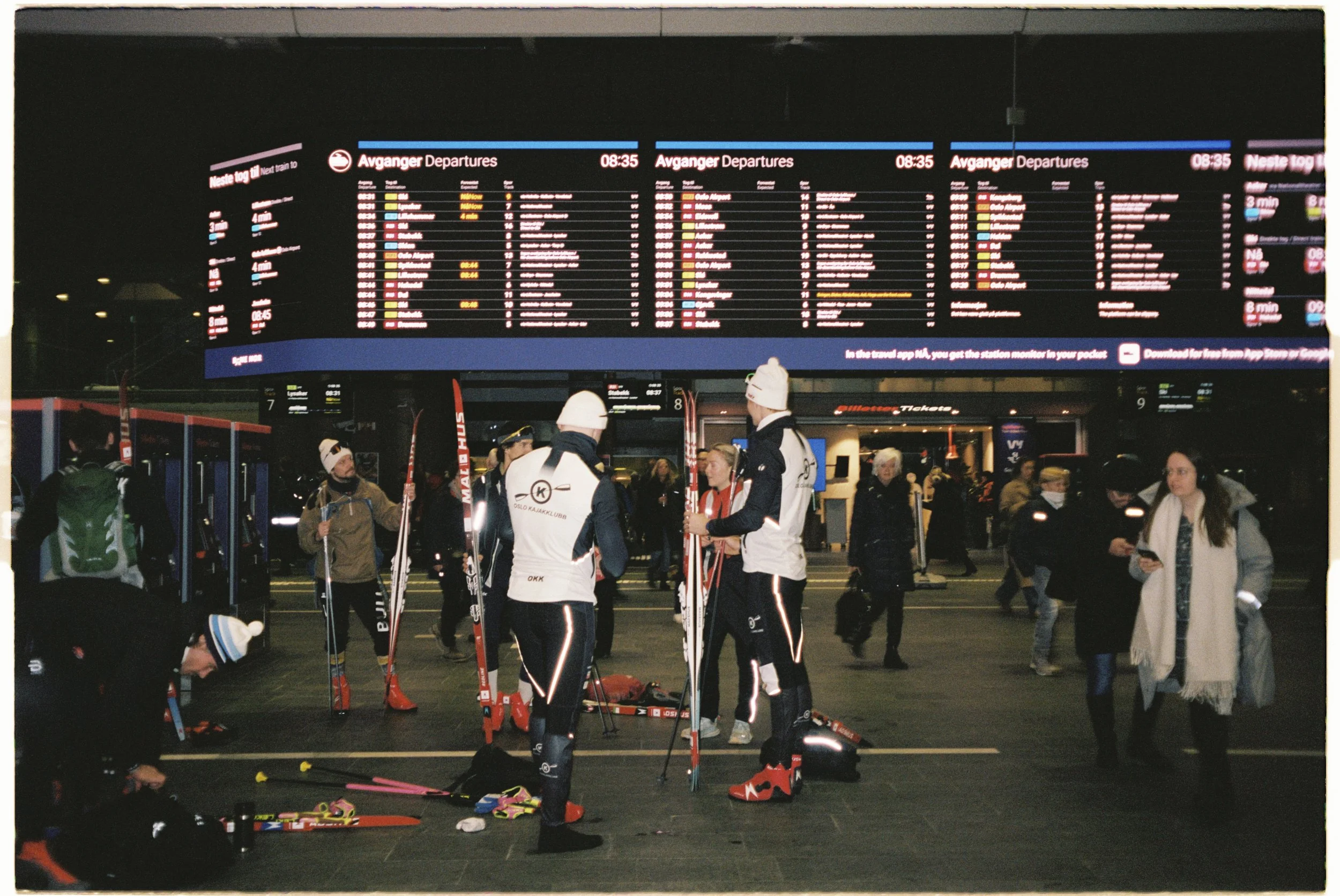
The group met at Oslo S in sneakers before gearing up for a micro-adventure led by markalos Christopher Frankum. Most skiers in Oslo know their way around Nordmarka, but many areas remain unexplored, and that’s where the best trails are found.
The train departed at 09:04, with an unexpected addition along the way: ski historian Thor Gotaas, who boarded at Kjelsås. The renowned writer lives and breathes Nordmarka and Nordic skiing traditions, and was on his way to a book reading. After a few anecdotes and stories, the group arrived at Grua. A quick walk through a quiet neighbourhood later, they found themselves at the gateway to something special.
*Markalos — someone who knows Nordmarka inside and out.
“Born with skis on your feet,” as the Norwegian saying goes, reflects how most Norwegians are introduced to cross-country skiing at a very young age. It is the country’s national sport, deeply rooted in its culture, and a key factor behind its remarkable and enduring dominance in the Winter Olympics. It’s simple, yet offers the physical benefits of engaging your whole body as you glide through landscapes of white gold.
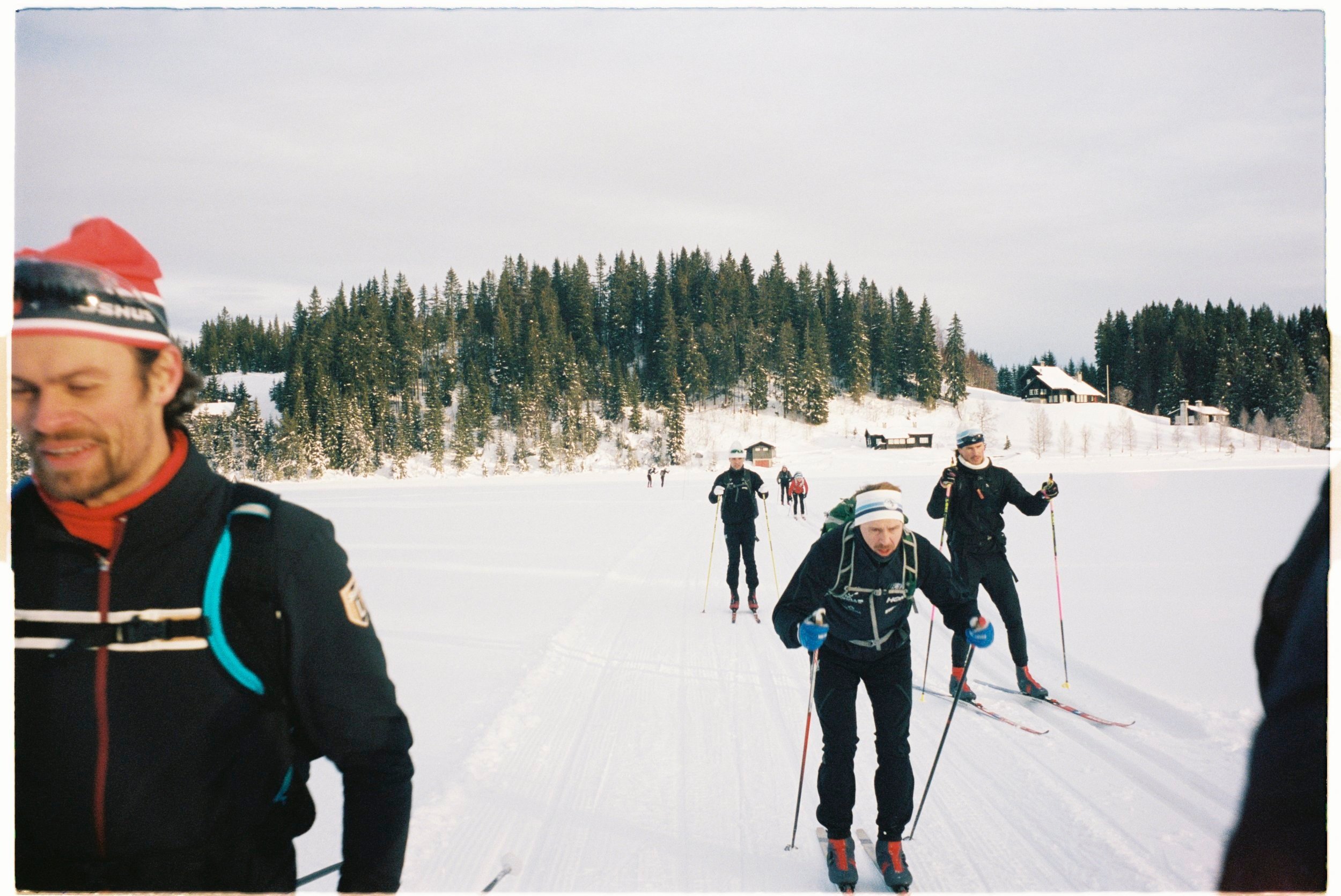
Skis on, sneakers packed, and backpacks filled with fuel and essentials, the group set off, eager to get moving. The first stop was the Svesvika cabin, with casual pit stops and stories along the way. Some cabins even date back to World War II, Frankum explained. Nordmarka played an important role during the war, used by “Gutta på skauen”, members of the Norwegian resistance who trained, hid, and carried out operations in these forests.
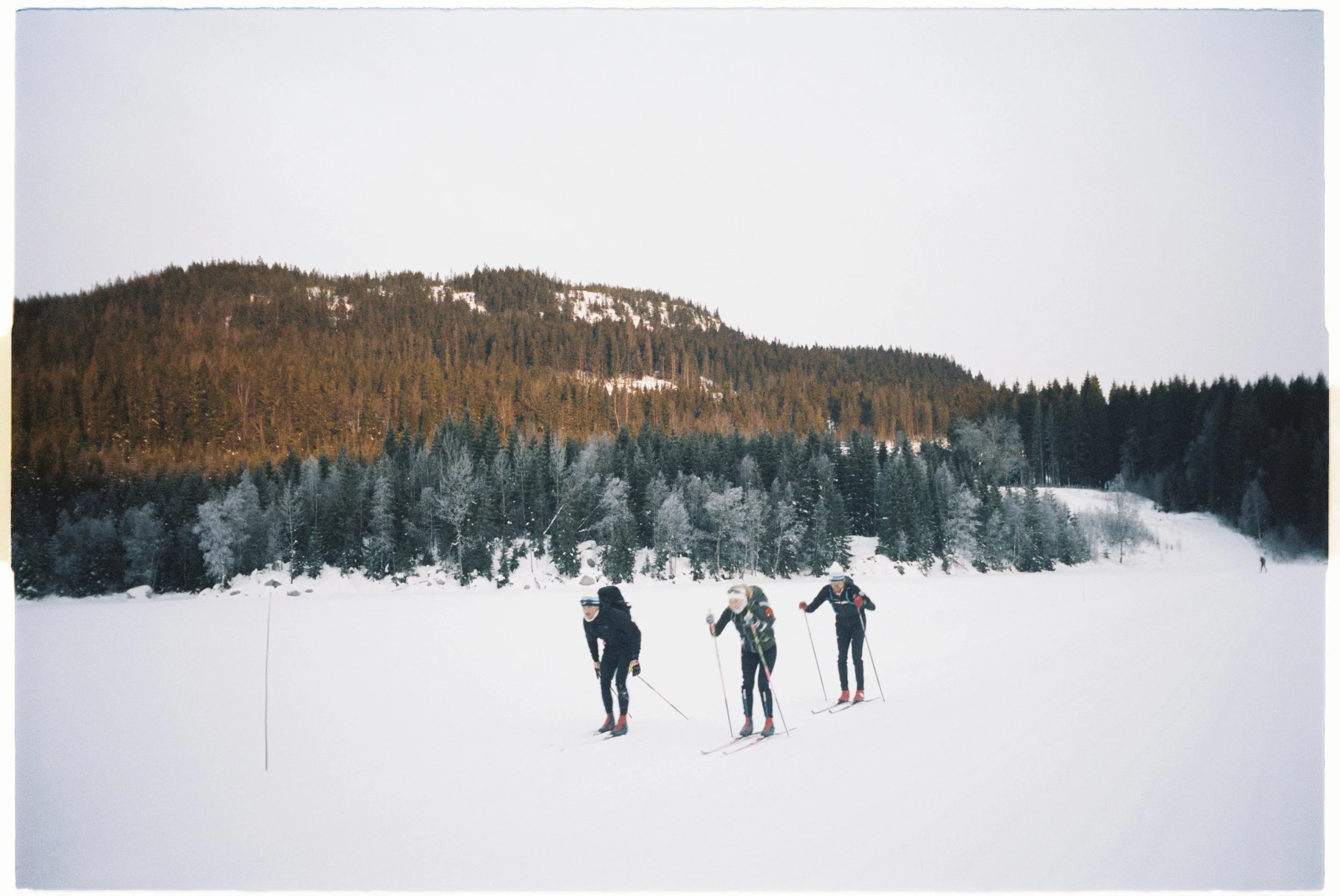
One of the participants jokes about the excuse used to cancel a few meetings in order to make the trip. It lands somewhere between humor and truth. Getting out here isn’t complicated, but it still has to be chosen. The whole group lives by this, while also admitting that life sometimes gets in the way.
Still, the group is at full capacity for this outing, perhaps thanks to the conditions that January morning: –4°C, 20 cm of fresh snow, and perfectly groomed tracks.
The pace picked up, and conversations became more fragmented. The paddling brothers Vold set the tempo, with the rest of the group holding on. Perhaps it was the promise of lunch at Trantjern that kept everyone pushing.
About every 10 kilometers, huts appear in Nordmarka, serving buns, waffles, and even pizza, and Trantjern is no exception. The newly built cabin features an impressive restaurant and accommodates up to 45 guests.
But the group wasn’t there to stay.
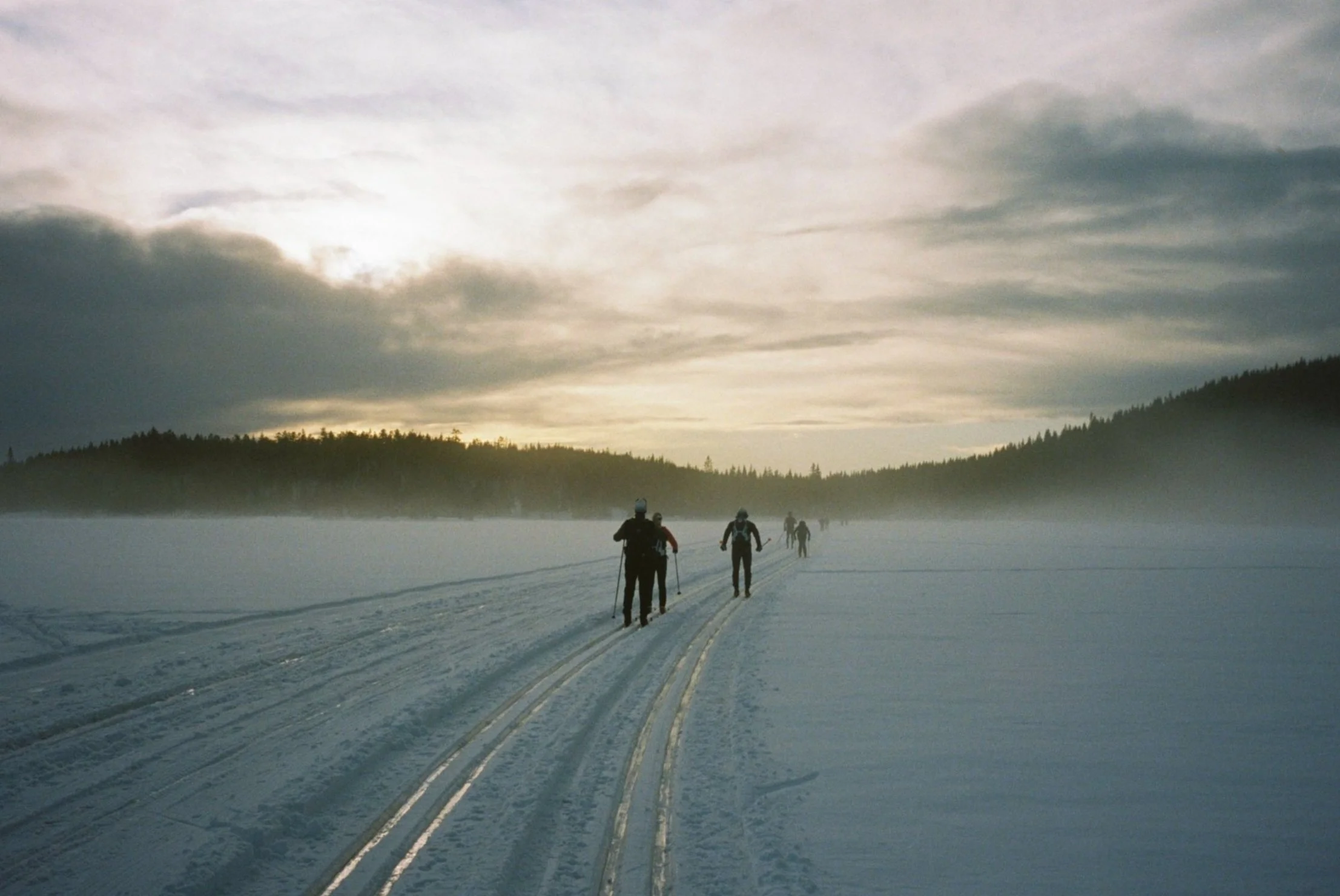
Beyond Trantjern lies some of the best Nordic skiing in the world. The farther out into Nordmarka you go, the better it gets. Narrow singletracks, soft snow, and the occasional crash. A quick left, then a right, and suddenly a long stretch of fairytale-like tracks opened up ahead. It was nothing short of spectacular, ending in a classic “Jerry trap” that took down five of the fifteen skiers.
As the sun began to set, the group approached Kikut, the destination for day one. The final stretch spread the group out, with those who had started too fast now trailing behind. But eventually, it appeared: Kikut.
A sauna with a view and a well-deserved culinary experience awaited at the legendary Kikut, which celebrates its 100th anniversary this year. Recently taken over by new owners Victoria and Roger, the place has been buzzing with new energy. Their ambition is clear: to create a menu based on local ingredients from the surrounding area, delivered at a level worthy of a Michelin-standard restaurant.
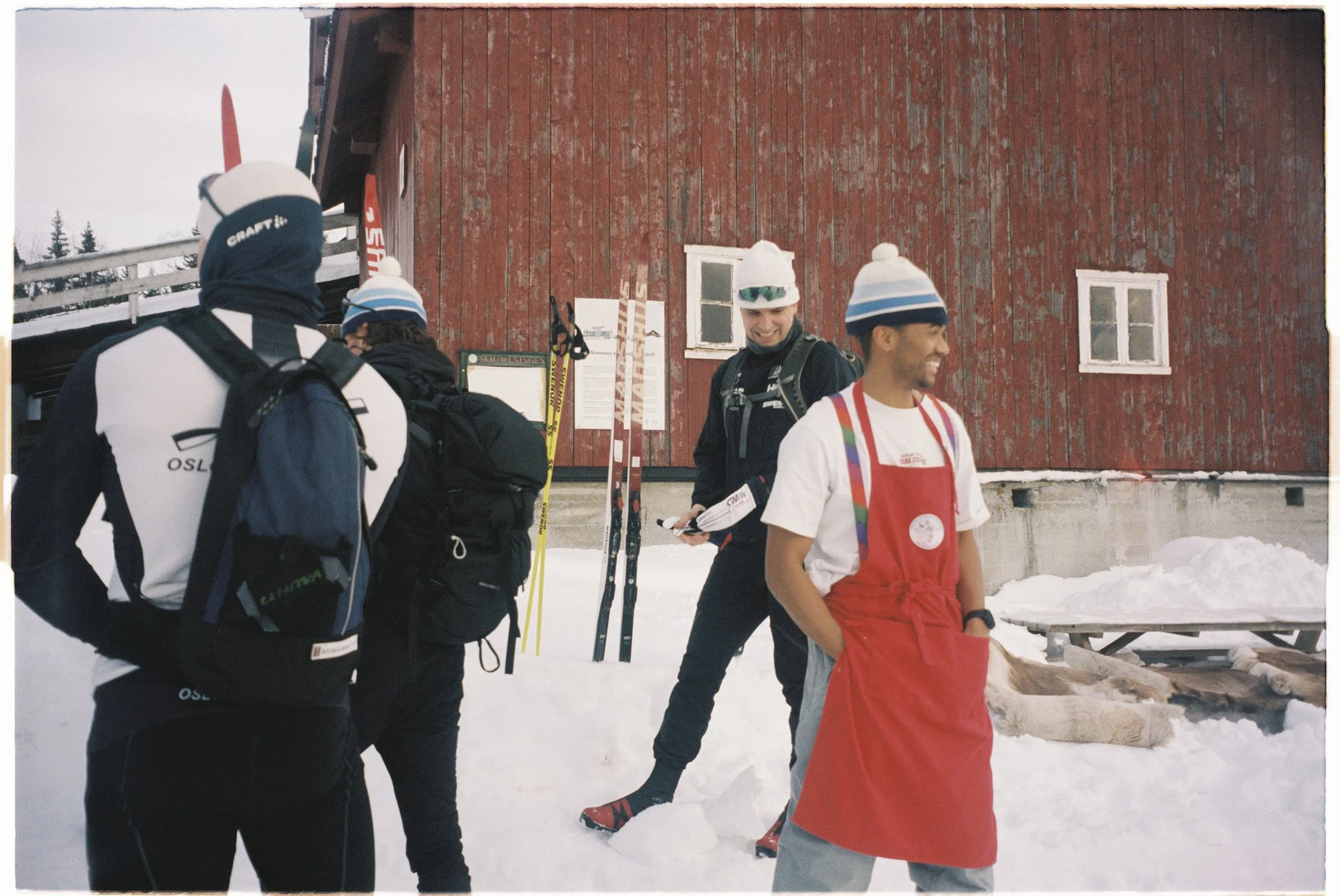
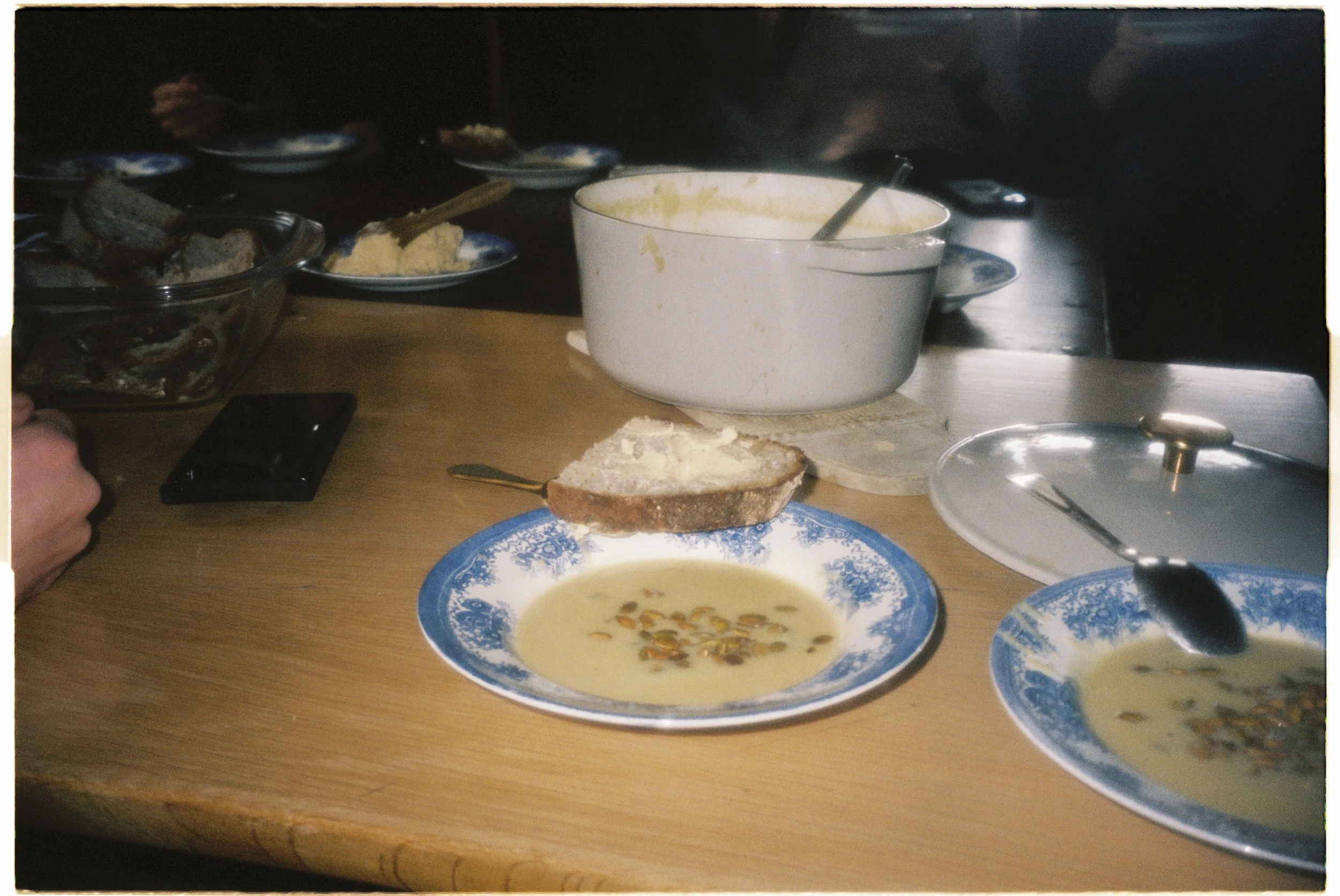
On a busy winter weekend, they estimate serving around 2,400 waffles and cinnamon buns, right in the middle of the forest.
After a night at Kikut, which offers 65 beds, the group met with two of Skiforeningen’s løypebaser*. They shared insights into how they maintain an impressive 450 kilometers of the 2,600-kilometer ski trail network across Marka, along with updates on the latest freshly groomed routes.
“It’s the best job in the world,” one of them says. Being able to experience this landscape while ensuring that others can enjoy it too is something special. Many of the løypebaser stay responsible for their areas until retirement, often longer than in more conventional jobs.
And speaking of conventional jobs. The final leg was a fast-paced return to the city, back to the concrete jungle, just in time to sit down at their desks, ready for work.